

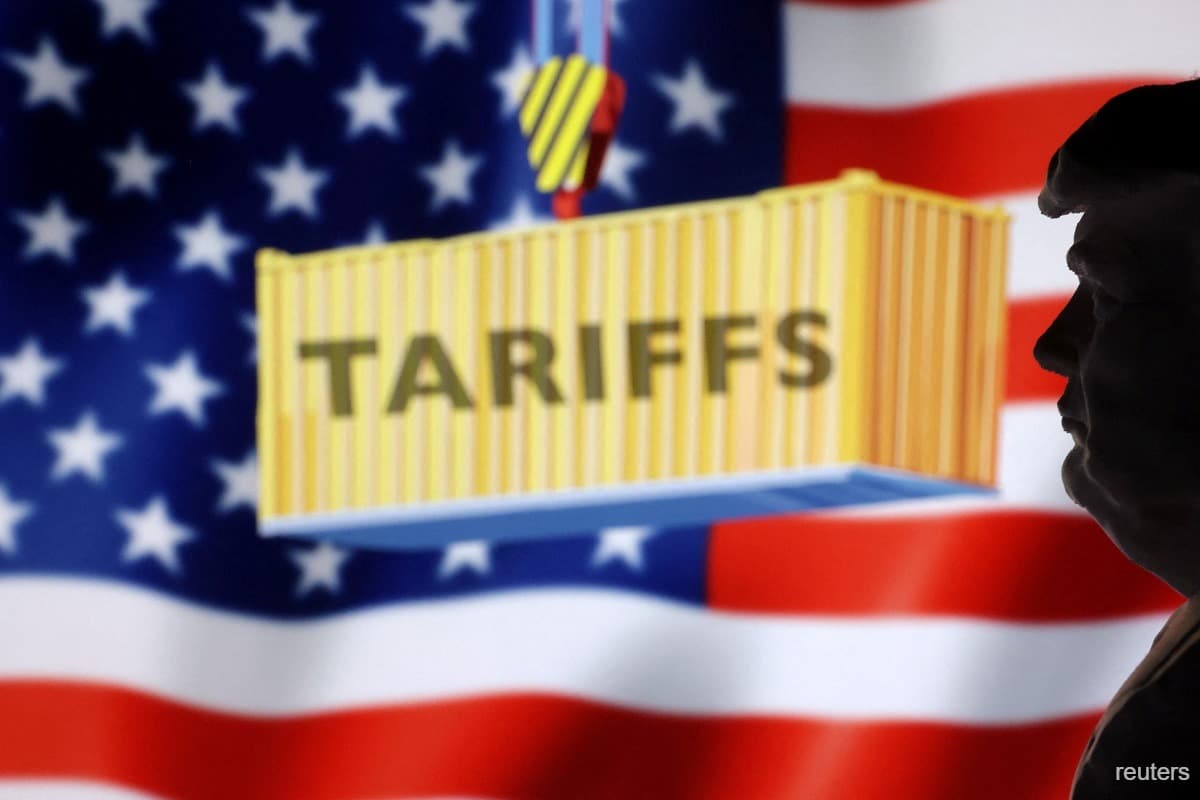
When the 24% reciprocal tariff US President Trump imposed on Malaysia on April 9 takes effect, Malaysia would face the biggest economic threat since we transitioned from an agricultural and commodity exporting country to a manufacturing exporting country in the 1980s. The reciprocal tariff would bulldoze all the economic prosperity that Malaysia has generated since then, rendering us a hollowed industrial ecosystem with a high unemployment rate.
Although the tariff rate imposed on Malaysia is not the highest among Southeast Asia countries, it still poses an unprecedented crisis to Malaysia, technologically and monetarily: America is Malaysia's most important trade partner, with total Malaysian exports to the US amounting to US$44.9 billion (RM201.9 billion) (2023), equivalent to 11.2% of Malaysia’s GDP; the main export comprises semiconductor and electronic devices (US$7.32 billion). Under the worst case scenario, if Malaysia needs to absorb the 24% import tariff, that will amount to 2% of GDP lost. We will also face a possible outflow of high-end manufacturing activities.
Despite the calming, diplomatic tone shown by the Ministry of Investment, Trade and Industry when discussing the tariff announcement, this is a major threat to Malaysia’s export-driven economy. For more than half a century, Malaysia's main revenue and the people's prosperity was built on the goods exported to the US and the job opportunities provided by US multinational companies (MNCs). The 24% tariff will completely change Malaysia’s economic development calculus, be it in government revenue, national technological advancement or the job security of the people.
To survive these critical tariff measures, one needs to comprehend Trump’s intention in imposing this tariff, then strategise relevant policies to contain the damage. The true intention of Trump's tariff is embedded in the tariff list. If we dissect it carefully, it will reveal three different categories of countries that are entangled with a specific Trump’s policy intention.
The first part of Trump's “liberation day declaration” placed all countries under a 10% tariff. Even uninhabited islands near Antarctica such as Heard Island and McDonald Islands are also included. Of course, this policy positioning is not pointing towards the penguins on those Islands. It is aiming at US trade partners where the US has a positive goods trade surplus, such as Singapore, the United Kingdom and the Netherlands. The purpose of imposing tariffs on these countries is to serve as a leverage to negotiate for an even better domestic market position for the US goods in these respective countries, including import tariff reduction or elimination and the restriction of competitors’ goods in the market. This is to increase US goods import and market dominance. All in all, the Americans wish to knock off other competitors, and further enlarge the current trade profits in these trade-surplus countries, ultimately dominating the market.
Next, the “liberation day declaration” calls for a reciprocal tariff to be imposed on countries that the US has trade deficits with. It shall replace the universal 10% tariff mentioned above. This reciprocal tariff in principle has nothing to do with unfair trade rules or trade barriers accused by the Trump administration. It is solely formulated and proportionate to the goods trade deficit amount they have with the Americans respectively — not even taking account of the service trade portion where the US commonly has a trade surplus with most of the countries. Countries on this list, including Malaysia, Vietnam, Indonesia, Thailand, China and India have a common economic structure: strong manufacturing industries that export most of the goods to the US.
For historical context, the manufacturing industry boom in all these countries is the result of the globalisation process, which started in the 1980s, where American companies went on a global search for more cost-efficient manufacturing sites to increase profits, ultimately shutting down the original manufacturing site in the US. Due to this de-industrialisation, American workers who used to work in the manufacturing industries have gone through wage deflation, and have eventually become unemployed.
In conclusion, the agenda behind the reciprocal tariff is to force manufacturing to flow back to the US, recreating what Trump describes as the golden age of America: factories and jobs will come roaring back to the country.
Last but not least, there are two non-US-sanctioned countries that are not imposed with any tariff: Mexico and Canada. Both are parties to the United States-Mexico-Canada Free Trade Agreement (USMCA), and all goods imported under USMCA to the US will attract zero tariff. While there are still unsettled tariffs between the US, Mexico and Canada, typically on imported steel, the Trump administration’s motive of skipping reciprocal tariffs on Mexico and Canada is crystal clear: create a North American sphere of influence under the US command. Canada would be positioned as the raw material supplier for energy products, and metallic and non-metallic minerals. Mexico will be the sub-tier manufacturing site which performs lower tier product assemblies before the final assembly is done in the US.
Now that we comprehend the intention of the three-tier liberation day tariff, the pieces of the puzzle now form a clear picture: Malaysia manufacturing industries are at stake. They are the key target that the US aims to transfer out. Despite semiconductors being exempted during the April 2 announcement, the White House then published the Annex II which does not include many kinds of chip-related goods which are critical in chip manufacturing. So there is literally no relief for Malaysia's manufacturing industries. It now lands Malaysia in a tight spot, facing the issue of utmost criticality: how do Malaysia convince the MNCs, especially the high value semiconductor and electronic instrumentation manufacturing firms to remain here?
Firstly, we must have a clear strategic intent: under the reciprocal tariff, now we need to compete with Mexico head to head, instead of the US. Americans remain too inefficient for domestic manufacturing industries to take off again, at least not massively for the coming five years. It is worth noting that manufacturing industries are not just about building factories and setting up production lines, it is nurturing an ecosystem comprising skilled labour, technical staff and a wide range of sub-contractors that perform machinery and software integration. The skilled labour is not cost competitive in the US when compared to the Southeast Asian region. Hiring a fresh engineering graduate in the suburban area is estimated to be US$80,000 per year. Comparatively, Malaysian fresh graduates who draw RM70,000 per year in manufacturing industries are already considered exceptionally high paid.
Besides, the US’ capability of manufacturing horizontal integration has been lost in history. Ever since the manufacturing industries shifted out, the US subcontractors that provide machinery, fixtures and software have faded due to low demand, and dispersed across the wide US continent. Critical manufacturing system integration and readiness would take an exceptionally long lead time, making the US under any circumstances, even with the high reciprocal tariff, the last choice for manufacturing activities.
But none of these is an issue with Mexico. In fact, they might be more competitive when compared to Malaysia. Their wages for skilled labour are lower than in Malaysia: fresh graduate engineers typically draw US$13,000 or RM57,200 per annum. Since the trade war waged during the Trump 1.0 Presidency, Mexico has developed and expanded large manufacturing activities in multiple cities, such as Reynosa and Guadalajara. They have built a matured manufacturing ecosystem that would support rapid prototyping, product development, and production scaling for customers. These are the core reasons behind Trump skipping reciprocal tariffs on Mexico despite the much higher trade deficit. He takes this as a safety zone carved out in his sphere of influence to install manufacturing industries which are deemed too expensive to relocate to the US. In fact, there are already MNCs which have de-risked their manufacturing in Malaysia by having a duplicated production line in Mexico, as early as 2022.
So how should we start to level the playing field for manufacturing industries in the face of a 24% reciprocal tariff? First and foremost, the prime minister would need to send a clear signal to Trump that he is willing to negotiate for a term that would satisfy Trump’s policy intention. To be honest, Trump’s impulsive behaviour and policy flip-flops might render any negotiations short lived. Even the tariff itself might have a very short half-life due to the change of the domestic political calculus. This gesture is mainly in place to calm down the MNC which run their manufacturing businesses in Malaysia, ensuring that the situation will not worsen as the Prime Minister has the “know-how” and leverage to negotiate effectively with Trump. This must be in place to halt any potential outflow triggered by any of the MNCs and close up the escape route to Mexico. Once an outflow is started, it will have a domino effect that will deal a fatal blow to Malaysia’s economy. All in all, we need to buy more time for ourselves and be better prepared for any impulsive changes on the reciprocal tariffs from the Trump administration, be it worse or better. Similar time buying strategy was also employed by Vietnam, through a call which Trump described as “productive”. The only question left for Malaysia is whether Anwar would be able to secure a call with President Trump.
Besides, one might be hopeful that a negotiation to remove the trade tariff on US imports into Malaysia would satisfy Trump and bring things back to normal. But in reality, it will not. The intention of the reciprocal tariff in our analysis is to force a manufacturing outflow. In order to seamlessly shield our MNC manufacturing industries from the reciprocal tariff attack, strategies to increase the MNCs’ “path dependency” on Malaysia’s manufacturing ecosystem should be implemented. Malaysia needs to be capable of offering more value add in terms of R&D, intellectual creativity and cross-functional integration, rather than just compete on the low cost paradigm. Malaysia should leverage this crisis and transform to a one-stop solutions centre of design, prototyping, production and continuous product improvement (CPI) to attract the MNCs to stay at least for the short term. All in all, it is simple math for the manufacturing industries: transferring manufacturing lines to the US or Mexico would require rapid, extensive capital expenditure yet it will only run full swing a minimum of five years later. By then Trump would have ended his presidency, and the reciprocal tariff policy might have been quashed completely. If Malaysia is able to provide extensive add-value in this transitional period, it will further fortify our critical position as the global manufacturing hub, surviving not just Trump’s presidency, but in a distant future.
As a conclusion, this “liberation day” crisis serves as a wake-up call for Malaysia. Despite the prosperity Malaysia gained for the past 50 years as a manufacturing nation, it is fragile in the face of external impacts. Anwar’s administration should take this as a lesson learned and start a “do-different” strategy proactively, creating a better value stream for foreign investors and multinational companies to continuously sustain and boom our manufacturing industries.
Ooi Tze Howe works in an US-based electronic tech company. He covers the corporate, governance and non-profit sectors. He founded and manages a non-profit think tank HEYA Inc on a pro bono basis.