

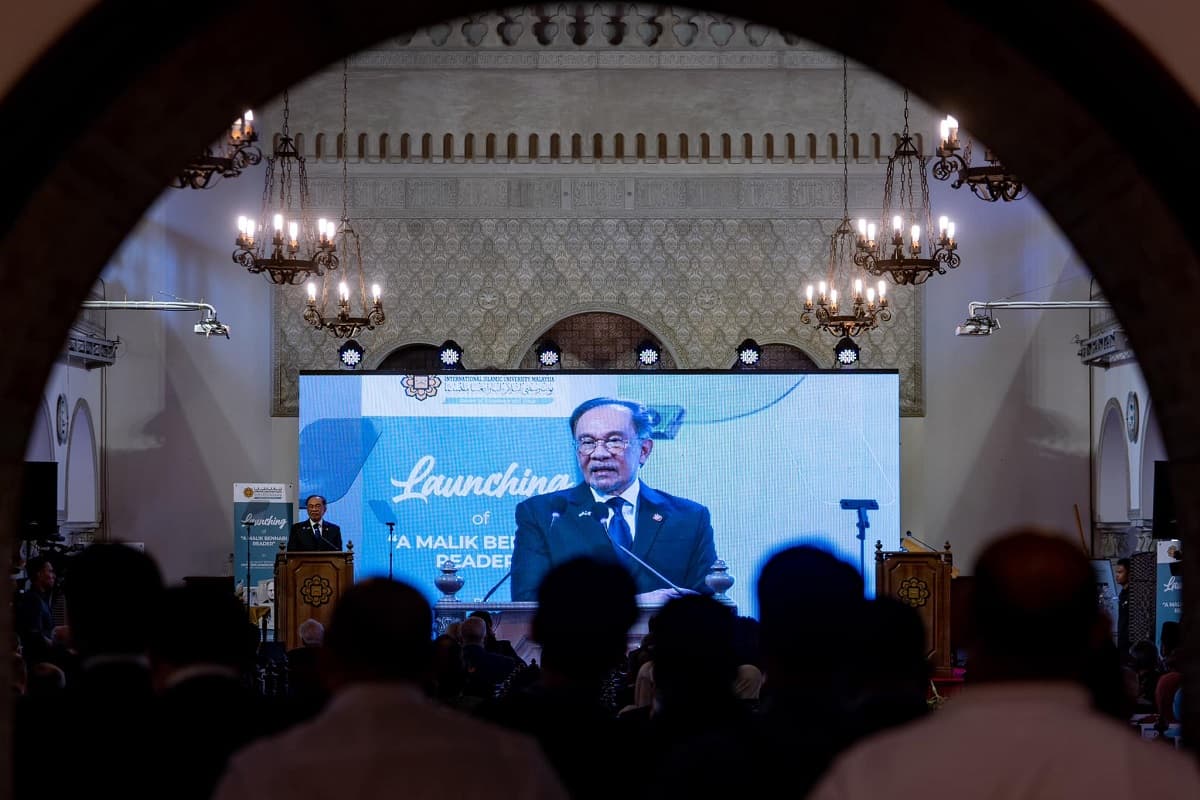
Early last month, Prime Minister Datuk Seri Anwar Ibrahim inaugurated the International Institute of Futures Studies (IIFS) at the International Institute of Islamic Thought and Civilization (ISTAC), International Islamic University Malaysia (IIUM), highlighting its role as a catalyst for bold and innovative ideas. Commending IIUM for this initiative, he emphasised the institute’s potential to establish the university as a global leader in futures studies. He underscored that futures studies is not merely a passing trend but a rigorous and increasingly vital discipline that influences government policy frameworks, including the Malaysia Madani philosophy.
The basis for the discipline of future studies is rooted in its interdisciplinary and holistic approach to understanding potential future scenarios. It combines insights from various fields, including social sciences, technology, economics, environment and politics to explore possible, probable and preferable futures. Futures studies emerged as an academic discipline in the 1960s and has evolved into a systematic study that emphasises creativity and imagination.
In an era of rapid technological advancements, geopolitical shifts and environmental uncertainties, the study of the future requires a holistic and integrated approach. Traditional linear thinking, which assumes a direct cause-and-effect relationship, is often inadequate in dealing with the complexity and interconnectedness of global challenges. The socio-economic reality we face today is shaped by intricate systems of trade, financial markets, labour dynamics, social structures and governance frameworks, all of which are deeply interwoven.
Economic policies implemented in one part of the world can have cascading effects on inflation rates, employment patterns and financial stability elsewhere. Similarly, social inequalities, migration patterns and technological disruptions create ripple effects that influence national and global stability. Understanding these multi-layered interactions is crucial for developing effective policies and strategies that promote sustainable development and equitable growth. This is where systems thinking plays a crucial role in future studies, offering a comprehensive framework to analyse, predict and shape the future effectively.
Systems thinking is an approach that focuses on the relationships, interactions and interdependencies within a system rather than isolating its individual components. Systems thinking is more than just understanding individual parts; it involves recognising how these parts work together to form a cohesive whole. Unlike linear or cause-and-effect thinking, which focuses on isolated elements or direct causal relationships, systems thinking acknowledges the intricate interdependencies within complex systems.
It helps differentiate between symptoms and underlying issues, offering a comprehensive view that can lead to more effective problem-solving strategies. It views the world as a series of interconnected systems, each influencing and being influenced by others. This perspective is particularly valuable in future studies, where emerging trends and uncertainties demand a multidimensional analysis.
By applying systems thinking, futurists can identify underlying patterns, feedback loops and unintended consequences of decisions. This helps in crafting more resilient and adaptive strategies for governments, businesses and organisations aiming to navigate future uncertainties. Various systems thinking tools, such as causal loop diagrams, agent-based modelling, systems dynamics modelling and artificial intelligence-based systems modelling, enable researchers to map complex interactions, simulate outcomes and assess potential future scenarios with greater precision. These tools help uncover hidden leverage points and provide actionable insights for long-term strategic planning.
But why does systems thinking matter in future studies? Many contemporary challenges, such as climate change, economic inequality and political instability do not exist in isolation. Systems thinking allows future analysts to explore the broader context and interconnected nature of these issues, leading to more comprehensive and effective solutions. A system is often composed of multiple feedback loops, where an action in one area may trigger unforeseen reactions elsewhere. By mapping these relationships, decision-makers can anticipate potential unintended consequences and mitigate risks before they escalate.
Systems thinking equips policymakers, business leaders and researchers with the tools to move beyond short-term fixes and instead develop sustainable, long-term strategies. This approach enables the identification of leverage points — small changes that can have a significant impact on an entire system. Leverage points are strategic intervention areas where targeted actions can create ripple effects, leading to transformative change. Identifying these points requires a deep understanding of systemic structures, feedback loops and underlying dynamics. For example, in economic policy, adjusting regulatory frameworks or introducing innovative financial incentives can lead to widespread economic improvements. Similarly, in environmental sustainability, a shift towards renewable energy subsidies can accelerate the transition to cleaner energy sources, creating significant long-term benefits.
Since systems thinking acknowledges the interconnectedness of different domains, it fosters collaboration among experts from various fields. This interdisciplinary approach enhances problem-solving capacity and enriches future studies with diverse perspectives. By engaging stakeholders in the decision-making process, organisations can ensure that their strategies align with societal needs and values, fostering a sense of shared responsibility for sustainable development.
By integrating systems thinking and future studies, governments can craft more strategic and adaptive foreign policies that account for the complexities of global geopolitics, economic interdependencies and emerging challenges. Systems thinking helps policymakers map international relationships, identifying key leverage points, feedback loops and potential unintended consequences of diplomatic decisions. Future studies, on the other hand, enable scenario planning and foresight analysis, allowing governments to anticipate shifts in global power dynamics, trade policies and security threats. This combined approach ensures that foreign policies are not only reactive but also proactive, fostering long-term diplomatic stability, economic resilience and strategic alliances that align with national interests in an increasingly interconnected world.
By modelling complex supply chain networks and forecasting potential disruptions, policymakers can develop adaptive strategies to improve resilience and sustainability. In renewable energy, a systemic approach helps assess energy flows, infrastructure challenges and regulatory frameworks, enabling optimised grid management and investment in green technologies. Similarly, blockchain adoption benefits from a holistic perspective that considers technological integration, regulatory requirements and security implications, ensuring scalable and transparent implementation across various sectors.
Dr Ahmad Badri Abdullah is deputy CEO at the International Institute of Advanced Islamic Studies (IAIS) Malaysia.