

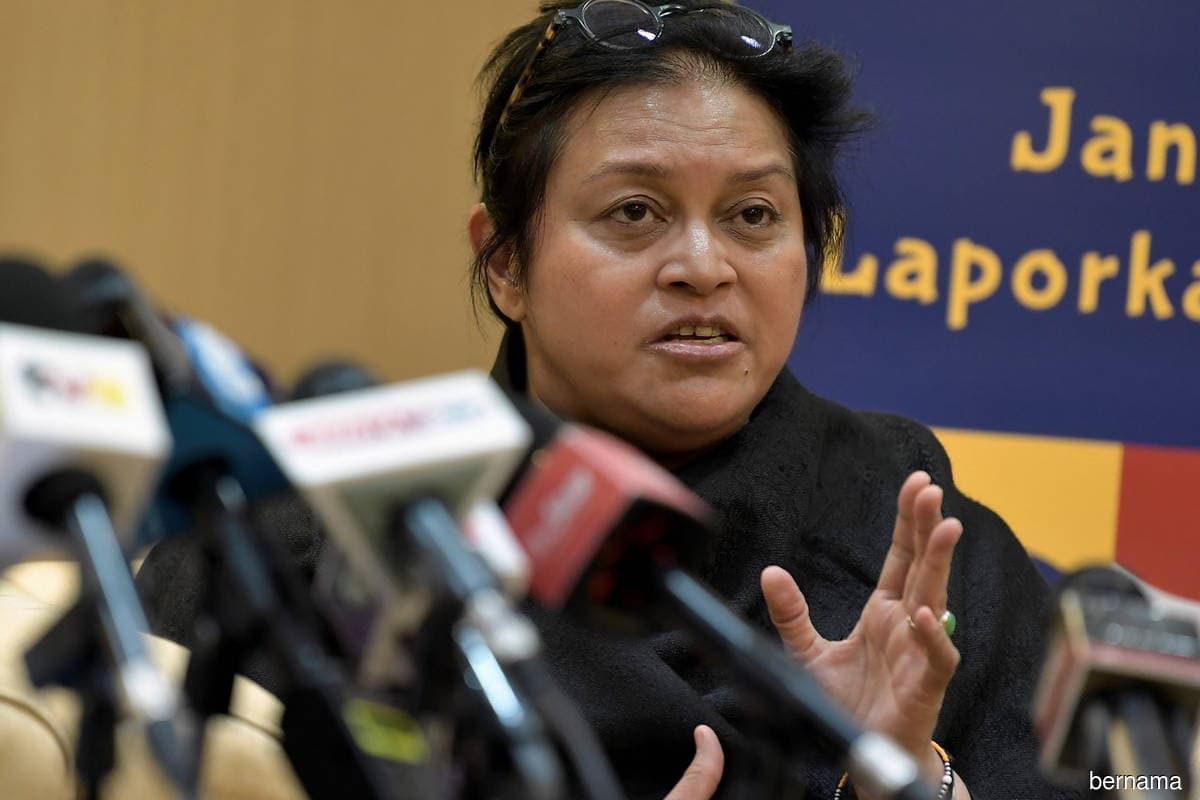
KUALA LUMPUR (March 6): House arrest is already a permissible form of punishment under existing Malaysian law, without the need for new legislation.
In a written parliamentary reply on Wednesday, Minister in the Prime Minister’s Department (Law and Institutional Reform) Datuk Seri Azalina Othman Said said Section 3 of the Prisons Act 1995 grants the minister of home affairs the authority to declare any home, building, or place as a “prison” for detaining inmates.
"In other words, the [home] minister has the power to declare a house as a lawful place to detain prisoners, subject to provisions under the Prisons Act," she noted.
Azalina was responding to Lim Lip Eng (Pakatan Harapan-Kepong), who inquired whether the minutes of the Pardons Board meeting related to former prime minister Datuk Seri Najib Razak could be declassified, and whether Malaysian law permits house arrest as a form of punishment.
Najib is currently serving his jail term after being convicted on seven charges related to abuse of power, criminal breach of trust, and money laundering involving funds from SRC International Sdn Bhd, a former subsidiary of 1Malaysia Development Bhd (1MDB).
He is now seeking to be placed under house arrest through a judicial review, claiming a royal decree was granted to him by the previous Yang di-Pertuan Agong for this, which would compel the government to enforce it.
In response to Lim, Azalina said the minutes from the Pardons Board meeting on Najib had been declassified in January 2025 for the purpose of judicial review proceedings.
She also said Section 43 of the Prisons Act allows the prisons commissioner general to release inmates on licence under specific conditions.
"If these conditions are violated, the inmate may be fined or re-imprisoned," she added, but did not elaborate.
Last October, Prisons commissioner general Datuk Seri Nordin Muhamad was reported as saying that the Release of Prisoners on Licence Programme under Section 43 of the Prisons Act was a key initiative to address overcrowding and allow selected prisoners to be released early under strict conditions. A total of 33,195 prisoners have undergone the programme since 2020, and 2,889 are reportedly still under the programme.
For more Parliament stories, click here.