

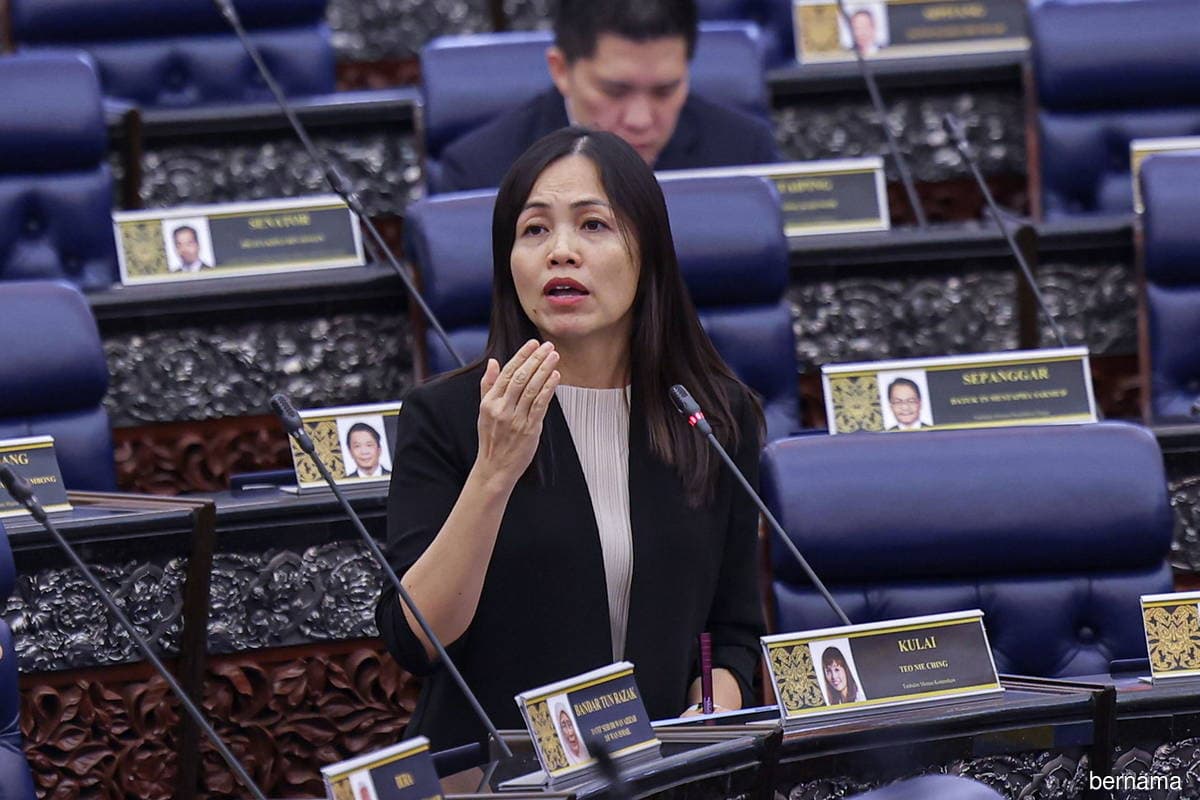
KUALA LUMPUR (Feb 26): Dewan Rakyat on Wednesday approved the Malaysian Media Council Bill 2024, paving the way for the establishment of a self-regulatory body to develop and enforce a code of ethics for journalism.
The bill was passed via a majority voice vote after being presented for its second and third readings by Deputy Communications Minister Teo Nie Ching.
The proposed legislation outlines key aspects of the council, including its functions, powers, membership, chairmanship, governance structure, finances and grievance mechanisms.
Clause 8 of the bill proposes the establishment of the council board, which includes appointing two members by the minister to represent the government. These appointed members must be individuals involved in the media industry.
Clause 9 states that the chairman will be appointed by the board, adding that the person cannot be a member of any legislative body, actively involved in politics, registered with a political party, or be a member of the public service.
Clause 12 provides for a deputy chairman, appointed by board members from among themselves, to assume the chairman's duties when the chairman is unable to perform his or her functions for any reason or if the position becomes vacant.
Clause 15 sets out a regulatory mechanism for handling complaints and grievances, which the council will periodically refine and adopt through general meetings.
Clause 17 proposes the creation of the "Malaysian Media Council Fund", which will be managed and controlled by the council. If the council receives funding from Parliament, it will be subject to the Statutory Bodies (Accounts and Annual Reports) Act 1980. The council may also accept foreign funding — provided there are no conditions attached and the funds are used solely for media-related awareness and education — with the approval of the communications minister.
Following its passage in Dewan Rakyat, the bill will now be sent to the Dewan Negara for debate and approval before being presented for royal assent and enacted into law.
Government representation on the council
During her winding-up speech, Teo said the requirement for two government representatives on the council’s 21-member board is due to fact that the council is accountable to the Communications Ministry.
However, she clarified that these two representatives — nominated by the communications minister — must be individuals involved in the media industry, as stipulated in the bill.
Teo also noted that the pro tem committee had requested government funding to support the council’s operations during its initial establishment phase.
"If this request is approved by the Finance Ministry, it would be reasonable to have a representative from the Finance Ministry on the board to oversee the allocation of funds," Teo said.
She dismissed concerns that the inclusion of two government representatives would undermine the council’s independence, noting that they would make up only a small percentage of the board.
Implementation timeline
Teo added that once the bill is gazetted into law after receiving royal assent, the council’s first general meeting must be convened within six months of the appointment of its founding board members.
She also explained that the council's regulatory mechanism for handling complaints and grievances would be finalised and approved at the general meeting.
"The pro tem committee has already developed a mechanism, but the government believes it would be more meaningful for it to be officially approved at the general meeting," she said.
Teo further clarified that there would be no legal barriers to filing for judicial review against grievance decisions made by the council.
For more Parliament stories, click here.