

This article first appeared in City & Country, The Edge Malaysia Weekly on February 24, 2025 - March 2, 2025
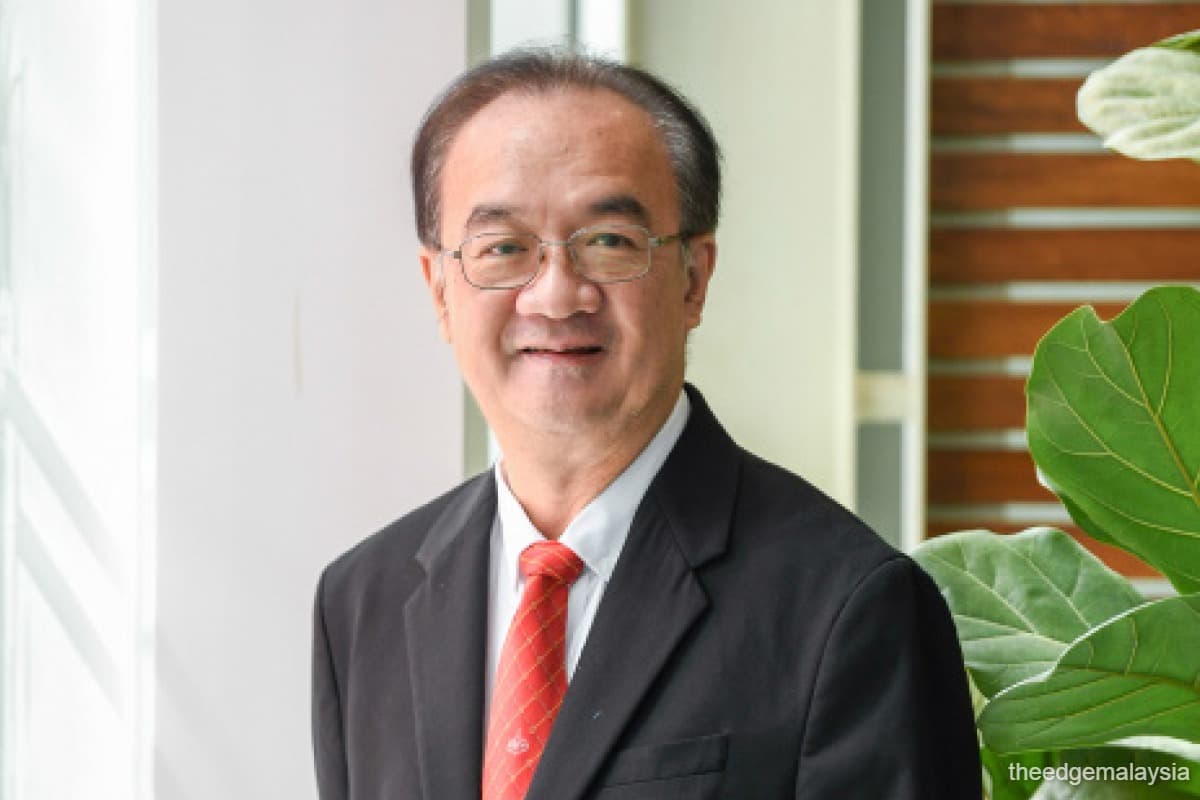
The Johor Bahru property market is on a positive growth trajectory, driven by new project announcements and government initiatives throughout the year, says Olive Tree Property Consultants (Johor) Sdn Bhd CEO Samuel Tan when presenting The Edge Malaysia | Olive Tree Property Consultants Johor Bahru Housing Property Monitor 4Q2024.
The announcements include the launch of the highly anticipated Johor-Singapore Special Economic Zone (JS-SEZ); a potential light rail transit (LRT) line or an autonomous rapid transit (ART) in Johor Bahru and its surrounding districts; and the conversion of private lease scheme units (PLS) to freehold status for Medini Iskandar Malaysia projects.
In providing more information on the recent launch of the JS-SEZ, Tan says: “Malaysia and Singapore officially launched the JS-SEZ with an ambitious target of attracting 100 projects in 10 years. It now covers Iskandar Malaysia, Forest City, Pengerang Integrated Petroleum Complex and Desaru.
“The scopes have been expanded to new priority sectors such as aerospace, electrical and electronics, chemical, medical devices and pharmaceuticals. These are in addition to other sectors such as business services, the digital economy, healthcare, manufacturing, tourism, education, logistics, energy and food security.”
He explains that the JS-SEZ will be operated on a project-by-project basis, where infrastructure will be built as projects, and investments are agreed upon, as opposed to the conventional arrangement of building infrastructure before attracting investments.
There are also special incentives for companies investing in new qualifying manufacturing and services such as artificial intelligence and quantum computing supply chain, medical devices, aerospace manufacturing and global services hubs. These companies will enjoy a special tax rate of 5% for up to 15 years. Besides that, eligible knowledge workers working in JS-SEZ are entitled to a special tax rate of 15% for 10 years.
“This is a step closer to the actual implementation of the ambitious cross-nation initiative,” Tan opines.
However, he says, it was reported that some Singapore manufacturing firms have concerns over the execution of the project-by-project model and whether infrastructure can be completed on time.
“The authorities and the private sector need to have regular dialogues and consultations to ensure timely infrastructure deliverables to match projects’ demand. This approach will benefit established destinations with major infrastructure works — such as road, power, water and internet coverage — ready.
“The tax incentives for qualified companies and individuals are welcomed. Nevertheless, most companies and workers are monitoring closely the actual implementation and the ease to qualify for the tax incentives. In addition, we believe multinational corporations (MNCs) will be looking for more than just tax incentives. Green technology, knowledge and capital-intensive MNCs would probably expect relocation incentives and other special concessions,” Tan elaborates.
Although the Kuala Lumpur–Singapore high-speed rail (HSR) is not included as part of the JS-SEZ initiative at this juncture, Tan is optimistic that such a long-term project would eventually be reconsidered in the future.
“This is especially so when JS-SEZ is successful and such a model is replicated in other parts of Malaysia. There would be more justification for an efficient high-speed rail serving as another spine connecting the nation,” he adds.
Potential market drivers
To further propel Johor Bahru’s property market, Iskandar Investment Bhd, the landowner of Medini Iskandar Malaysia in Johor Bahru, announced plans to extend the option of converting properties under the private lease scheme to freehold. This will be applicable to developers buying vacant land or individual buyers of completed projects.
An earlier report by The Edge Malaysia titled “The end of private lease scheme in Medini?” states that existing registered developers in Medini, for example, have the option to acquire a freehold interest in their land bank from Iskandar Investment, specifically for undeveloped land.
“This is definitely good news for existing property owners and future buyers. With its lease perpetuity and the willingness of banks to finance the resale property, a converted freehold status to the title will increase property resale values. We are given to understand that the premium payable will be nominal for completed units, where serviced apartments will be charged a premium of RM5,000 and RM8,000 for units of less than 1,000 sq ft and above 1,000 sq ft respectively,” Tan says.
“All owners would want to convert their titles to that of freehold. We expect Medini will become a sought-after location again. With its strategic location, good connectivity and excellent infrastructure, developers will be keen to develop and invest in the location again, especially with the JS-SEZ and Forest City Special Financial Zone in the grand scheme of the plan to revitalise Johor Bahru. The market will be watching closely the official announcement on the implementation of such a lease conversion.”
He hopes the administration process of the lease conversion will be simplified.
Elsewhere, in a move to alleviate traffic congestion once the Johor Bahru-Singapore Rapid Transit System (RTS) Link is completed, the federal government has proposed to build an LRT line or an ART tram-bus network in the city and its surrounding areas. Recent news reports have said the two networks could cost RM20 billion and RM7 billion respectively.
Tan welcomes these proposals. “The Johor-Singapore Causeway is one of the world’s busiest land crossings. As at March 2024, 430,000 to 450,000 people use it daily, based on data from Johor Immigration. The figure has exceeded the 400,000 average recorded in 2019, prior to the pandemic. It is therefore important to resolve the potential congestion problem around the RTS terminal when the RTS Link starts operations in about three years.”
However, there are challenges to executing such mega projects, he cautions. “Firstly, private funding will be needed. The details of the funding mechanism, land acquisition, project feasibility relative to the fares, government concession and other operational issues will take time to sort out.
“Secondly, it is not easy to change the habits and mindsets of Malaysians to pivot to public transport. The public transport network needs to be very efficient to encourage the locals to use it. Such an extensive network needs time to develop. Low utilisation of LRT or ART especially during the initial period makes the projects’ viability challenging.
“Nevertheless, we are hopeful that a good public transport system linking various regions within Johor Bahru via LRT or ART and RTS Link will be a transformative move for the economic development of the city in the long term,” Tan adds.
Although things are now looking up for Johor Bahru, he is worried that US President Donald Trump’s expanding of protectionism and escalating of trade war could affect global supply chains, including Malaysia.
“Trump has been threatening to impose a 60% tariff on China’s export and a ‘modest’ universal tariff on all other countries. China has publicly declared that it will retaliate against the US tariff hike while Europe, Canada and Mexico have also expressed their resolve to oppose the US. A prolonged trade war would slow global economic growth, reducing demand for Malaysian exports, especially commodities like palm oil, rubber and natural gas.
“On a brighter note for Asean countries, Malaysia might attract more investment under the China+1 strategy adopted by these companies to avoid tariffs. This was evident during the previous US-China trade war when Southeast Asia, including Malaysia, saw increased foreign direct investment. We assess that the net effect of Trump’s second term is likely to spark more surprises and uncertainties to the already fragile global political and economic landscape,” Tan adds.
Supply and price trends
On the bright side, Tan observes that residential property prices in Johor Bahru have increased compared to the previous quarters in 2024. For landed properties, prices increased by RM20,000 to RM100,000, which is about 3% to 11%, he says.
Double-storey semi-detached homes were the most actively transacted in this quarter with five of the nine developments tracked enjoying price increases. A 3,400 sq ft home in Taman Bukit Indah was sold for RM1.3 million, compared with a similar unit’s RM1.2 million price tag in 3Q2024. In Austin Heights, a 3,595 sq ft unit was sold for RM 1.5 million, versus a similar unit’s RM1.4 million in 3Q2024. Over at Senibong Cove, a 3,780 sq ft home was sold for RM1.7 million, compared with a similar unit’s RM1.6 million in the previous quarter.
For serviced apartments, prices increased by 3% to 6%, Tan says. At Sky Executive, a 750 sq ft unit was sold at RM370,000, a good increase from RM350,000 in 3Q2024. A 797 sq ft unit at R&F Princess Cove Phase 1 was sold at RM700,000, an increase from RM680,000 in the previous quarter. At serviced apartments Twin Tower at Bukit Chagar, an 872 sq ft unit was sold at RM800,000, an increase from RM780,000 previously.
Rental rates, on the other hand, remained the same across all residential property types. Tan adds, “As a result of price increases and stabilising rental, most projects witnessed marginal yield compression.”
While some projects managed to maintain their yields, a few witnessed marginal decreases.
Launches in 4Q2024
There were seven launches in 4Q2024, of which five were of landed properties and two were of serviced apartments.
At Taman Impian Emas in Tebrau, Gunung Impian Development Sdn Bhd launched Iconia Garden Residence. The 111 double-storey terraced houses have land areas of 1,920 to 3,568 sq ft and built-ups of 2,344 to 2,710 sq ft with selling prices starting from RM850,000. This project has been fully sold.
At Setia Eco Gardens in Pulai, S P Setia Bhd (KL:SPSETIA) unveiled a double-storey terraced housing development named Pine 3. Consisting of 131 units, these homes have a land area of 1,170 sq ft and built-ups of 1,445 to 1,502 sq ft with selling prices starting from RM649,000. Tan says the project has been about 80% taken up.
Also at Pulai, Horizon Hills Development Sdn Bhd launched The Peak, comprising 85 units of three-storey cluster homes, three-storey semi-detached homes, three-storey bungalows and double-storey link homes. These units have land areas of 1,875 to 7,065 sq ft and built-ups of 2,851 to 4,690 sq ft with selling prices ranging from RM1.366 million to RM3.95 million.
WM Senibong Sdn Bhd introduced The Kews (Phase 1) at Iskandar Puteri, comprising 64 double-storey cluster homes that come with land areas of 1,400 to 1,980 sq ft and built-ups of 2,003 to 3,433 sq ft. Prices range from RM1.063 million to RM1.633 million.
At Bandar Permas Jaya, BRDB Permas Jaya Sdn Bhd launched The Straits View Garden Phase 2. This project offers 64 double-storey cluster homes that have land areas of 2,100 to 2,240 sq ft and built-ups of 2,210 to 2,429 sq ft. Prices range from RM1.45 million to RM1.76 million. To date, the project is 30% taken up.
As for serviced apartments, at Kebun Teh, Exsim Kebun Teh Sdn Bhd launched The Asteriaz, featuring 848 units that come in built-ups of 560 and 915 sq ft with prices ranging from RM491,400 to RM713,900. Tan says the project has been 100% sold.
At Johor Bahru city centre, Kuala Lumpur-based Majestic Gen Sdn Bhd launched its maiden project — a serviced apartment project called Gen Rise. Comprising 732 units, the development offers six different layouts with built-ups of 497 to 1,930 sq ft. Selling prices range from RM560,000 to RM2.13 million. About 90% of the project has been sold.


Save by subscribing to us for your print and/or digital copy.
P/S: The Edge is also available on Apple's App Store and Android's Google Play.