

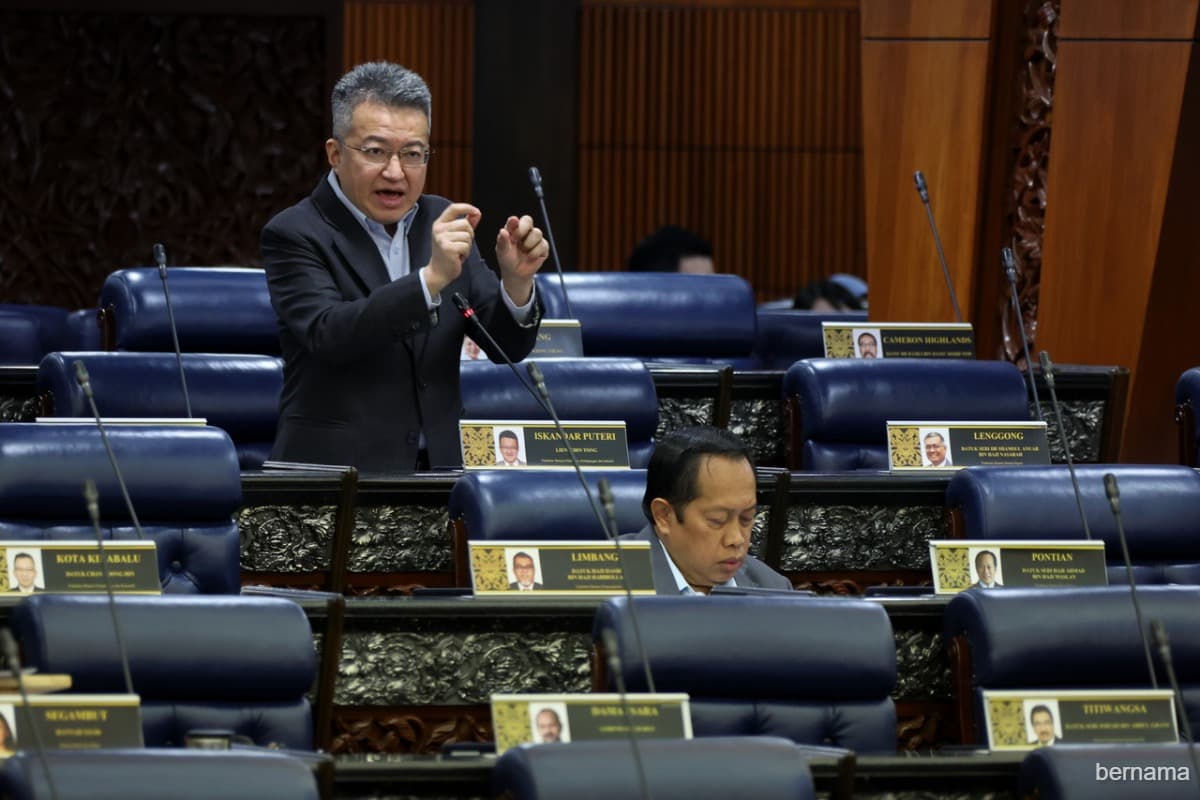
KUALA LUMPUR (Feb 19): The local semiconductor industry is expected to remain unaffected by the impending US export restrictions on advanced artificial intelligence (AI) chips, but the development of high-end data centres in Malaysia could face potential disruptions, according to Deputy Minister of Investment, Trade and Industry Liew Chin Tong.
Liew told the Dewan Rakyat on Wednesday that this, however, is limited to a few as not all data centre projects in Malaysia require cutting-edge AI chips as many facilities operate without the need for such high-performance processors.
“The semiconductor ecosystem will not be disrupted [following the impending US export restrictions]. However, the ecosystem involving the most advanced AI-driven data centres may face potential impact from the newly announced US framework, although it has yet to be implemented,” Liew said in response to questions from Pang Hok Liong (Pakatan Harapan-Labis).
The deputy minister added that several data centres in Malaysia primarily handle media processing, cloud storage, or other forms of data that do not involve AI-powered large language model (LLM) processing.
As of December 2024, Malaysia had 18 operational data centres, with the number projected to rise to 81 by 2035.
Pang had asked about the potential impact of the US export control measures on Malaysia’s ambition to become a regional data centre hub. He also inquired about the government’s strategies to mitigate risks arising from the restrictions.
This came as on Jan 13, the administration of former US president Joe Biden introduced the “Export Control Framework for Artificial Intelligence Diffusion”, which placed Malaysia in Tier 2. This categorisation limits Malaysia’s access to advanced AI chips, such as graphics processing units (GPUs), to a maximum of 50,000 units over two years.
Following his inauguration, newly elected US President Donald Trump revoked a 2023 executive order issued by Biden, which was aimed at mitigating AI-related risks to consumers, workers, and national security. However, the AI diffusion export rule remains under a 120-day public comment period.
The rule is expected to take effect as early as May 15, providing the Trump administration time to review or potentially intervene.
“Although our country relies on the US market for semiconductor exports, the government is committed to expanding and diversifying market access to other regions, including Asean and the Middle East,” Liew said.
“This is part of the government’s mission to reduce reliance on the US market and broaden Malaysia’s semiconductor export destinations.”
For more Parliament stories, click here.