

KUALA LUMPUR (Feb 4): The government is considering several proposals to enhance the Whistleblower Protection Act 2010 (Act 711) particularly on the application of laws concerning confidentiality of whistleblowers.
The proposals include enhancement of investigative efficiency, the introduction of a standardised reward scale for whistleblowers, and the expansion of physical protection measures through the Witness Protection Programme under the Witness Protection Act 2009 [Act 696].
The government is also considering forming a task force as a transitional step towards establishing a central agency to coordinate and strengthen governance related to whistleblower protection.
The proposed enhancements are based on international best practices, and also touches on mechanisms for revoking protection, and safeguarding enforcement agencies that may need to disclose whistleblower identities, according to Minister in the Prime Minister’s Department (Law and Institutional Reform) Datuk Seri Azalina Othman Said.
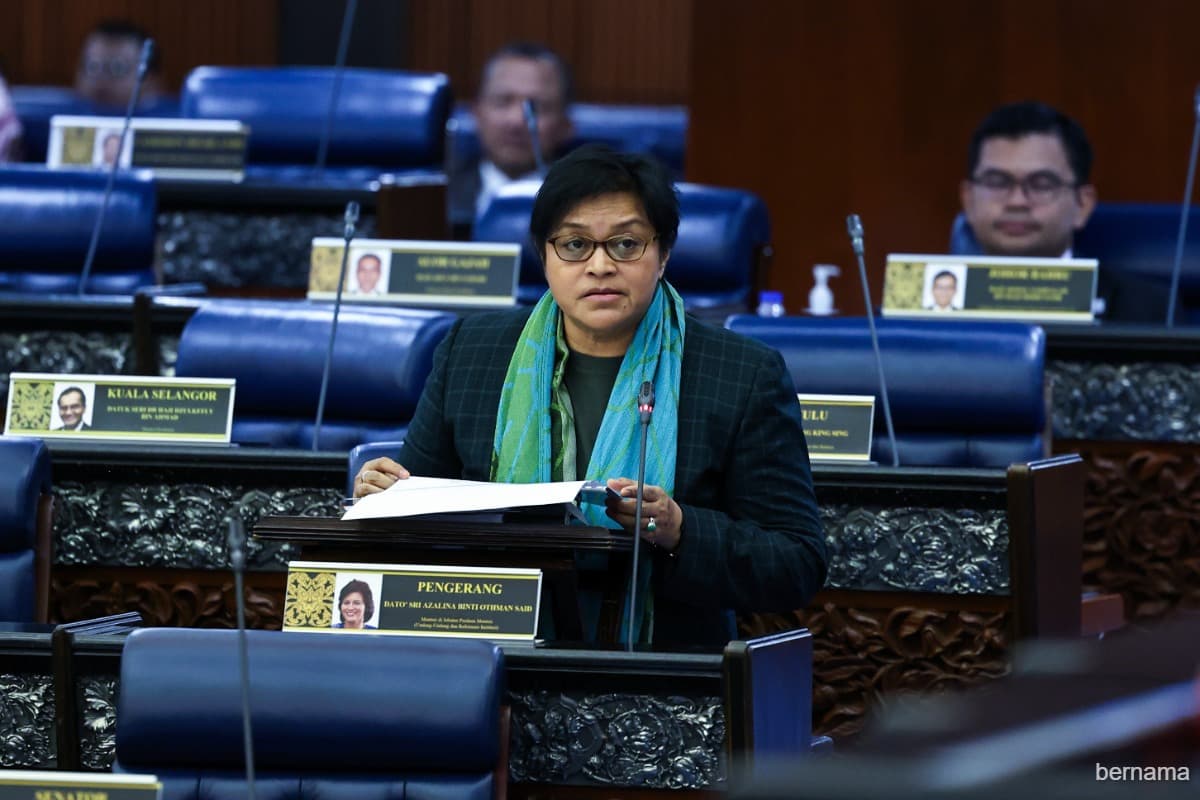
“Several policy proposals are being considered for the Cabinet’s review, hopefully at the upcoming meeting. If agreed upon, the amendments can be tabled in Parliament during this session,” Azalina (BN-Pengerang) responded to Teresa Kok (PH-Seputeh) during the oral question and answer session in the Dewan Rakyat on Tuesday.
On specific sections of the Act, Azalina explained that amendments to Section 6 aim to prevent overlaps with existing legislation and encourage the reporting of misconduct without legal barriers.
Currently, Section 6 allows individuals to disclose improper conduct to any enforcement agency based on reasonable belief, provided such disclosures are not explicitly prohibited by other laws.
Meanwhile, proposed changes to Section 11 seek to refine conditions for revoking whistleblower protection, allowing for extended protection if disclosures are made in good faith and without personal interest. The current provision permits revocation if disclosures are deemed frivolous, vexatious, or malicious.
Section 8 pertains to the protection of confidential information, while Section 14 mandates comprehensive investigations into complaints of detrimental actions.
No protection if information made public before reporting to enforcers
Azalina also highlighted that the Whistleblower Protection Act applies exclusively to disclosures made through enforcement agencies, and expanding this scope would require further government studies.
She emphasised that individuals acting as whistleblowers cannot expect protection under the Act, if they disclose information publicly before reporting it to the relevant enforcement agencies.
“We cannot expect protection after going to the public domain. Sometimes, whistleblowers may not act in good faith, which is why disclosures must be made to enforcement agencies first,” Azalina said.
"We wanted agencies to be the trigger point for the evaluation. If they are not enforcement agencies — under the current law — we will face problems because it is the enforcement agencies that will determine whether the information is needed or not," she added.
Azalina was responding to an additional question from Teresa Kok, who referenced a viral video in Sabah involving a whistleblower who exposed information publicly before lodging a report with the Malaysian Anti-Corruption Commission. The audio clip allegedly featured a politician discussing a bribe received in exchange for supporting a state project.
“The disclosure was made publicly before the whistleblower reported it to an enforcement agency. In this context, the whistleblower cannot be protected under Subsection 7(1) of the Act 711. At present, there are no proposals to amend the Act to cover disclosures made to the public before reporting to enforcement agencies,” Azalina said.
For more Parliament stories, click here.