

This article first appeared in The Edge Malaysia Weekly on January 27, 2025 - February 2, 2025
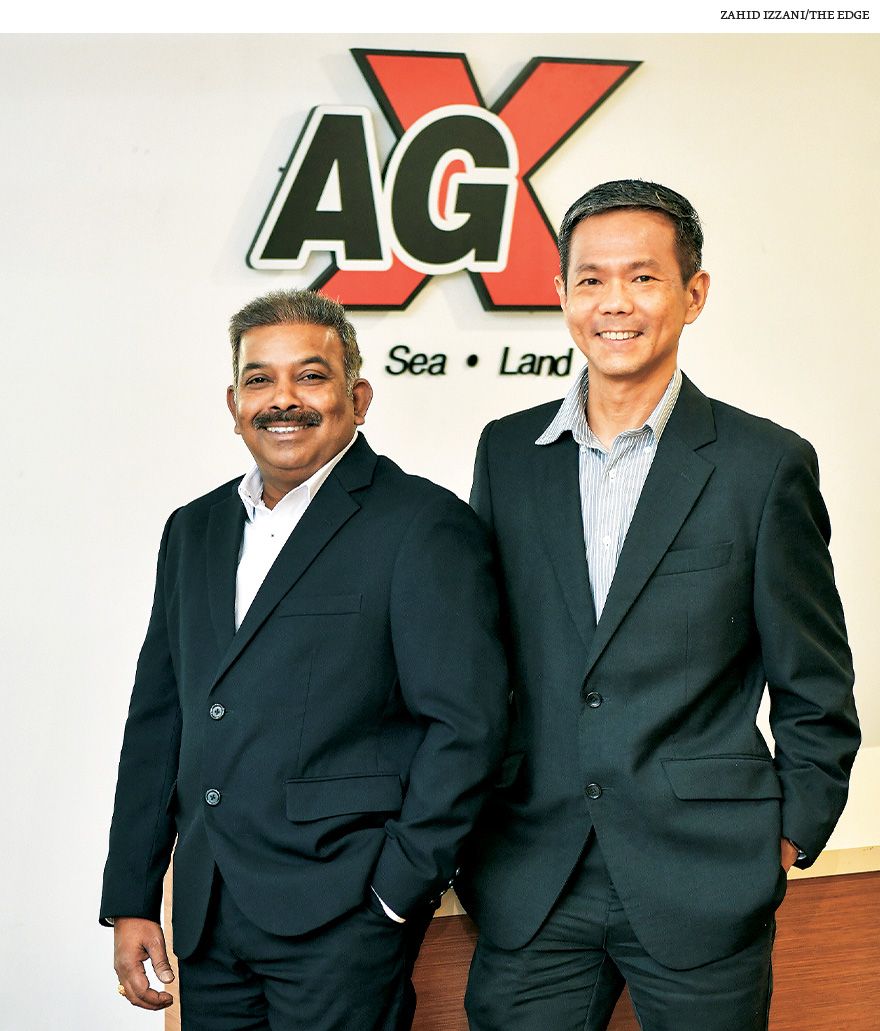
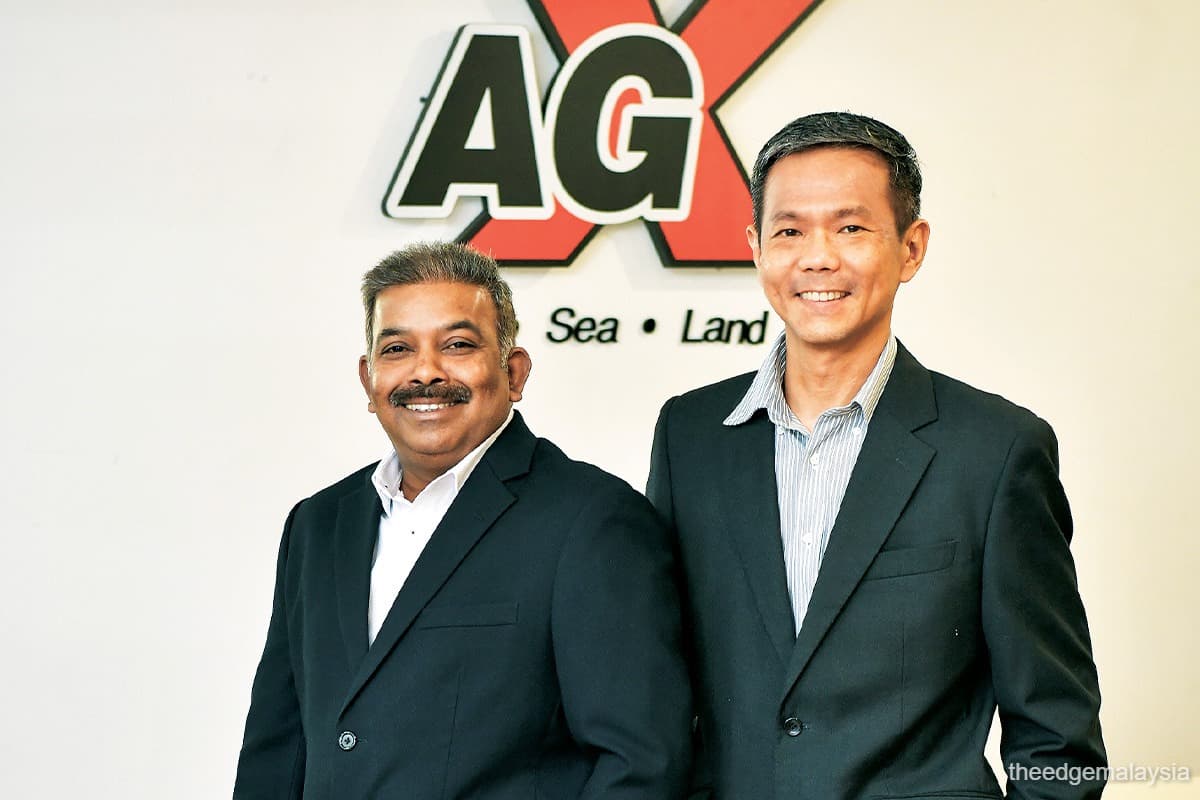
AGX Group Bhd (KL:AGX), which debuted on Bursa Malaysia’s ACE Market about a year ago, expects its aerospace logistics business to see more business volume on the back of increased travel demand and its fleet rejuvenation exercise.
According to AGX co-founder, group CEO and executive director Datuk Ponnudorai Periasamy, gross profit margins for the aerospace logistics segment are relatively higher at between 30% and 40%, compared with the 20% to 30% for the sea and air freight forwarding segments.
“Margins for aerospace logistics are definitely better as the business operation is time critical and sensitive. We need to bring [the parts] to the customers as fast as we can … We are getting more customers for this segment,” he tells The Edge in an interview.
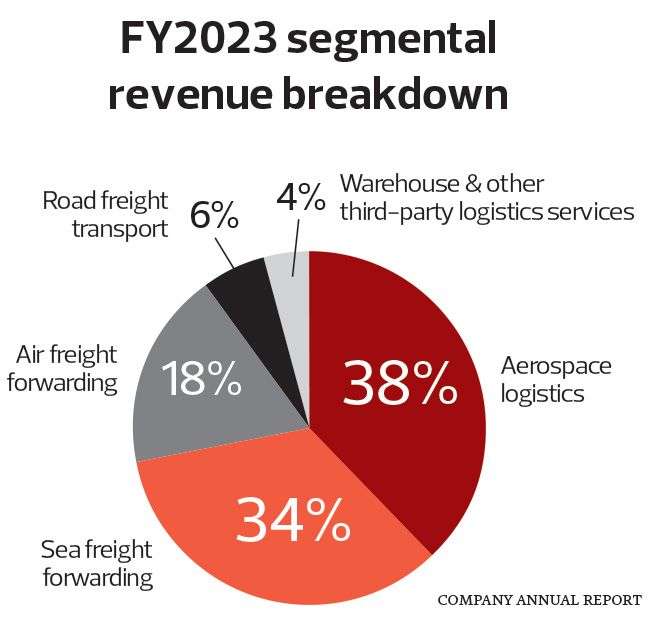
Revenue contribution from this segment jumped 38% in the financial year ended Dec 31, 2023 (FY2023), and is expected to rise further to between 41% and 44% in the coming years. This compares with only 13% in FY2022.
Under its aerospace logistics segment, AGX manages air freight for aircraft parts, components and equipment, ensuring the smooth execution of routine and scheduled maintenance for clients’ fleets of aircraft.
Ponnudorai notes that among the supporting factors for this business segment are rising demand for maintenance, repair and overhaul (MRO) services, strategic agreements as well as industry recovery and fleet rejuvenation. It has three aerospace logistics teams operating in Malaysia, Singapore and the Philippines.
Last November, AGX entered into a deal to provide round the clock freight forwarding and customs brokerage services to Capital A Bhd’s (KL:CAPITALA) MRO unit Asia Digital Engineering Sdn Bhd (ADE) for a two-year period. This came as ADE launched its 14-line MRO hangar in the KLIA Aeronautical Support Zone 1.
“It [ADE] also wanted to expand to have another seven-line hangar. With this expansion, it will be able to service all AirAsia aircraft,” says Ponnudorai.
He observes that the increased demand for MRO services has been underpinned by a rebound in air travel, a record-high backlog of aircraft orders and a global shortage of new aircraft.
This, in turn, has increased the reliance on aircraft on ground (AOG) services. When there are technical issues, airline operators have to get their aircraft back into service as soon as possible.
With global air travel demand projected to grow 5% to 10% annually until 2026, Ponnudorai believes this will put the company in a favourable position to capitalise on this opportunity.
In 2024, AGX opened offices in Vietnam and Thailand, with plans to open an office in Indonesia this year.
“Currently, we are handling some airlines for Indonesia from the Malaysian office. We need to open our own office there so that we can venture into other segments,” he says.
Ponnudorai sees Vietnam as a key market for the aerospace logistics segment and the company is looking to secure a few big customers there.
Sea freight forwarding, however, is poised to be the largest revenue contributor for FY2024 due to the significant increase in sea freight rates in the first half of last year as a result of disruptions in key maritime routes such as the Red Sea, Suez Canal and Panama Canal, according to AGX chief financial officer Chang Poh Sheng. Nonetheless, the rates have since normalised and become more stable, he adds.
Chang observes that there has been some frontloading activity by its client in the sea freight forwarding segment to mitigate the potential impact from the imposition of new tariffs under US President Donald Trump’s administration.
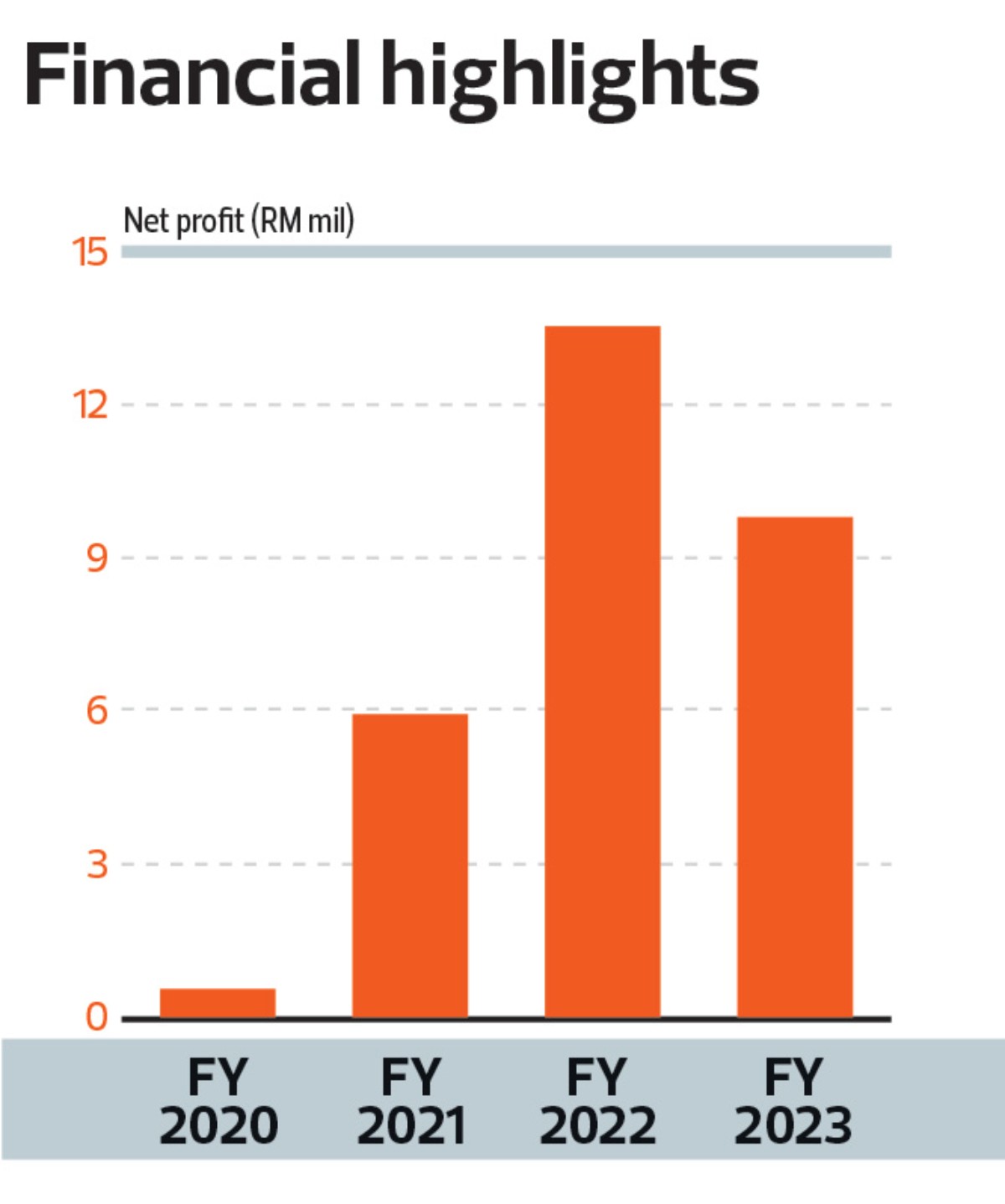
For 9MFY2024, AGX reported a net profit of RM5.49 million, down 40.1% from RM9.16 million in the same period a year earlier, mainly due to listing expenses, foreign exchange (forex) losses and higher manpower costs for the aerospace logistics business.
Chang says the negative forex impact had already eased in 4QFY2024, and the company will continue to adopt a natural hedge policy to mitigate forex fluctuations. For FY2025, he expects AGX to register a better performance on the back of its expansion plans and the absence of expenses related to its initial public offering (IPO) and setting up of warehouses in FY2024.
“We easily incur losses for three to six months after setting up new warehouses. Only then, can we see the volume slowly ramping up,” he adds.
Since its IPO, AGX has increased the number of warehouses from nine to 15 — five in the Philippines and one in Port of Tanjung Pelepas in Johor. The company is on the lookout for a suitable site to set up a warehouse in Penang to strengthen its presence in the northern region. It is also looking to set up more warehouses in the Philippines and South Korea.
As more time is needed for the setting up of its Penang warehouse, AGX has extended the time frame for the utilisation of the RM6.93 million allocated for business expansion that has yet to be utilised from its IPO proceeds, by another 12 months until Feb 6, 2026.
AGX has a presence in eight countries — Malaysia, Singapore, Thailand, Vietnam, Cambodia, the Philippines, Myanmar and South Korea. This will reduce the concentration risk for the company, says Chang.
The Philippines and South Korea are two major overseas markets for the company, collectively accounting for half of its revenue, while Malaysia contributes 12%.
He notes that the US-China trade war has benefited the Philippines and Vietnam as many Chinese companies have been relocating their operations to these two countries. Having said that, he is of the view that the Malaysian operation still has the potential to play catch up and grow as big as the operation in the Philippines.
Ponnudorai does not rule out the possibility of undertaking mergers and acquisitions that are related to its logistics business as it looks to expand its reach. At the same time, AGX will continue to adopt an asset-light business model, focusing on freight forwarding over asset ownership, he stresses.
“We lease all our warehouses. We don’t own any properties. Our customers might change over time, so when you have a certain type of warehouse, it may only be suitable for a certain industry. When you secure customers from other industries, then it may not suit them,” he explains.
Last month, Phillip Capital initiated coverage on AGX with a “buy” rating and target price of 84 sen, based on a price-earnings ratio of 15 times 2025 earnings per share, representing a 20% premium to its Malaysian-listed freight peers.
“Among its attractive growth prospects are growing demand for sea and air freight services from existing and new customers, a positive outlook from All-Link’s [China-based logistics provider] newly secured customer, sustained high freight rates and its unique positioning in aerospace logistics, benefiting from AirAsia’s expanding fleet and the post-pandemic surge in maintenance needs and delivery backlogs,” the research house says in a Dec 3 note.
AGX has adopted a dividend policy with a payout ratio of up to 30% of its profits. It paid a 0.45 sen dividend per share for FY2023, translating into a 12-month dividend yield of 0.9%.
At end-September 2024, the company had cash and bank balances of RM23.46 million, as well as loans and borrowings of RM34.47 million.
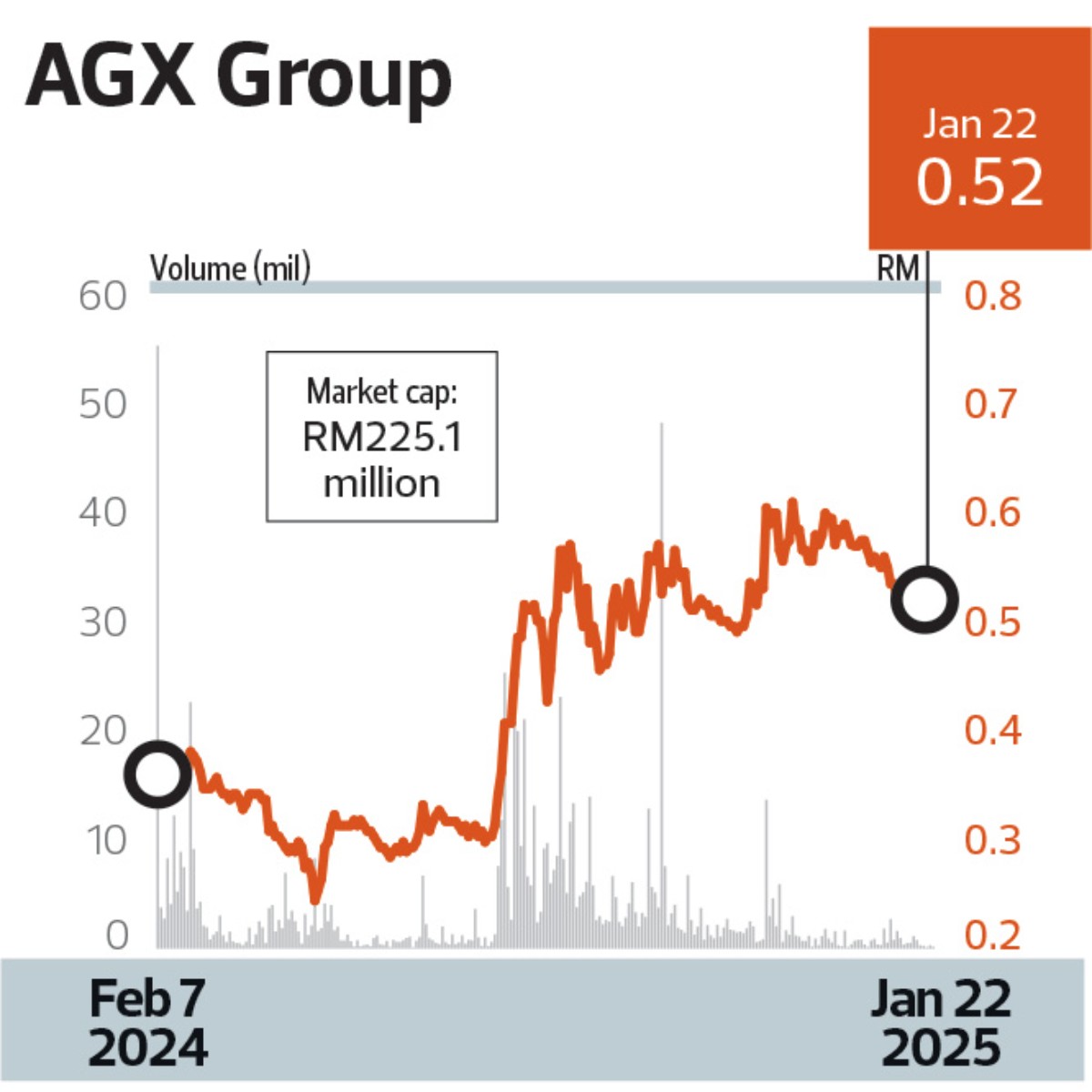
AGX’s share price closed at 52 sen last Wednesday, up 48.6% from its IPO price of 35 sen. This valued the company at RM225.1 million.
Ponnudorai has an 11.54% stake in AGX. Other substantial shareholders are co-founder Peter Neo Lip Pheng (18.22%) and executive directors Penu Mark (18.39%) and Jayasielan Gopal (11.54%).
Save by subscribing to us for your print and/or digital copy.
P/S: The Edge is also available on Apple's App Store and Android's Google Play.