

This article first appeared in City & Country, The Edge Malaysia Weekly on February 3, 2025 - February 9, 2025
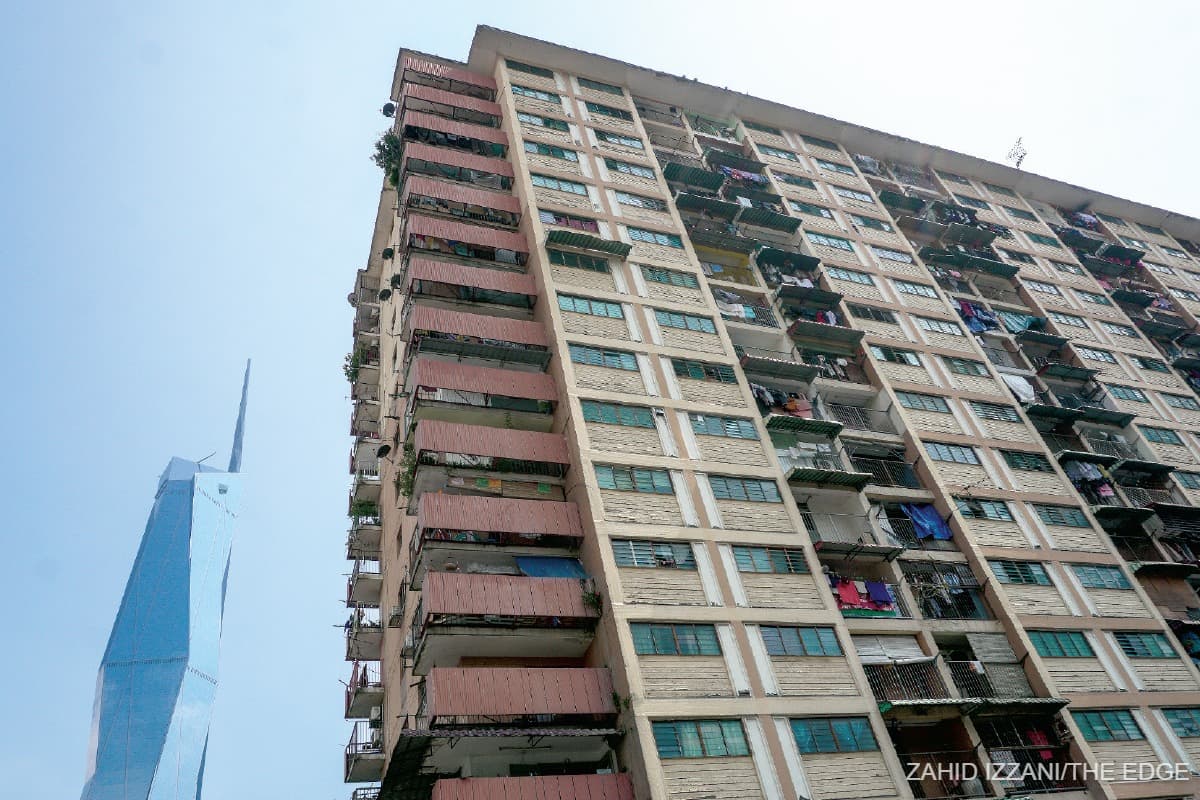
While skyscrapers and modern developments define the city skyline, hidden within the Klang Valley are ageing neighbourhoods, dilapidated sites and underserved communities that have long been left behind.
Despite Malaysia’s rapid urbanisation, poverty as well as poor living and working conditions remain an issue in Kuala Lumpur. Informal settlements, run-down public housing and overcrowded low-cost flats make up a significant portion of the city’s urban slums.
What exactly is an urban slum and how can the area be regenerated? City & Country reached out to property experts Nawawi Tie Leung Property Consultants Sdn Bhd director Saleha Yusoff, Henry Butcher Real Estate Sdn Bhd chief operating officer Tang Chee Meng and CBRE | WTW group managing director Tan Ka Leong and advisor Foo Gee Jen to delve further into the topic.
In an urban landscape like the Klang Valley, badly dilapidated areas are often referred to as urban slums, says Saleha. “A slum is typically defined as a densely populated urban area characterised by substandard housing and squalor. These areas often lack basic services and infrastructure and are marked by poverty, social exclusion and various forms of deprivation.
“Urban slums are driven by rapid urban population expansion triggered by rural-urban migration and population growth with the lack of housing options that are generally affordable. It started with informal settlements, where settlers built houses without formal permission from landowners and used materials and building standards that are not aligned with the building codes.”

Identifying sites for regeneration
The need for regeneration in urban slums arises from the necessity to improve living conditions, promote social inclusion and provide economic opportunities for residents, says Saleha.
Tan says the regeneration of slum areas in the Klang Valley is a crucial step towards a more equitable and prosperous city. “These areas have been neglected for far too long, and it’s time to unlock their potential and create a more equitable city. Several areas have been identified, such as Taman Ikan Emas in Cheras, Pudu, Chow Kit and some parts of Sentul, that require substantial redevelopment to improve living conditions and economic opportunities.”
How are these areas identified and who determines the need for redevelopment? Launched November 2023, the Kuala Lumpur City Hall’s (DBKL) Kuala Lumpur Structure Plan (KLSP) 2040 report identified 139 areas in the city, spanning 1,372 acres, that are ripe for redevelopment or regeneration. These are brownfield areas with non-economic usage, old industrial areas, areas that could result from investment in transit infrastructure as well as river conservation, among others.


The report defines brownfield areas as dilapidated public and private housing areas; markets, food courts and hawker areas; dilapidated residential areas; dilapidated industrial areas; and dilapidated commercial areas.
Of the 139 areas listed, 91 are residential, 14 are commercial, 14 are institutions and public facilities, three are industrial, 15 are infrastructure and utilities, one is a train station and one is a mixed-used development.
Selangor Menteri Besar Datuk Seri Amirudin Shari said last February that the state government was looking to redevelop ageing housing areas in districts such as Petaling Jaya, Klang and Hulu Langat. Because the consent threshold of strata properties is at 100%, however, the local governments found it difficult to carry out renewal projects.
Some of these are not necessarily “urban slums”, says Saleha, as the buildings are still in good condition. “Among the reasons cited to redevelop some of these residential schemes are to increase the economic value of the land by going for higher density and mixed use as well as providing more decent units, from a built-up area of 550 sq ft to a more acceptable size of 850 to 1,000 sq ft and a better living environment for the residents.
“Some of these low-cost flats are in poor quality due to inadequate funding for maintenance and repair works, resulting in further building decay. To keep prices low, the complexes were poorly designed using low-quality construction materials, which have exacerbated the deteriorating conditions. This is more severe in complexes of higher densities. These factors pose a threat to positive living conditions and increase the costs of maintenance to those who own the units,” she notes.
CBRE | WTW advisor Foo Gee Jen is of a different view from the KLSP 2040 report, which has listed 139 sites for potential redevelopment. In an earlier report by The Edge titled, “Housing Ministry: Urban Redevelopment Act being drafted; 139 potential redevelopment sites in KL”, it was stated that the Ministry of Housing and Local Government engaged with various agencies and local authorities, such as DBKL, to identify areas that are in need of redevelopment and the result of that is the 139 sites. These areas will be earmarked for redevelopment when the Urban Renewal Act is implemented.
“To me this is not the right way, that should not be the spirit of the Urban Renewal Act. Because [it is important to] understand and respect the rights of individual owners, it must always be upheld.”
Foo argues that property owners have the fundamental right to decide what happens to their private property, and external authorities or property consultants should not impose redevelopment decisions on them. He emphasises that even if an area is old, in poor condition, or has social issues, it is not up to outsiders to declare it unfit for living or mandate redevelopment. Instead, the initiative for any changes should come from the residents themselves, as this aligns with the principles of democracy and individual rights.

Foo cites an example of a project called Desa Kudalari that was developed in the 1970s. “This was the very first high-end condominium in Kuala Lumpur, it was opposite the former Selangor Turf Club, which is where the Petronas Twin Towers is situated today. This was a low-density development. Then after the Persiaran KLCC MRT station came into the picture, some of the residents felt that it was right to push the condominium for further redevelopment.,” he says.
Then the joint management body (JMB) of Desa Kudalari engaged with the consultancy firm to act as their representative to seek potential buyers for the project in April 2016. However, the plan was dropped because they could not get 100% consent from all the residents.
But the lesson from this instance is what Foo suggests should take place when it comes to redevelopment exercises.


Saleha adds, “In any urban renewal project, it would be good for the local authority to crowd-source ideas from the affected residents before initiating any redevelopment projects. Uprooting the residents from their existing houses not only have physical and economic implications — they will have to resettle away from their workplace which might not have good public transportation — but also social implications or uprooting their livelihood and communities they are more familiar with.”
On how residents of privately-owned properties can initiate redevelopment, Foo suggests, “When redeveloping, residents should remember that maximising land use and their social welfare should be the priority. Urban redevelopment in other countries follows structured processes to ensure fairness, and similar mechanisms should be in place here. The sale of a site should be endorsed by an independent tribunal appointed by the government, and a stringent valuation process should be conducted. At least two independent valuers, along with a government valuer, should verify the valuation to ensure fairness.”
Foo adds that the bidding and tender process for land sale must be handled transparently by qualified, registered estate agents. These steps are crucial to maintaining transparency and ensuring that everyone’s interests are protected.
One of the listed sites for potential redevelopment is Kampung Baru. City & Country reached out to Fuad Fahmy, a fourth generation Kampung Baru resident, to understand his perspective.
“In my personal view, we have lived alongside and evolved with Kuala Lumpur for the past 135 years. I believe Kampung Baru should develop organically over time.
“I think Kampung Baru should continue in this way because people shouldn’t be forced to sell their land and redevelop it according to someone else’s desires. Those who prefer to maintain their way of life for future generations should be allowed to do so.
“The government, especially the ministries, frequently emphasise sustainable development — it’s a key topic in many conferences held in Malaysia. Since Kampung Baru is just a stone’s throw away from KLCC, why not recognise and support this form of sustainable development? Kampung Baru is a development that preserves the community and its heritage,” Fuad comments.
What it takes to regenerate the Klang Valley
The practice of regeneration or renewal is not a foreign concept in Malaysia. Over the decades, there have been several successful urban renewal projects, ranging from shophouses to large mixed-use developments.
Notable projects include Mid Valley City, KL Eco City, Bangsar South and KL Sentral in Kuala Lumpur. All four developments are former low-cost housing areas that received an upgrade and whose residents were relocated to nearby areas. With meticulous planning, the sites have been transformed into the successful mixed-use developments that they are today.
As for squatter settlements, Saleha says the land — typically belonging to the government — is occupied illegally. “As more people moved in, there tended to be social and health problems, hence the need to regenerate the areas. In this situation, the land owner or government will either relocate the squatters or offer them houses as part of the regeneration scheme, depending on the suitability of the land for residential or commercial development.
“An example is Kampung Kerinchi, where DBKL demolished the squatter settlements in the 1990s and built low- and medium-cost flats. Then, in 2005, DBKL sold the remaining land to UOA Development Bhd (KL:UOADEV), which took the lead to develop the area, which is known today as Bangsar South.”
The examples mentioned above required 100% consent from the existing tenants or owners of the land, under the Strata Titles Act 1985 (Section 57). However, not all attempts have been successful.
According to an article by The Edge headlined “Urban Renewal Act: Finding a balance between progress and societal needs”, in most cases, efforts to get all the owners to agree to sell their parcels to a developer ended with a few holding out. As a result, the buildings remain in their current state — a neglected eyesore.

In some instances, owners have left non-stratified buildings or sites neglected. Over time, this neglect could contribute to the emergence of urban slums.
CBRE | WTW’s Tan says, “When property owners cannot be located, the government can utilise compulsory acquisition under the Land Acquisition Act 1960 or issue management orders to take control of neglected properties while providing future compensation to identified owners.”
Henry Butcher’s Tang says, “It would be difficult to proceed if some of the owners cannot be located and their agreement is not obtained for the redevelopment. The government is working on the Urban Renewal Act, which will be tabled in parliament later this year.
“The proposed Act aims to reduce the consent threshold to 80% for buildings less than 30 years old, 75% for older buildings and 51% for buildings deemed unsafe or abandoned. This will help facilitate the redevelopment of sites where a small number of owners are either not in favour of redevelopment or cannot be found.”
Meanwhile, Tan says community-driven initiatives, public-private partnerships, special-purpose vehicles and temporary-use agreements can help facilitate urban regeneration efforts.
It should be noted that such legislation comes with challenges. “The current legislative framework for property regeneration in Malaysia faces several challenges, such as a lengthy legal process, insufficient funding, fragmented ownership, inadequate enforcement, community opposition, bureaucratic hurdles, limited incentives and coordination issues among stakeholders,” he elaborates.
“To facilitate more effective regeneration projects, Malaysia could implement new or improve existing legislation and guidelines related to community land trusts and affordable housing. These initiatives would promote the development of affordable housing, streamline the redevelopment of underutilised sites and provide zoning incentives for public amenities. Strengthening these frameworks would create a more supportive environment for sustainable urban renewal and ultimately enhance the quality of life for residents.”

Learning from examples
While it is noteworthy that the government acknowledges the importance of urban renewal in the city, the property consultants suggest that it also learn from its neighbours how to effectively implement policies and strategies, thus allowing seamless and successful urban regeneration.
Tang suggests that Malaysia should take cues from countries with well-established legislation and policies on urban renewal and redevelopment.
“It is useful for Malaysia to learn from the experience of countries [such as the UK, the US, China and Singapore], as their urban redevelopment policies and strategies have evolved over time to address various challenges encountered along the way,” he says.
Malaysia could adopt the positive aspects and avoid the pitfalls that those countries faced during the redevelopment process.
“This will expedite and smoothen the redevelopment process and help in cost optimisation as a result of implementing the most effective programmes,” says Tang.
Meanwhile, Saleha and Tan note some of the relevant policies in those countries that Malaysia could learn from.
“In Singapore, the Urban Redevelopment Authority Act 1989 established the Urban Redevelopment Authority (URA), which governs all redevelopment lands and projects. The URA prepares and executes proposals, plans and projects for the clearance, development and redevelopment of land with conditions,” says Saleha.
These conditions stipulate that at least 80% of owners’ consent or applications are required to redevelop a strata-titled development for collective sale. Specifically, 80% consent is needed for developments over 10 years old and 90% consent is required for those under 10 years old, based on the share value.
Tan notes that Hong Kong’s Building Management Ordinance promotes collective responsibility of the buildings’ upkeep among property owners while the Revitalisation Scheme encourages property owners to invest in refurbishing dilapidated buildings.
The Building Management Ordinance provides the legal framework for the formation of owners’ corporations to facilitate effective building management. The Revitalisation Scheme, introduced in 2008, is a government initiative to repurpose historic government-owned buildings by inviting non-profit organisations to repurpose the buildings and use them for social enterprises.

Benefits of regeneration
According to Saleha, urban regeneration can have a significant impact on the property values of an area that has undergone revitalisation. She cites, for example, the PPR Pantai Permai units in Pantai Dalam, Kuala Lumpur.
“We analysed the transactions of units at PPR Pantai Permai, adjacent to Bangsar South. We noted that the PPR is served by the Universiti station (part of the Kelana Jaya LRT Line), which is about six minutes away by car. A unit was sold at RM42,000 in 2004, and the average transacted price in 2023 was RM218,929, reflecting a compound annual growth rate (CAGR) of 9%.
“This scheme benefits not only from its connectivity by LRT but also from the business activities in Bangsar South, which offer good employment opportunities in the neighbourhood. As such, there is a high demand for rental property, hence the increase in property values.”
Besides higher property values, the other benefits include improvement of infrastructure; economic development such as heightened commercial activity with new businesses and job creation; upgraded public amenities and facilities, environmental improvement, health and well-being; educational opportunities; increased social equity; and enhanced local identity and pride.
“Overall, the regeneration of urban areas can lead to a wide range of positive impacts that extend beyond mere property value increases, fostering more vibrant, inclusive and sustainable communities,” says Saleha.
While urban regeneration typically makes a positive impact on the surrounding area, the benefits are often intertwined with gentrification issues, such as the increase in living costs and displacement of existing residents, she highlights.
“The overall impact of urban regeneration on property values is influenced by a complex interplay of factors, including the scale of the project, the local economic environment and the specific measures taken to ensure inclusive growth and prevent negative outcomes such as gentrification and displacement.”
To address the aforementioned issues, says Henry Butcher’s Tang, social integration should be prioritised by ensuring that existing communities are not marginalised.
“The regeneration of an area should have a positive impact on the lives of the existing communities. Developers must make sure the redevelopment can seamlessly integrate the existing communities into the overall enlarged community without their being looked down upon by new residents.
“Their replacement homes should not be glaringly of lower quality than the new homes built as part of the regeneration project. There should not be distinct boundaries that prevent the existing communities from using the common facilities that are built, except for private facilities built specifically for exclusive use of the new residents.”
Tan believes the existing communities (residents and businesses) need to be involved in the early stages of redevelopment planning to better understand their needs. “To regenerate a property or area without negatively impacting existing communities, developers should engage in inclusive planning by involving the community early in the process to understand their needs and priorities,” he says.
“Ensuring the inclusion of affordable housing options in regeneration projects is crucial to preventing the displacement of low-income residents and maintaining diversity through mixed-income developments. Supporting local businesses with grants and low-interest loans can help them thrive alongside new developments, while protecting and enhancing the area’s cultural and historical aspects can preserve its unique identity.”
He adds that implementing regeneration projects in phases allows for a gradual adaptation by the communities and minimises disruption in their daily lives. “By adopting these approaches, property developers can ensure the regeneration efforts benefit both existing and new residents, fostering more inclusive and sustainable developments.”
Meanwhile, CBRE | WTW’s Foo says the practice of urban regenerations helps reduce the issue of land scarcity in the Klang Valley.
“I don’t think opening more land is the solution to creating more housing because land is scarce. Some people say, “This area is already developed, and we have so much land—why not open more?” But in my view, even in my generation, I believe land should be preserved. Open spaces should remain open, and agricultural land should continue to be used for farming. Instead of expanding into new areas, we should focus on maximizing the efficient use of the land we already have.”
“If we keep opening more land for development, future generations will have no space left for playgrounds, which is very concerning to me. It saddens me to see schools sacrificing their playgrounds to build more classrooms or computer labs in the name of development. To me, playgrounds are essential for a child’s mental and physical development.”
Why urban regeneration matters
All in all, Saleha and Tan believe that regenerating a neglected and ageing area is important for sustainable development.
“Regenerating urban slums is vital for fostering sustainable urban development, improving the quality of life for low-income populations and creating equitable, resilient and thriving urban environments. The multifaceted benefits underscore the importance of continued investment and innovation in slum regeneration efforts. Therefore, the benefits encompass all aspects — social, economic, health, physical, environmental and safety,” says Saleha.
Tan says, “Urban regeneration is crucial, as it enhances the quality of life for residents by providing improved housing, infrastructure and services. It stimulates the local economy by attracting investment, generating employment opportunities and fostering business growth, which benefits the community, businesses and government. Regeneration promotes social cohesion by creating inclusive and vibrant neighbourhoods, reducing inequalities and cultivating a sense of belonging … regeneration helps communities become more resilient to economic, social and environmental changes, ensuring long-term sustainability and adaptability.”
With the revitalisation of ageing areas through urban regeneration projects, Tang emphasises that no segment of society should be left behind. “The government has the responsibility to bring everyone into the modern world that the country has progressed into and ensure that everyone is able to enjoy the convenience and benefits that the modern world can offer.”
Ultimately, urban regeneration is not just about giving new life to neglected real estate. In part, it also provides multifaceted benefits such as improved quality of life and better socioeconomic opportunities to both existing and new communities in a regenerated area. It should benefit everyone.
Save by subscribing to us for your print and/or digital copy.
P/S: The Edge is also available on Apple's App Store and Android's Google Play.