

This article first appeared in The Edge Malaysia Weekly on December 30, 2024 - January 12, 2025
Every monsoon season, I’d feel the dread that grips Southeast Asia — the deadly floods currently displacing hundreds of thousands in a day, the thick blankets of haze we’ve grown up with and, of course, the unease over how our leaders will respond.
This year, I feel cautionary hope at the bright, bold words “Keterangkuman dan kemampanan” (inclusivity and sustainability) emblazoned on billboards around Kuala Lumpur to celebrate Malaysia’s 2025 Asean chairmanship.
In a region in which rising sea levels threaten our very existence, Southeast Asia stands at a critical crossroads. Will Malaysia lead the way to a sustainable future or will we continue to face irreversible environmental degradation?
Malaysia has the opportunity to advance environmental rights by spearheading Asean’s adoption of Southeast Asia’s first environmental rights declaration: the Asean Declaration for a safe, clean, healthy and sustainable environment.
Unfortunately, the journey in drafting this declaration has been difficult, with many more obstacles ahead.
Asean’s first environmental rights declaration
The Asean Environmental Rights Declaration focuses on three pillars — substantive rights, such as the right to a safe, clean, healthy and sustainable environment; procedural rights, including access to environmental information, public participation in decision-making, and access to justice when these rights are violated; and protections for environmental human rights defenders (EHRDs), individuals and groups who face significant risks while advocating for human and environmental rights.
Ideally, this declaration would strengthen environmental democracy in Asean and promote the development of national policies to safeguard these rights.
This effort builds on global progress with environmental rights. In 2022, the United Nations General Assembly recognised access to a clean, healthy and sustainable environment as a universal human right.
Other regions have also set precedents: Europe’s 1998 Aarhus Convention empowers the public with rights to information, participation and justice in environmental matters; Latin America and the Caribbean’s 2018 Escazú Agreement became the first legally binding treaty that explicitly protects EHRDs.
Now, Asean is developing its own declaration. Since 2022, the Asean Intergovernmental Commission on Human Rights (AICHR) has led a multi-stakeholder working group comprising diplomats, UN bodies, civil society and youth such as myself to draft this declaration.
Having grown up hospitalised annually because of transboundary haze and witnessed friends losing their homes to floods, I can confidently say adopting this declaration is more urgent than ever to protect the environmental and human rights of Asean’s 604 million people — about 9% of the world’s population.
If passed by all Asean member states, this policy will bear political weight and form the region’s benchmark for environmental rights. For Asean states without national human rights institutions, this could be a form of reference and accountability.
Who is defending our environmental defenders?
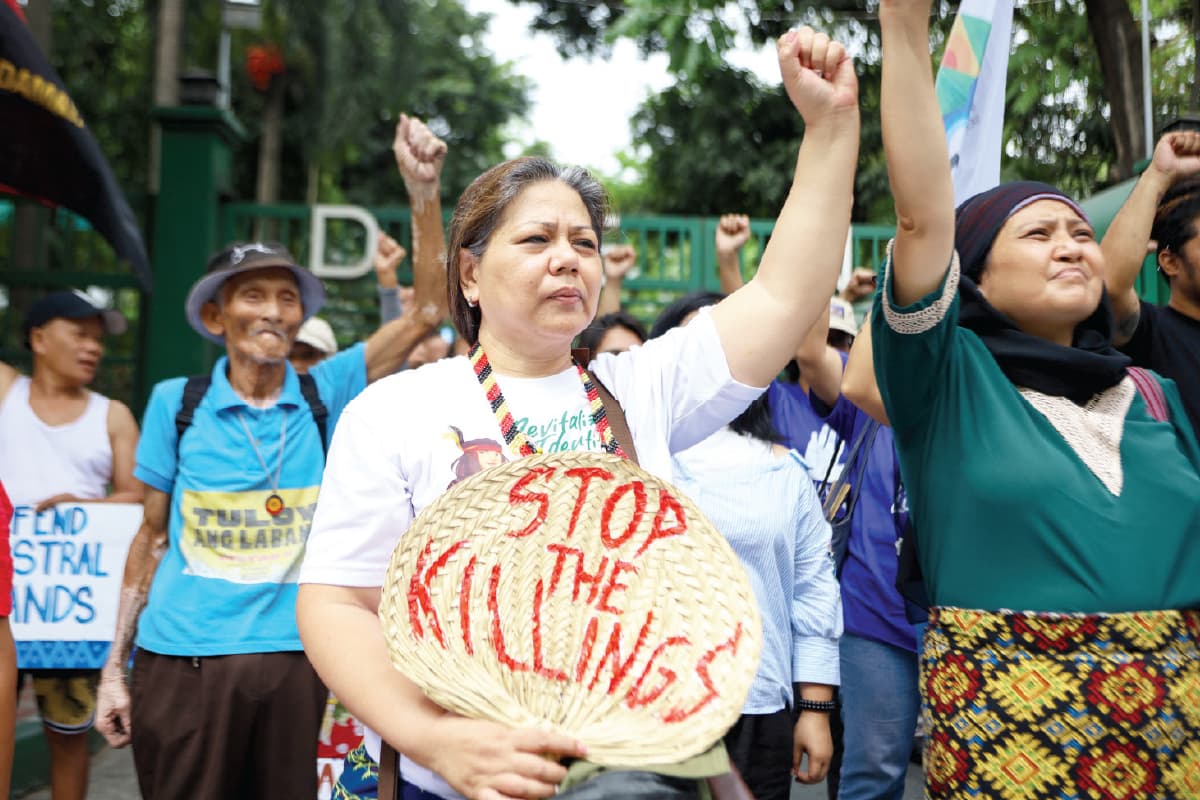
To build a strong benchmark, Asean must address the serious risks that EHRDs face from state and non-state actors in the region.
In 2021, Forum-Asia recorded that 80% of the 330 documented violations against EHRDs in Asia occurred in Asean countries. Just two weeks ago, six EHRDs, including 2016 Goldman Environmental Prize Recipient Ouch Leng, were arrested while investigating illegal logging in Cambodia’s Veun Sam-Sem Pang National Park.
Malaysia is not exempt from this trend. In 2021, logging company Samling sued Sarawak-based indigenous rights group SAVE Rivers for RM5 million over their articles raising concerns about community consultations and certification. UN Special Rapporteurs have even expressed concerns over whether the lawsuit is a Strategic Lawsuit Against Public Participation (SLAPP) meant to silence activists.
While drafting this declaration, I worked with EHRDs across Southeast Asia, many of whom are young people, lawyers, activists and journalists who bravely shared their lived experiences and hopes for a safer Asean.
Many EHRDs raise community concerns peacefully but have been wrongfully arrested and detained, some were sued 40 times by corporations through SLAPPs, and some were abducted and never resurfaced.
Environmental defence and activism is not a crime, and should not be met with violence. The work of EHRDs in investigating projects and advocating for genuine public participation are merely procedural rights. By protecting environmental defenders, we are, in effect, protecting the environment itself.
Where the declaration falls short
Having finalised the draft in July 2024, the AICHR and relevant ministries are now reviewing the declaration ahead of potential adoption at the 2025 Asean Summit.
From the beginning, the drafting process has been fraught with challenges over the declaration’s ambition and scope. Initially envisioned as a 17-page legally binding framework, the document was drastically reduced and eventually became non-binding.
I witnessed the “Asean Way” in action — the AICHR invoking the principle of non-interference, striking out provisions on environmental democracy, and rewording language into vague phrasing.
Instead of drawing on international frameworks that many Asean members states have endorsed, such as the 1992 Rio Declaration and 2015 Paris Agreement, they stubbornly relied on language from previous Asean texts.
Consequently, the draft appears as a rehash of past agreements rather than an advancement of environmental rights.
Even our hard-fought victory of getting the AICHR to include public consultations proved insufficient and difficult to implement.
Many of us civil society representatives had to translate the draft into different languages and use our own funds to host consultations, all within a tight one-month timeframe. The latest and only publicly available draft yielded 109 submissions that mainly called for more stringent environmental impact assessments and the explicit recognition of indigenous peoples and EHRDs.
The draft’s most concerning omissions involve these exact key terms — “indigenous peoples” and “EHRDs”. Despite pleas from indigenous representatives, some members resisted the recognition of indigenous peoples, citing the term’s ties to European colonisation and how their entire country’s population could be considered indigenous.
Similarly, members dismissed EHRDs on the basis of granting special rights to a particular group, despite the UN’s recognition of EHRDs and their risks. These stances ignore calls for recognition from Asean’s indigenous groups, the life-and-death struggles of EHRDs, and evidence showing that the lack of protection for indigenous rights to land and resources leads to land insecurity, vulnerability and conflict.
This recognition of indigenous peoples is relevant to Malaysia, as our Human Rights Commission identifies the Orang Asli of Peninsular Malaysia and various ethnic groups of Sabah and Sarawak as indigenous communities. Malaysia’s government has also publicly affirmed its commitment to protecting indigenous rights as a national priority at the UN. Let’s honour that.
Asean’s priorities: inclusive policies, stronger protections
Asean should prioritise the public’s voice in shaping a declaration that affects their rights and livelihoods. The inclusion of civil society organisations in drafting this declaration may be groundbreaking for Asean, which typically conducts government-led meetings.
Stakeholders should, however, be genuinely represented both in process and input rather than treated as an afterthought.
The declaration should also balance substantive and procedural environmental rights while integrating a human rights-based approach to their implementation. This includes commitment to clean air, climate resilience, pollution control and more stringent environmental impact assessments.
By framing environmental governance through a human rights lens, Asean can address the inextricable link between the environment and human well-being more comprehensively.
Lastly, Asean must urgently recognise and protect indigenous peoples and EHRDs from threats, intimidation, criminalisation and violence in the declaration.
In fact, Asean has previously used “indigenous peoples” in its own texts, such as the “Guidelines on Recognition of Customary Tenure in Forested Landscapes” and the “Guidelines on Promoting Responsible Investment in Food, Agriculture and Forestry”. Furthermore, national laws such as the Philippines’ Indigenous Peoples’ Rights Act of 1997 prove that such recognition is not new.
With Southeast Asia home to an estimated 100 million indigenous people and numerous EHRDs at risk, excluding them from their rights and protections is both unjust and devastating.
We refuse to abandon hope
You might ask, what if our governments do not listen? Why push for a declaration if it is non-binding?
Because an Asean declaration is a political commitment, a document we can hold up and remind leaders of what they have signed. Because we, the people of Asean, deserve nothing less.
Because I am a young person inheriting the future and environment of Southeast Asia, and I vote for leaders who listen and feel the pain of their people. Because I grew up my whole life in Malaysia experiencing environmental pollution first-hand.
Because I draw hope and courage from vulnerable communities who know their risks and still choose to fight for their lands. Because we love and want an Asean that is safe, clean, healthy and sustainable — and that is what our governments should fight for, too. Because I am not alone in believing Asean can and must do more.
In response to the draft’s shortcomings, civil society coalitions have drafted their own declaration to democratically reflect public input on the Asean People’s Declaration on Environmental Rights. We have submitted this to the AICHR as a benchmark for aligning Asean’s commitments with the needs of its people.
As we step into 2025, let this be the year Asean rises to the challenge. The Environmental Rights Declaration is our chance to address the region’s environmental and human rights crises and build a safe and sustainable future for all.
This is not just a New Year’s resolution for Malaysia or Asean; it is a resolution for all of us. Write to your government. Amplify the Asean People’s Declaration. Demand real progress at the next Asean Summit. Let’s make 2025 the year we chose to protect our environment, our defenders and our shared home.
Max Han is co-founder of Youths United for Earth (YUFE), a non-profit mobilising youth for environmental action through storytelling, advocacy and campaigning, and that represents the Asean Youth Forum on the Asean Environmental Rights Working Group. He is pursuing a Master of Science in Environmental Change and Management as a Rhodes Scholar at the University of Oxford.
Save by subscribing to us for your print and/or digital copy.
P/S: The Edge is also available on Apple's App Store and Android's Google Play.