

This article first appeared in Forum, The Edge Malaysia Weekly on December 23, 2024 - December 29, 2024
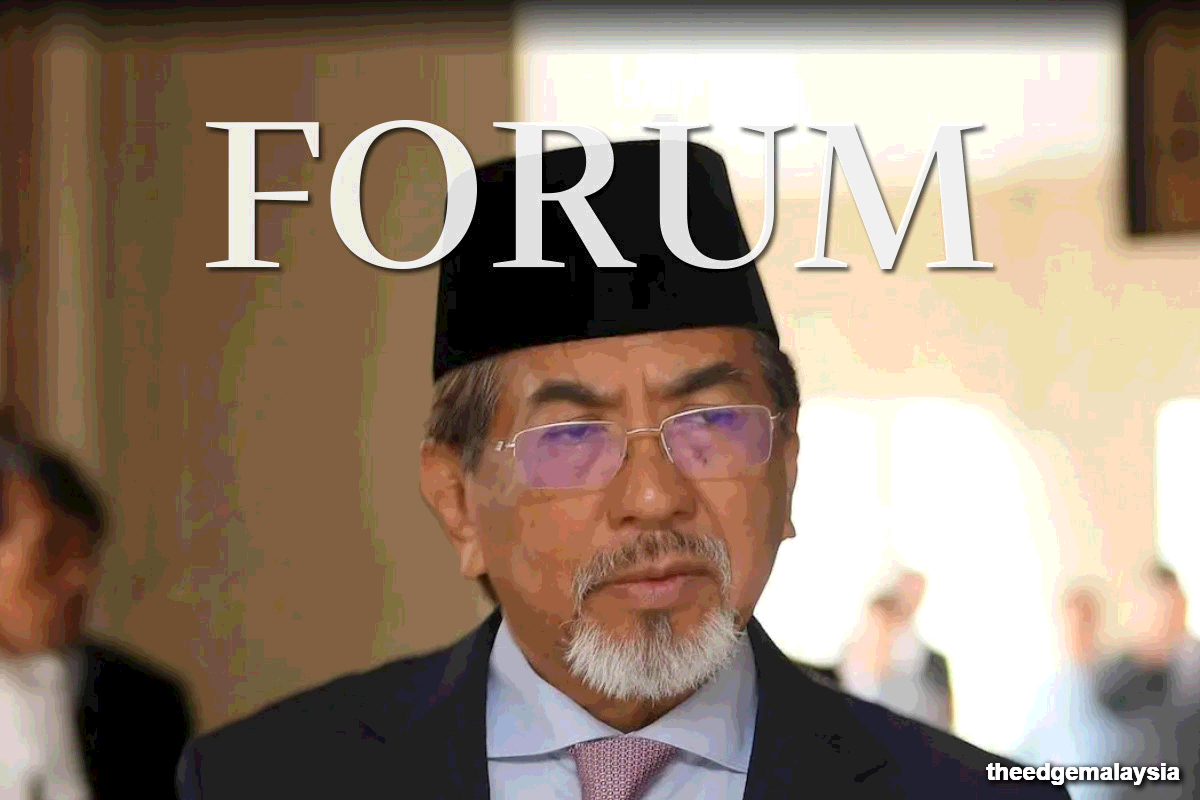
Tun Musa Aman was not a contender for the position of Yang Dipertua Negeri of Sabah as there were others, such as current chief minister Datuk Seri Hajiji Noor, in the running. His name only cropped up one month ago as a replacement for Tun Juhar Mahiruddin, whose term ends this month.
The former chief minister of Sabah’s comeback as governor opens a new political chapter for the state where Hajiji is under pressure from Umno’s Datuk Seri Bung Moktar Radin as well as Datuk Seri Shafie Apdal, who heads the opposition Parti Warisan Sabah.
This is on account of Musa’s track record in ruling Sabah for 15 years from 2003 to 2018. As head of Barisan Nasional (BN) Sabah, he was able to hold together the different factions in the state where the Kadazan and Dusun form a large portion of the population and the Chinese voters are crucial.
For 10 years from 1994, the position of chief minister was rotated among the different parties in BN Sabah, for two years each. It was a formula introduced by former prime minister Tun Dr Mahathir Mohamad to appease the warring factions. Sabah had six chief ministers over the 10 years.
The fact that Musa was appointed as governor despite having faced charges of corruption, which were subsequently dropped in 2020, and allegations of criminal intimidation indicates that Putrajaya recognises his hold over political affairs in the state.
While the government’s spokesperson Fahmi Fadzil is right in stating that the appointment of the Sabah governor is the prerogative of the King after consultation with the chief minister, it should be noted that it was Prime Minister Datuk Seri Anwar Ibrahim who is responsible for Hajiji staying as chief minister.
In January 2023, Hajiji, who leads Gabungan Rakyat Sabah (GRS), was in danger of losing his post following the Bung Moktar-led Umno’s withdrawal of support for his leadership. However, an endorsement from Anwar and five Umno state assemblymen pledging their allegiance to Hajiji preserved the status quo.
Bung Moktar has made no secret of his opposition to Hajiji despite GRS and Umno being partners in Anwar’s unity government at the federal level.
The political landscape in Sabah is fractious, with two main coalitions, GRS and Shafie’s Warisan. The Umno-dominated Barisan Nasional (BN), Parti Bersatu Sabah (PBS) and Sabah Pakatan Harapan (PH) are the main partners in the coalitions.
Since 2018, the chief minister has come from either Warisan or GRS. However, the position is dependent on which partners, particularly Sabah PH, Umno and PBS, support the candidate.
A combination of Warisan and PH Sabah wrested control of the state in 2018 and ruled until September 2020. It was speculated then that Shafie called for state elections in September 2020 to prevent a coup supposedly orchestrated by Musa.
GRS was formed two weeks before the Sabah state elections. It was made up of Sabah Perikatan Nasional (PN), BN and PBS. Hajiji was the chairman of GRS by virtue of being the head of Bersatu Sabah.
The GRS coalition won 38 seats in the 2020 state elections, ousting Shafie as chief minister. Warisan, Sabah PH and UPKO won 32 out of the 73 seats.
In November 2022, following the change of government at the federal level, Hajiji’s GRS pledged its support for Anwar’s government. The move helped him thwart a motion of no confidence from Bung Moktar in January 2023 and also garnered the support of Sabah PH.
Nevertheless, his leadership and the prospects of GRS retaining power in the next state elections have always been a subject of uncertainty due to the threat of an unhappy Bung Moktar joining forces with Shafie.
To add to the problems is an alleged corruption scandal involving prospecting licences for minerals in the state. Hajiji and several of the state assemblymen have been implicated in the scandal after a businessman alleged that the assemblymen and Hajiji had demanded money in return for prospecting licences.
The entry of Musa can calm the frayed nerves of GRS and its partners ahead of the state elections. Moreover, Musa is no friend of Shafie’s and should be able to rein Bung Moktar in.
“The return of Musa kills two birds with one stone,” says an aide to Hajiji.
Musa’s return is one of the biggest political comebacks under Anwar’s watch. Although, as governor, Musa is supposed to be apolitical, his appointment shores up support for Hajiji and GRS, which has four MPs in Parliament.
In Sabah, the governor can make a big difference when the outcome of the state elections is close.
In the January 1994 Sabah state elections, PBS, led by Tan Sri Joseph Pairin Kitingan, won by a mere two seats. His opponent then was BN — which comprised Umno and three Sabah-based splinter parties — that garnered 23 seats versus PBS’ 25.
Umno, which did not exist in Sabah prior to the 1994 state elections, won 18 seats. Anwar was the driving force for setting up Umno in Sabah in 1994 and putting together a coalition against PBS. Anwar was then the deputy president of Umno. Sabah with its 25 divisions was a major support base for him at the national-level party elections.
After winning by a two-seat margin, Pairin waited outside the gates of the Governor’s residence for 36 hours before he was sworn in. During those long hours, speculation was rife that BN was trying to buy over some of the PBS assemblymen.
The speculation came true two weeks later. Pairin’s government lasted only two weeks before three PBS assemblymen defected to the Umno-led BN. Pairin tried to dissolve the state assembly to seek a fresh mandate but the governor, Tun Mohamed Said Keruak, refused.
Musa had tried to use the governor to remain in his position as chief minister following the May 2018 state elections where BN won only 29 seats and needed the support of partners to stay in power.
Musa was sworn in as chief minister on May 10, 2018, and lasted for only two days before being replaced by Shafie. In the subsequent weeks, it was reported that the police were looking for Musa for criminal intimidation against the governor but the investigations did not proceed.
In November 2018, Musa faced multiple charges related to corruption and money laundering in awarding timber concessions. The amount in question was RM243 million. In 2020, all charges were dropped.
Musa’s comeback as governor ahead of the 2025 state elections sets the stage for a new phase in Sabah politics. His appointment, which has not earned Anwar’s reform agenda any brownie points, signals his importance as a counterforce for maintaining the government’s stability.
M Shanmugam ([email protected]) is a contributing editor at The Edge
Save by subscribing to us for your print and/or digital copy.
P/S: The Edge is also available on Apple's App Store and Android's Google Play.