

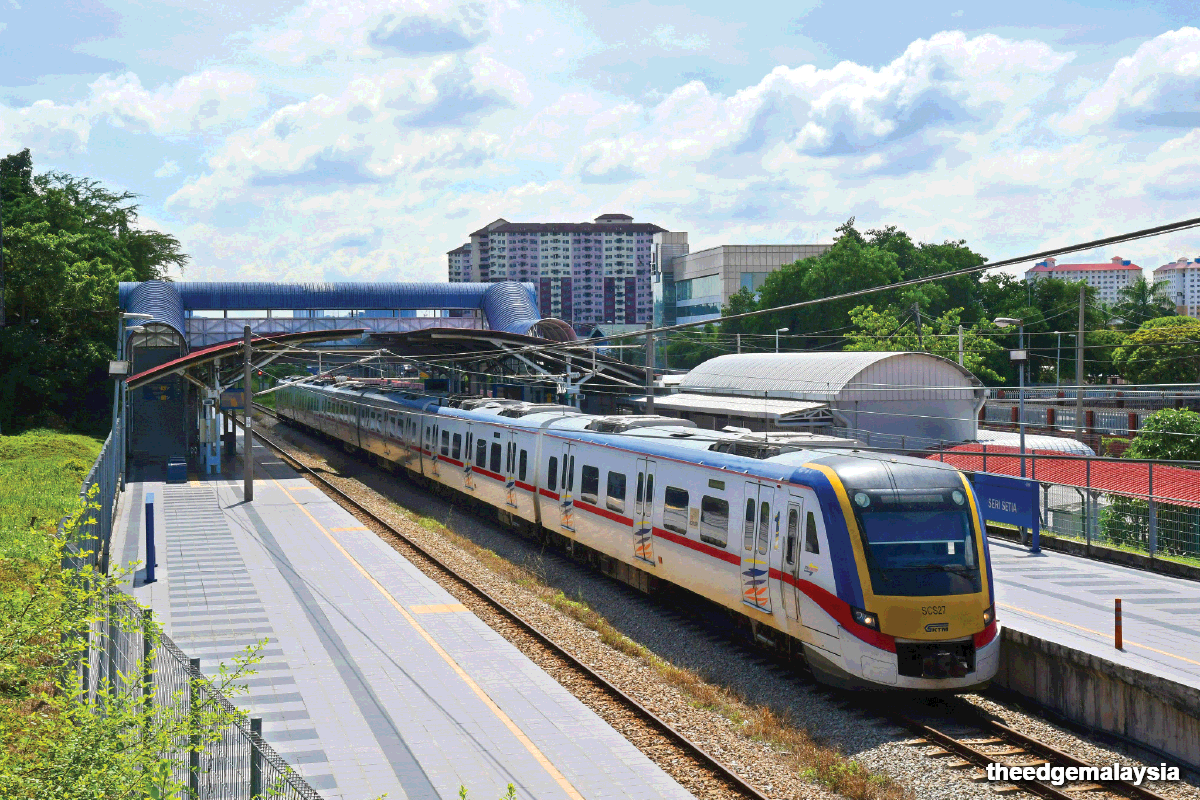
This article first appeared in The Edge Malaysia Weekly on December 16, 2024 - December 22, 2024
KERETAPI Tanah Melayu Bhd (KTMB) has long been viewed as inefficient. Many in the Klang Valley regard it as the most outdated component of the urban railway system and avoid using it when travelling across the peninsula, with the exception of the popular northbound Electric Train Service (ETS).
In the government’s view, KTMB’s operations can only be improved with an upgrade of its entire system. To that end, it has been upgrading KTMB’s networks since 2000 and it is now on the final stretch of those efforts.
It is hoped that the upgrading, which involves the electrified double-tracking of lines along the peninsula, as well as the acquisition of more trains, will be the catalyst for a more efficient railway system and operator.
“Why can’t we push for higher frequency? There are two reasons; one is because of the ongoing track work. With track work, of course, [there is] a big impact on our frequency. Because [of] the double-track rehabilitation project, we have to close one line. So, you can only use one side of the track.
“So that cost [us] in terms of frequency, but that will be overcome in stages because you know, phase by phase, we will do and open up the newer track,” Transport Minister Anthony Loke Siew Fook tells The Edge.
The second reason is the lack of rolling stock, he adds. To address this, the government through the Ministry of Transport entered into a leasing agreement with China Railway Rolling Stock Corp (CRRC) to lease 62 train sets for KTMB’s operations.
The leasing agreement, however, is being investigated by the Public Accounts Committee (PAC) as the RM10.7 billion cost and 30-year leasing period warrant further scrutiny.
For Loke, the leasing arrangement, which includes maintenance, repair and overhaul, ensures that KTMB always has a sufficient number of trains in its fleet. Earlier this year, he said the annual maintenance cost for KTMB’s assets is RM257 million.
“So with this model, we must get [a] guarantee in terms of service, guarantee in terms of operation. So that is one of the ways for us to overcome the frequency issues,” he stresses.
KTMB’s low frequency has led to low ridership and inefficient operations. As a result, the government provides it with funding every year to meet the operating funding gap.
The funding gap has grown over the last six years. In 2020, KTMB received a government grant of RM180 million, which then increased to RM209.96 million in 2021. This declined to RM180 million in 2022, before being increased to RM305.7 million in 2023. This year, the funding gap is estimated at RM300 million.
The MoF has allocated RM300 million to meet the funding gap in 2025.
At the same time, the government has been upgrading KTMB’s tracks in the Klang Valley through the Klang Valley Double Tracking (KVDT) project. Phase 1, from Rawang to Salak South, was completed in March after several extensions.
Thanks to earlier efforts to electrify and double-track the northern segment of the railway line in the peninsula, a frequency of 15 minutes during peak hours for the service between Tanjung Malim and KL Sentral is now achievable.
Meanwhile, Phase 2 of the KVDT — from Salak South to Seremban and Simpang Pelabuhan Klang to Pelabuhan Klang — is currently being undertaken by an 80:20 joint venture between Dhaya Maju Infrastructure (Asia) Sdn Bhd and Lembaga Tabung Angkatan Tentera (LTAT). The project is estimated to cost RM4.48 billion.
This phase is expected to be completed by the first quarter of 2029.
Loke argues that KTMB, just like any other public railway infrastructure system operator, is not sustainable without substantial government support. As such, the government is not considering a privatisation of the system, he says.
“Firstly, who is prepared to take KTMB private? That is a big question mark, I think. I don’t think that we are in [talks for] any privatisation of KTMB as of now. As I said, this will remain a government entity, as a government operator.
“But you see, KTMB comes with a lot of non-profitable routes, and they come with a lot of social obligation as well.”
Loke says KTM Komuter cannot be profitable as it serves routes with low demand and fares. The popular ETS and cargo operations are cross-subsidising the passenger railway and KTM Komuter operations.
A lot of resources and funding have gone into KTMB over the decades to keep it running, connecting towns all over the peninsula. The popular ETS offers a glimpse of what KTMB can offer. Whether the rest of its services can catch up remains to be seen.
Save by subscribing to us for your print and/or digital copy.
P/S: The Edge is also available on Apple's App Store and Android's Google Play.