

This article first appeared in City & Country, The Edge Malaysia Weekly on November 25, 2024 - December 1, 2024
WINNER | The Night Shelter | Penang Island City Council
The streets of George Town were buzzing with life as we set off on our site visits in Penang. Navigating the city’s notorious traffic amid the sweltering heat that morning was challenging to say the least — until we arrived at our first destination.
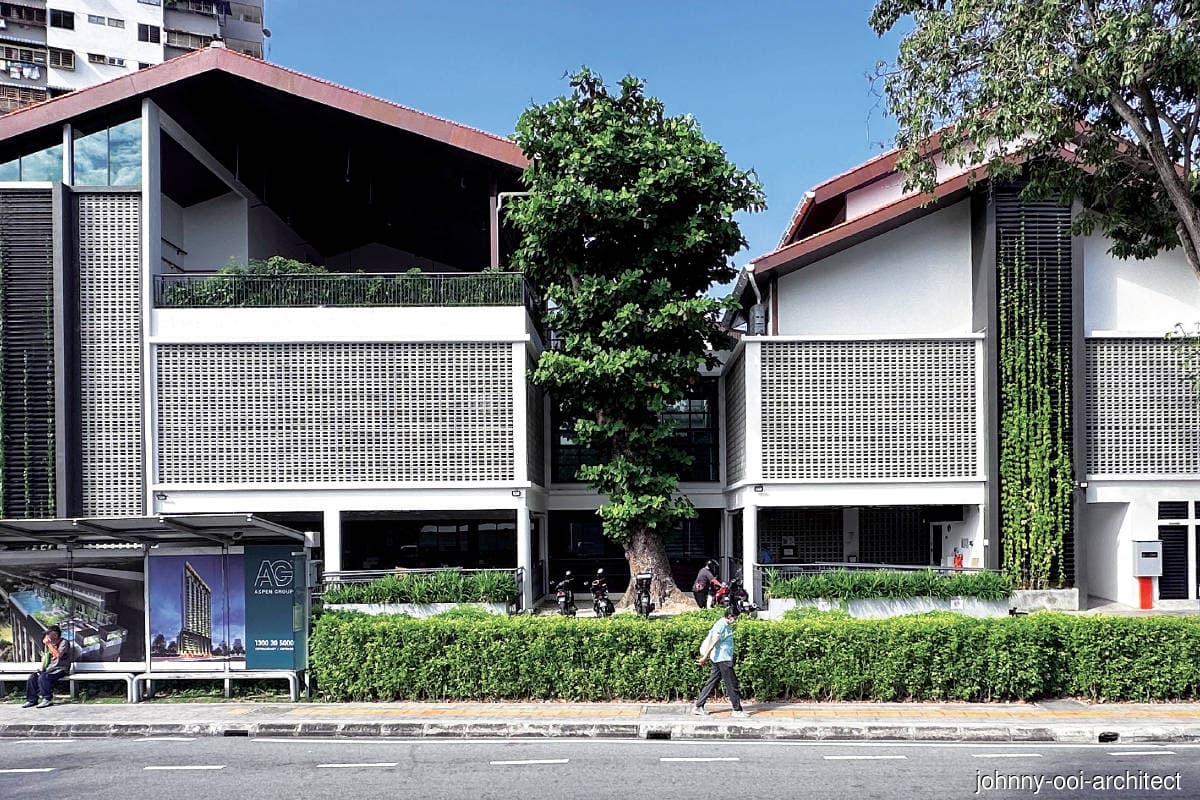
The structure has an aesthetic that integrates both natural and urban elements. The façade has perforated concrete blocks that allow in natural light and airflow while the greenery and majestic century-old Indian-almond (terminalia catappa) tree in the centre of the building lends a warm touch.
What is most surprising about this building is that it is a refuge for the city’s homeless community, something one could not tell just by looking at it.
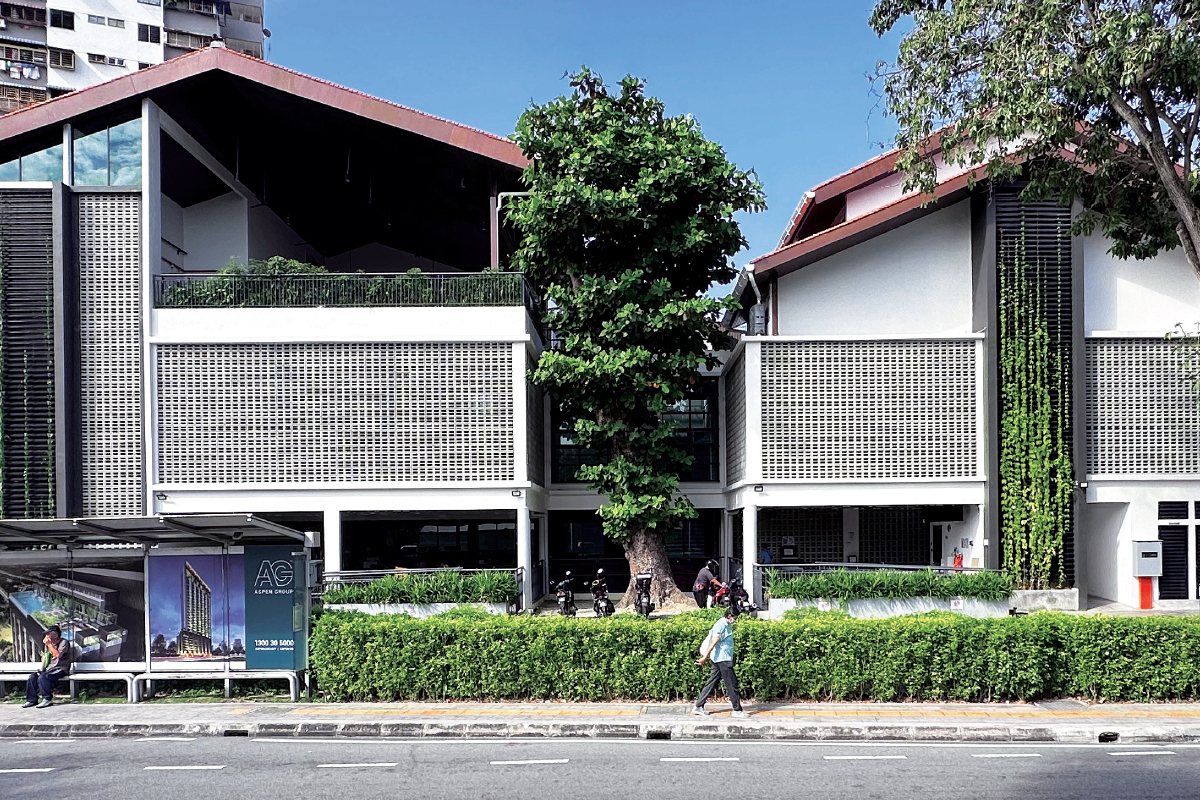
Occupying a 0.37-acre plot at the intersection of Jalan C.Y. Choy and Jalan Magazine, The Night Shelter is a restored 1920s two-storey shophouse built in the Southern Chinese Eclectic Style, with a newly added three-storey building that extends to the back of the existing shophouse. Overall, it has a built-up of 17,500 sq ft.
The idea to build George Town’s first shelter for the homeless was mooted in 2018 by Penang Island City Council (MBPP) and the Penang government. Johnny Ooi Architect, led by principal architect Johnny Ooi, was appointed to design the project.
Following the appointment, the state government conveyed to the architect its concerns about the well-being of the homeless as they lack access to essential shelter, sanitation and hygiene facilities, which leave them vulnerable to a range of health risks caused by inadequate living conditions. MBPP, the architecture firm and other stakeholders sat down together to brainstorm various solutions that could tackle the issue.
The result was a low-energy green building that honours George Town’s historic architecture while providing a proper and comfortable refuge for those in need.
“The Night Shelter project is designed to provide a safe, supportive environment that prioritises the well-being of its occupants. By offering immediate refuge, the project seeks to mitigate the health risks associated with homelessness, while implementing long-term support services to facilitate rehabilitation and reintegration into society. This holistic approach not only addresses immediate needs but also fosters a sense of dignity and security, enabling individuals to regain control over their lives and improve their overall quality of life,” says Ooi.
Construction commenced in 2020 and was completed in 2022. The Night Shelter officially started operations in August 2023.
The Night Shelter has a vertical green wall that provides the building’s interior with natural shade from the sun, as well as being clad with ventilation blocks and an exposed perimeter that allows for good ventilation and air circulation. In the compound, there are pocket parks with ample seating areas for people to sit and enjoy the greenery. The Indian-almond tree is preserved to create a cooling effect on the compound.
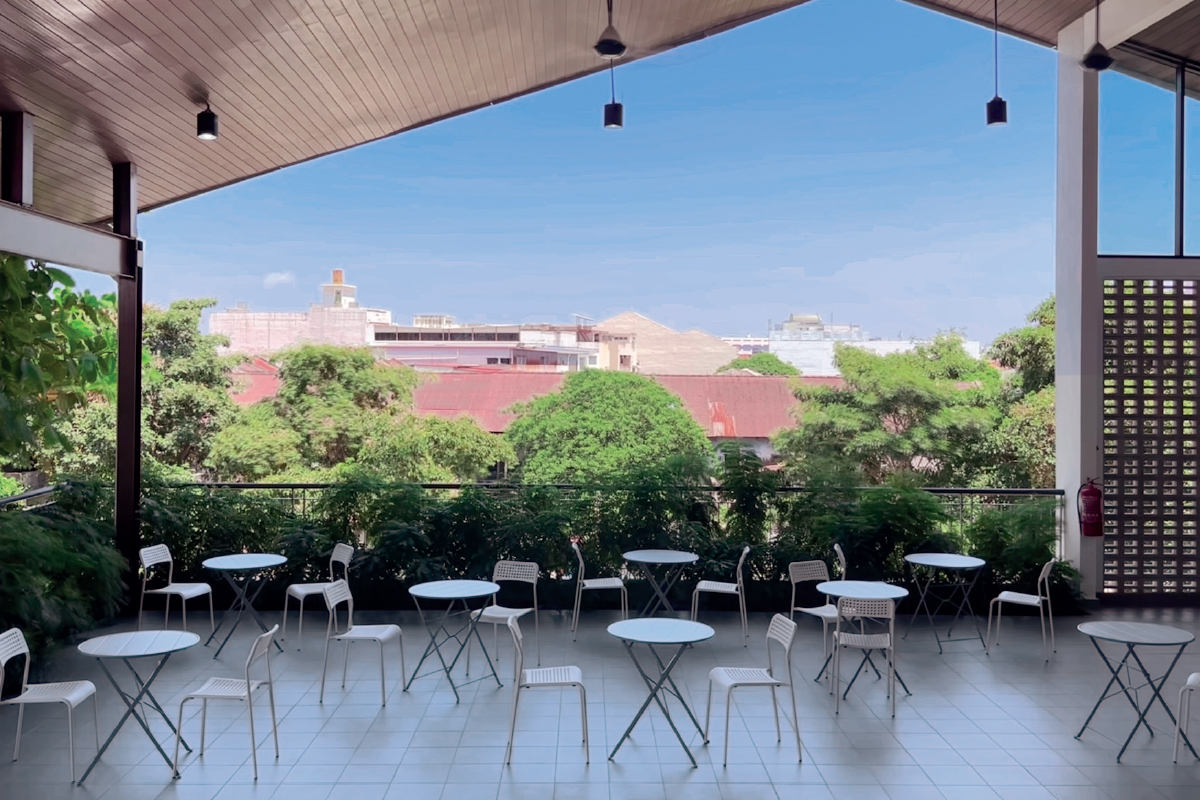
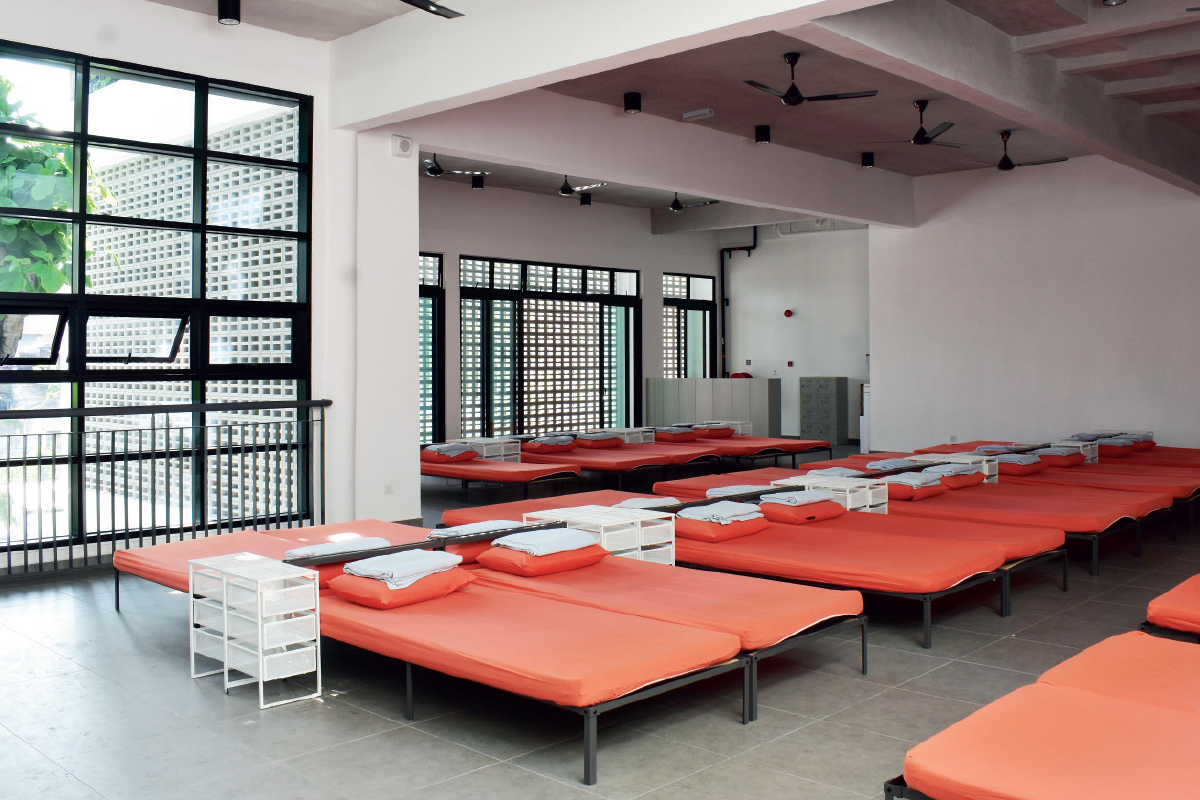
The interior has ample spaces for the occupants to mingle and the dormitories, which are segregated by gender, can accommodate up to 80 beds. The Night Shelter also has training rooms, learning centres, a rooftop yard with a garden, a kitchen and a dining space where non-governmental organisations (NGOs) can distribute food to the residents and others who qualify for the service.

“We want to provide proper spaces for them. Besides training rooms and learning centres, we also provide comfortable sleeping areas that are well ventilated [with the use of ventilation blocks] and a rooftop garden for them to have gatherings and enjoy the greenery within the building,” says Ooi.
The Night Shelter is the winner of The Edge Malaysia-PAM Green Excellence Award 2024. The award recognises property developments that demonstrate sustainable designs that are innovative and outstanding while contributing positively to the community.
Green building with heritage value
The goal for Ooi and his team was to build a shelter that embraces the triple net zero concept. This means the consumption cost of the building in terms of energy, water and waste needs to be low.
A mix of active systems and passive designs were integrated into the building to strive for a triple net zero building. Installations like energy-saving LED lighting with motion sensors and a 40kWp solar photovoltaic panel system on the rooftop are some of the features that help to lower the cost of energy consumption.

Additionally, the use of ventilation blocks help to create cross-ventilation in the building, thus reducing the need for air conditioning. Ample perimeter openings and an open courtyard help to naturally light up the building’s interior, thereby reducing the need for artificial lighting during the day. According to Ooi, the electricity bill for The Night Shelter is less than RM150 a month.
Striving for net zero water consumption, the building uses a rainwater harvesting system for toilet flushing and landscape irrigation, greywater recycling from showers and basins for irrigation purposes and water-saving fittings.
Meanwhile, more than 75% of construction waste is recycled and reused. This includes reusing the old timber from the staircase and wood battens from the roof structure, and repurposing these into timber decking, planter boxes and benches in the pocket parks. Organic waste is turned into organic fertiliser for the plants in the compound.
To further its triple net zero agenda, Internet of Things (IoT) systems are used in the shelter as it helps to continuously monitor thermal comfort as well as energy and water usage.

“By integrating smart technologies, the shelter optimises resource management and operational efficiency through real-time monitoring and data analysis. IoT sensors track energy usage, water consumption and indoor environmental conditions, which enable the automated systems to adjust lighting, heating and cooling based on occupancy and natural light, thus minimising energy consumption,” says Ooi.
MBPP director of building control department Rizuwan Salleh says the operator of The Night Shelter, the Penang Social Welfare Department (JKM Pulau Pinang), occasionally faces problems in trying to manage the building efficiently due to a lack of green awareness.
“Initially, it was a struggle for the operator to run a green building. It’s [a challenge] for them to use the green facilities in the building. [To help them] seminars and workshops have been held to help the operator develop an understanding of the building so that the green status of the building can be maintained,” he says.
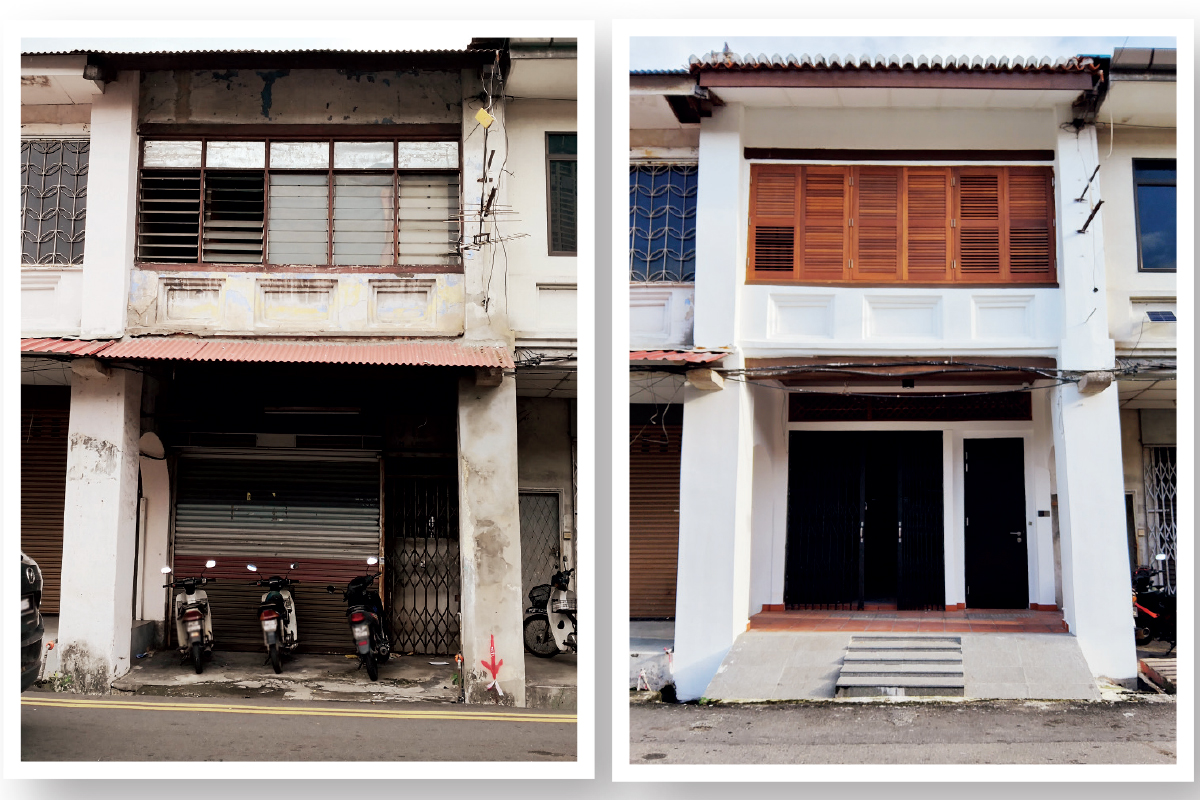
As the team of architects were developing the green building, they simultaneously preserved the historical elements of the existing two-storey shophouse, which is classified as a category two heritage building. Research was conducted to better understand the original elements of the shophouse, which was built in the Southern Chinese Eclectic Style, to restore it properly.

When asked why MBPP decided to revamp the existing two-storey building instead of starting from scratch, Rizuwan says there was an opportunity to give the old shophouse a new lease of life. “We saw opportunities to repurpose the abandoned heritage building and give it a new lease of life in a similar way to how we can help the forgotten community to reintegrate back into society.”
The works carried out included the restoration of the façade by replacing the old glass louvres in the windows with wooden louvres, dismantling the metal roof and installing terracotta roof tiles, and maintaining the air well openings. Ooi says illegal structures that had been put up by the previous tenants needed to be taken down too.
During the restoration period, the disjunction between the compliance requirements of the Fire and Rescue Department and those of the Heritage Department posed a great challenge, he adds. “The challenge of preservation in architecture is to ensure its fire safety compliance. Pre-war houses do not have stringent fire safety requirements beforehand, such as fire escape staircase and fire compartmentation between floors. Thus, some modifications were needed to comply with the building by-laws while preserving their original appearance.”
One of the challenges Ooi and his team faced was restoring the wooden staircase. They had to replace the wooden staircase and put in reinforced concrete as the structure of the new staircase. Recognising that such a move would deviate from the authentic preservation of the building’s original structure, the team incorporated timber floor finishes above the reinforced concrete to replicate its original feature.
State-initiated project
Adopting a blend of heritage and green elements, The Night Shelter was ultimately designed for the comfort of the homeless community. The aim of the state-initiated project was to provide a place where they could get back on their feet and become contributing members of society again.
“We decided to implement this project to help the [homeless] feel included in society. The project not only provides basic necessities such as food and shelter for the homeless community, but the building is designed with spaces for training, learning and working to help them gain skills and health support in order to improve their livelihood,” says Rizuwan.
An individual is given a two-week stay, during which JKM Pulau Pinang will help to find a job and a place to stay. The period can be extended if both requirements are not met.
During the two-week stay, the occupants take part in various programmes at the shelter. These include skill learning workshops, motivational seminars, free health screening, counselling and job matching programmes that are curated by JKM Pulau Pinang.
According to Rizuwan, some 374 people from the homeless community have spent time at the shelter since it started operating. A total of 130 people were able to get a job through the matching programme, found a permanent residence, or both.
Prior to developing The Night Shelter, Ooi talked with various NGOs and learnt that the lack of proper space in George Town to distribute food to the homeless was a challenge for them. Hence, The Night Shelter also doubles as a centralised distribution centre for NGOs or companies to hold donation drives or food distribution in a safe and controlled environment.
“The lack of proper space and platform for such initiatives often ends up triggering others, ensuing issues such as disorganised distribution at less appropriate locations, which creates traffic disruption due to overwhelming responders,” he says.
Since then, there have been many donation drives and bazaars, as well as food distribution and corporate social responsibility programmes, held by companies and NGOs at The Night Shelter.
When asked whether there will be similar projects in the pipeline, Rizuwan says MBPP hopes to continue collaborating with the state government to produce similar projects if the cost allows.
“This initiative is first of its kind and will serve as a replicable prototype for the subsequent implementation of similar initiatives. We hope that there will be more similar projects in the pipeline to tackle the issues of the homeless community outside the city. We will work together with JKM Pulau Pinang to research possible future locations to replicate similar initiatives,” he adds.
It is heartening to witness a state government and local council that goes above and beyond to help the less fortunate.
Save by subscribing to us for your print and/or digital copy.
P/S: The Edge is also available on Apple's App Store and Android's Google Play.