

This article first appeared in The Edge Malaysia Weekly on November 25, 2024 - December 1, 2024
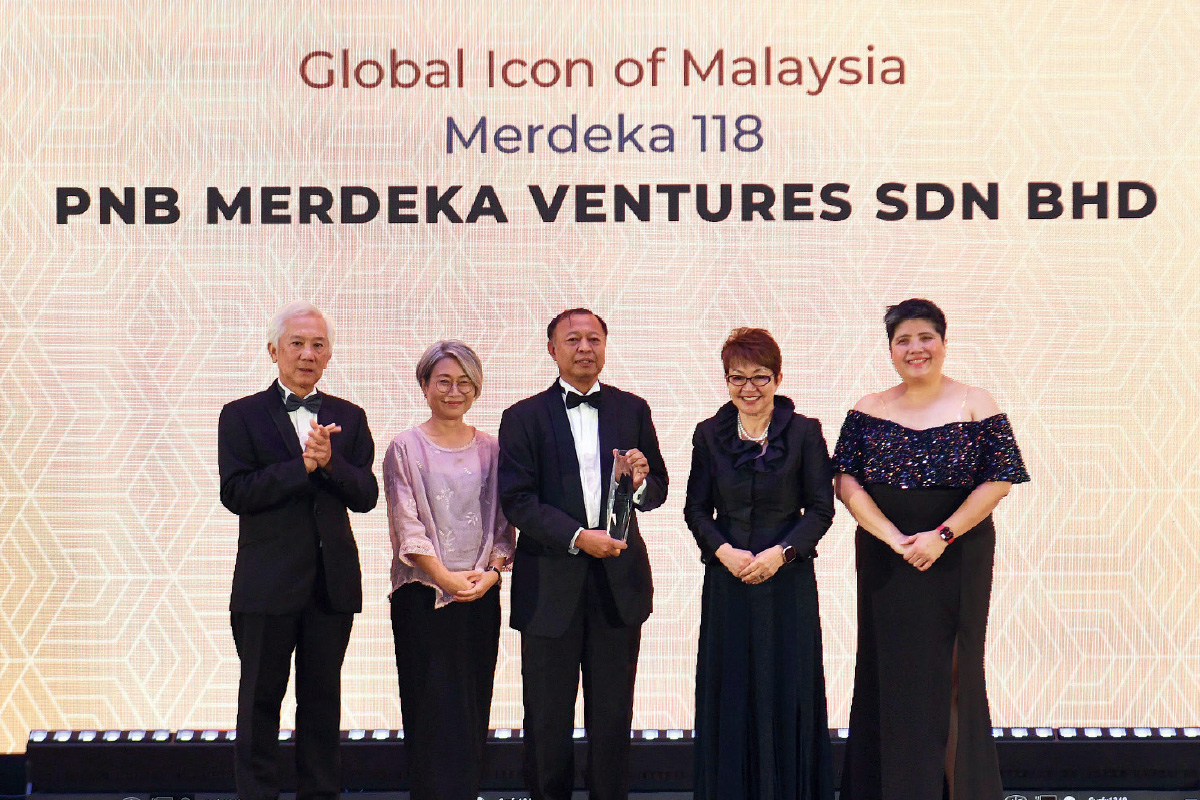
WINNER | Merdeka 118 | PNB Merdeka Ventures Sdn Bhd
Kuala Lumpur, with its rich blend of history, culture and modernity, has always stood as a testament to Malaysia’s progress. The Petronas Twin Towers have long been synonymous with the city’s identity, but a new architectural marvel has emerged to share the limelight.
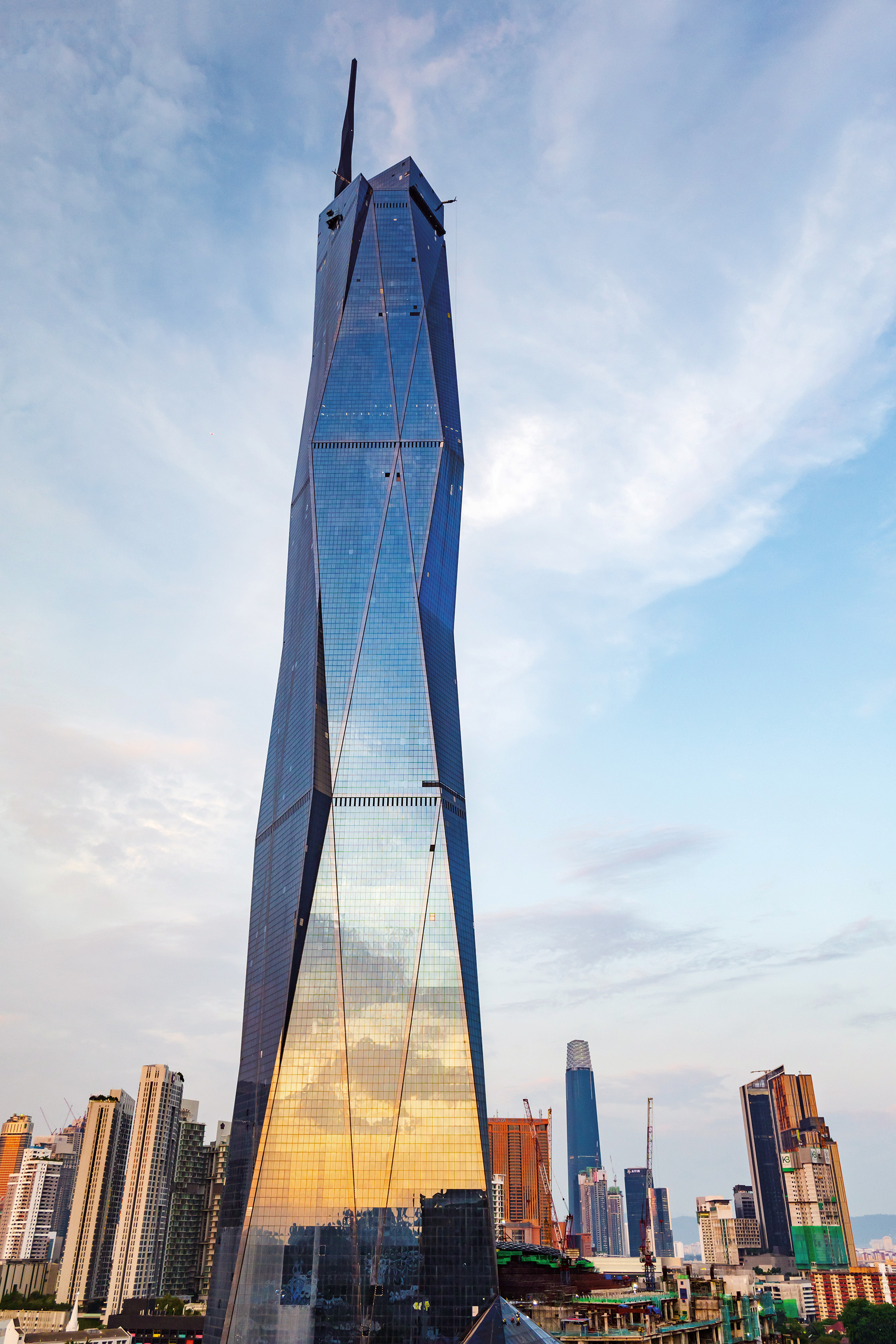
Named Merdeka 118, it is the tallest building in Southeast Asia and the second tallest in the world. As the name suggests, it comprises 118 storeys and soars a whopping 678.9m above the Kuala Lumpur skyline, offering a majestic view of a glimmering diamond-shaped crystalline concept.
Designed by Melbourne-based Fender Katsalidis Architects, the skyscraper is named after Malaysia’s independence and is situated in the larger 40-acre Merdeka 118 precinct. The entire precinct is owned and being developed by PNB Merdeka Ventures Sdn Bhd, a wholly-owned subsidiary of Permodalan Nasional Bhd (PNB).
— Ab Aziz
(Photo by Sam Fong/The Edge)
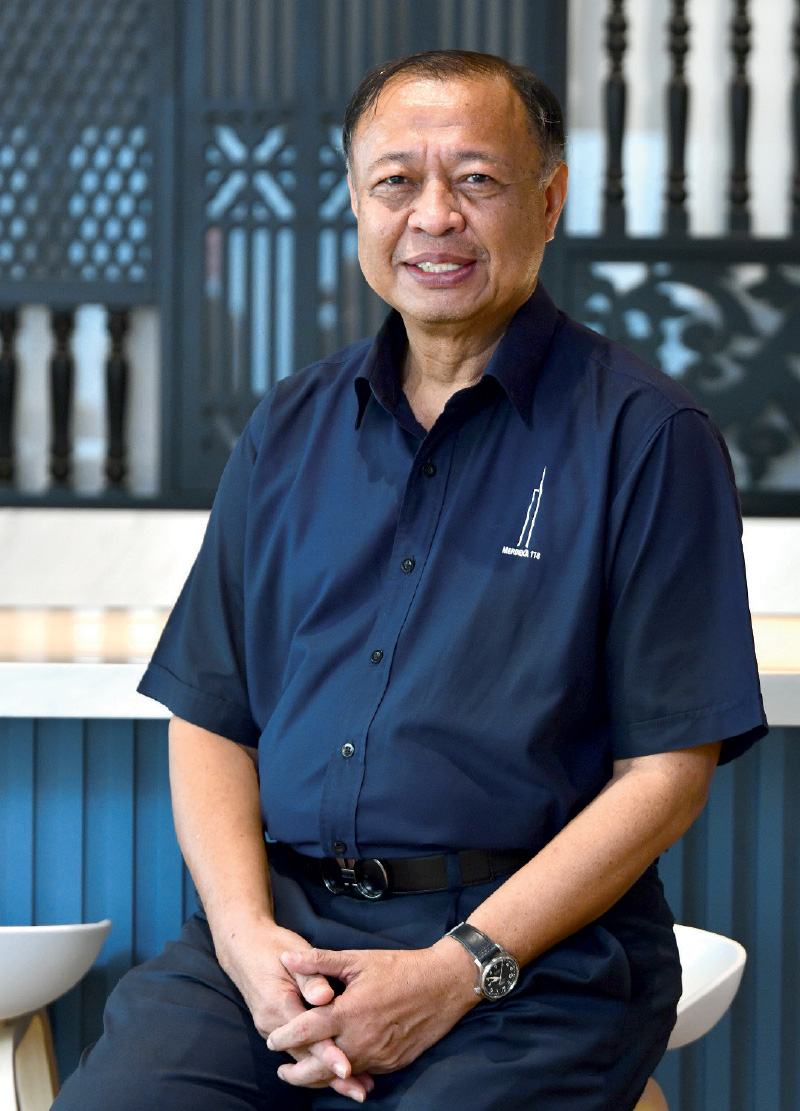
From the 96th floor, we could see the entire Kuala Lumpur skyline, adorned with majestic skyscrapers and traditional shophouses, leaving us in absolute awe. “Rather than competing with the other tall buildings, our aim has always been to complement them,” says PNB Merdeka Ventures CEO Tengku Datuk Ab Aziz Tengku Mahmud with a smile.
“Merdeka 118 was envisioned as a catalyst for change, driving economic revitalisation and growth for the surrounding area. It also reflects our commitment to sustainability in its design, architecture and construction, making it a forward-thinking workplace of the future.”
The tower currently has an occupancy rate of 70% with the vast majority being PNB staff alongside employees from a few other companies.
The Merdeka 118 precinct will be connected to the Merdeka MRT station and is near the Maharajalela monorail station, Plaza Rakyat LRT station and Hang Tuah LRT and monorail stations.
The commercial tower will house offices, Park Hyatt Kuala Lumpur hotel and, on the podium level, 118 Mall. There is a linear water park called Merdeka Boulevard at 118 Park, which runs from its southern front entrance to the Maharajalela monorail station.
The west podium houses mainly hotel-related facilities, including a large ballroom, an auditorium and other supporting facilities.
The precinct will have three premium residential towers, namely the Merdeka Residences West Tower, Merdeka Residences East Tower and Oakwood Primer Serviced Residences; the Look At 118, which is an experiential centre; the Merdeka Textile Museum; a purpose-built childcare centre; Masjid Al-Sultan Abdullah as well as the historical landmarks of Stadium Merdeka and Stadium Negara.
About 70% of the precinct has been developed, with the remaining components being the residential towers and the west podium. These will be launched following the completion of the mall, Ab Aziz reveals.
As an architectural marvel that has not only reshaped Kuala Lumpur’s skyline but also serves as a catalyst for economic growth in the vicinity, Merdeka 118 won The Edge Malaysia Property Development Excellence Award — Global Icon of Malaysia at The Edge Malaysia Property Excellence Awards 2024. The award recognises buildings that are a beacon of national pride and create a legacy.

How the vision came to life
In 2000, PNB Merdeka Ventures was set up as a special purpose vehicle to buy the 40-acre land, which includes the two stadiums — Stadium Merdeka and Stadium Negara. The motivation for PNB to buy the land was to maintain the two stadiums as heritage sites, which were kept for 10 years while the company decided what to do with the site.
A decade after the land was purchased, PNB finally decided to develop the site. Ab Aziz says the idea to build a super-tall tower and the project planning came about sometime in 2010.
The inspiration for the Merdeka 118 tower came from the two stadiums, he notes. “When the country declared independence, this place saw the beginning of it all. But when the Petronas Twin Towers were built, most attention pivoted to that part of the city. It became the central business district. We all know this area was like the forgotten part of KL. So now, we want people to remember this area. Hence, we are trying to bring back or expand the business side of Kuala Lumpur towards here as well.”
Besides the stadiums, the location of the precinct is another plus point, he adds. “From the outset, we recognised the profound significance of this area and aimed to unlock its full potential. Rich in historical value, this area deserves to be celebrated and the Merdeka 118 tower, along with its surrounding components, stands as a compelling destination and landmark for Kuala Lumpur.”
Now that the idea to build a super-tall tower was set, it was time to think of a design and Ab Aziz says PNB wanted “the best, not a repeat” of other buildings.
“At that time, PNB wanted to make sure the building was the only one in terms of its architectural treatment, and [one of] a few things that really made a difference was when we put in the spire. It was moved from the centre to the edge [resembling Tunku Abdul Rahman’s hand gesture when declaring independence].”
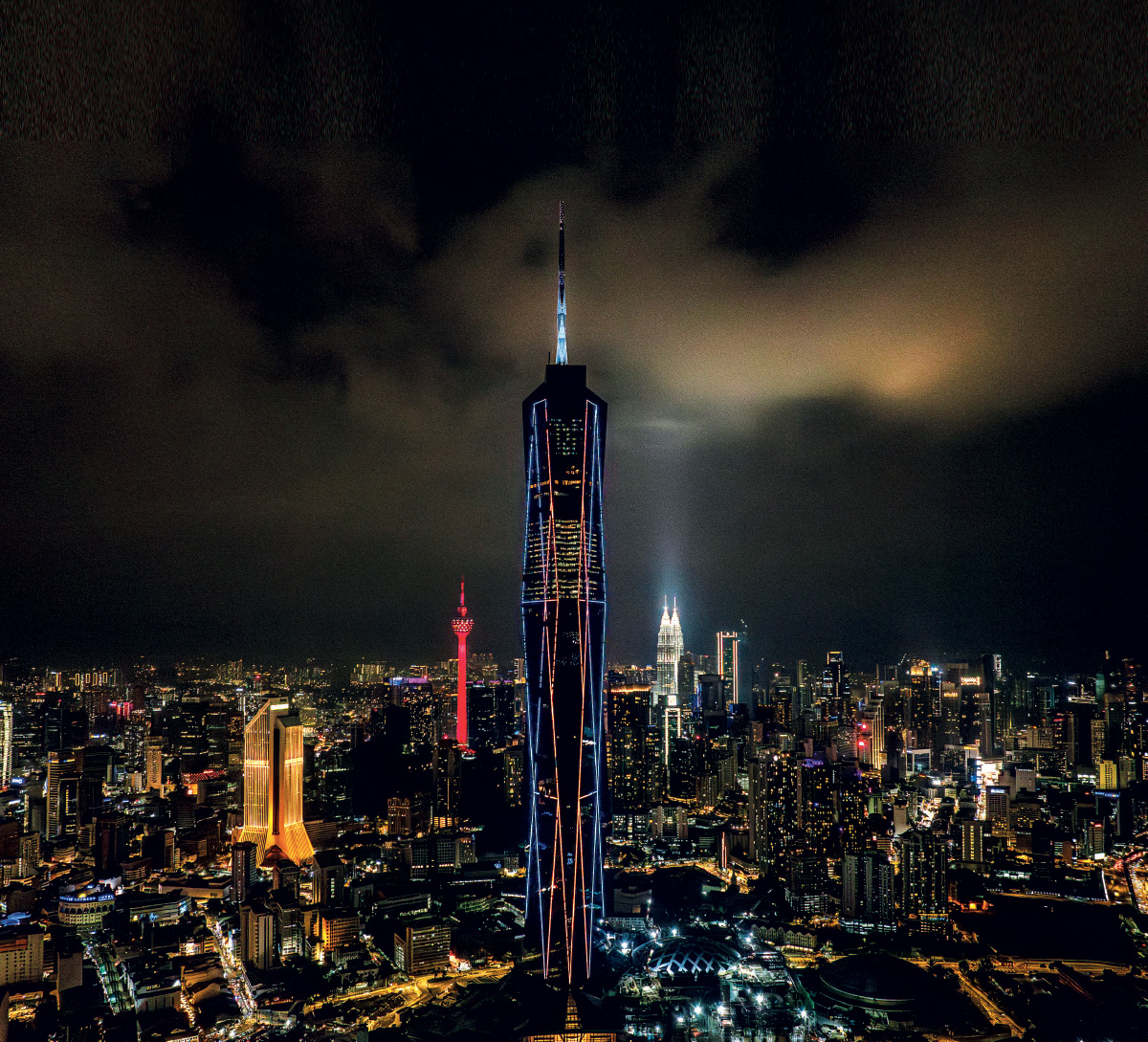
Additionally, the façade of the tower is multifaceted like a diamond. Ab Aziz elaborates, “The floor plate is diamond-shaped, so that drives the whole concept. The façade is made up of diamond-shaped glass panels, which are linked to each other vertically and lit up by LED lights at night.”
Proper planning to overcome challenges
During the construction process, the developer faced several challenges. Fortunately, due to far-sighted planning, Ab Aziz says they were able to navigate without much difficulty.
“A couple of questions we were constantly asking ourselves were: How do we build a new super-tall tower and how does it relate to the surroundings? This area has very narrow roads, so once we started looking into the details, we found that there was a lot of planning work that needed to be done in terms of widening the roads, adding flyovers and looking at accessibility, pedestrian walkways and so on. This was a developed area, so we needed to spend time trying to understand the whole thing before even starting with the design.”
Construction is more about managing the construction traffic, he adds. “The area is known to have bottlenecks everywhere. So we had to think a lot about logistics in terms of pre-planning, making sure that the construction vehicles don’t interfere with the public vehicles. Because at the peak, we have about 3,000 workers a year, so we have to be sure that kind of mobility is not affected.”
To solve the issue of potential traffic congestion in the area once the entire precinct is completed, Ab Aziz says the developer decided to connect a tunnel from the Federal Highway that links directly to the basement of the tower.
“When we had to work on planning parameters, we had to go beyond our boundaries. Because if we just did it within our boundaries, it wouldn’t have worked. So I think the [most important] part of the work is to look at that first. So once you have it in place, then the rest is fairly easy,” he points out.
Ahead of time
In 2010, when the idea to build a super-tall tower was being discussed, the developer already wanted it to be a green building, Ab Aziz reveals. True to its vision, Merdeka 118 is the first mega-tall building in Malaysia to get Leadership in Energy and Environmental Design (LEED) Platinum certification.
“It was right from day one. I mean, it was planned 10 years ago and at that time the environmental, social and governance (ESG) concept was not really known. But we already made the decision that once we do this, it has to get platinum certified and that drove the whole team to think through the whole process earlier. Of course, while the building was under construction, we upgraded some of the features to the latest ones.”
One of the main reasons why they opted for a green building was to reduce cost, he says. “I think being a big building or skyscraper, it’s going to be very costly to maintain it. So the simple reason why we adopted green principles is because we want to reduce the life cycle cost. In the beginning, we might have to spend a bit more to incorporate these green features, but the long-term plan was to reduce our maintenance cost.”


Some green features in Merdeka 118 tower include an underfloor office air-conditioning distribution system; energy-efficient internal and external light fixtures utilising LEDs; and a cooling tower air circulation system that harvests air from the carpark ventilation system.
Besides that, the tower is equipped with rainwater harvesting systems and 100% non-potable water use for irrigation; grey water recycling for flushing systems; and solar panels on the roof that supply hot water to Park Hyatt KL.
On the use of innovative construction methods or technologies during the construction of the tower, Ab Aziz says it was some of the country’s firsts.
“When the Petronas Twin Towers were built, grade 80 concrete was used. By comparison, we used grade 105, which is a lot more in terms of strength. So we are the first in the country to use that grade and it was successfully done,” he adds.
“Another method we used was pumping concrete from the bottom up to about 500m, which is not conventional, but we have done that successfully and by doing so we are actually extending the knowledge of concreting so other buildings can do the same. Again, it sets new boundaries for future buildings.”
Historical significance
Ab Aziz says that following the completion of the tower, his team has observed property prices in the vicinity going up.
“It has been going up and it will go up further because it’s a question of [whether] success breeds more success. If we have more and more towers being completed, naturally it will enhance the surroundings. So over the years, the value of capital will keep going up because there will be less land available for redevelopment. So what’s remaining becomes more expensive. It’s quite a natural process.”
In fact, Ab Aziz says the transformation of this part of Kuala Lumpur began as early as 2016 when new developments began to sprout up around the area.
“Boutique hotels, condominiums, restaurants and cafés now line the streets, while even the once-forgotten back lanes have been reimagined as pedestrian-friendly. This organic renewal has injected fresh energy into the neighbourhood,” he observes.
“The Merdeka 118 precinct is set to enhance this revitalisation, complementing the surrounding developments. I think we have been able to integrate all those things together and I think that by itself is an attraction. Having the old and new come together is something special for Kuala Lumpur and I think it helps the locals and tourists to really appreciate the place as it was the country’s place of independence. Ultimately, we hope we can revive that spirit.”
Save by subscribing to us for your print and/or digital copy.
P/S: The Edge is also available on Apple's App Store and Android's Google Play.