

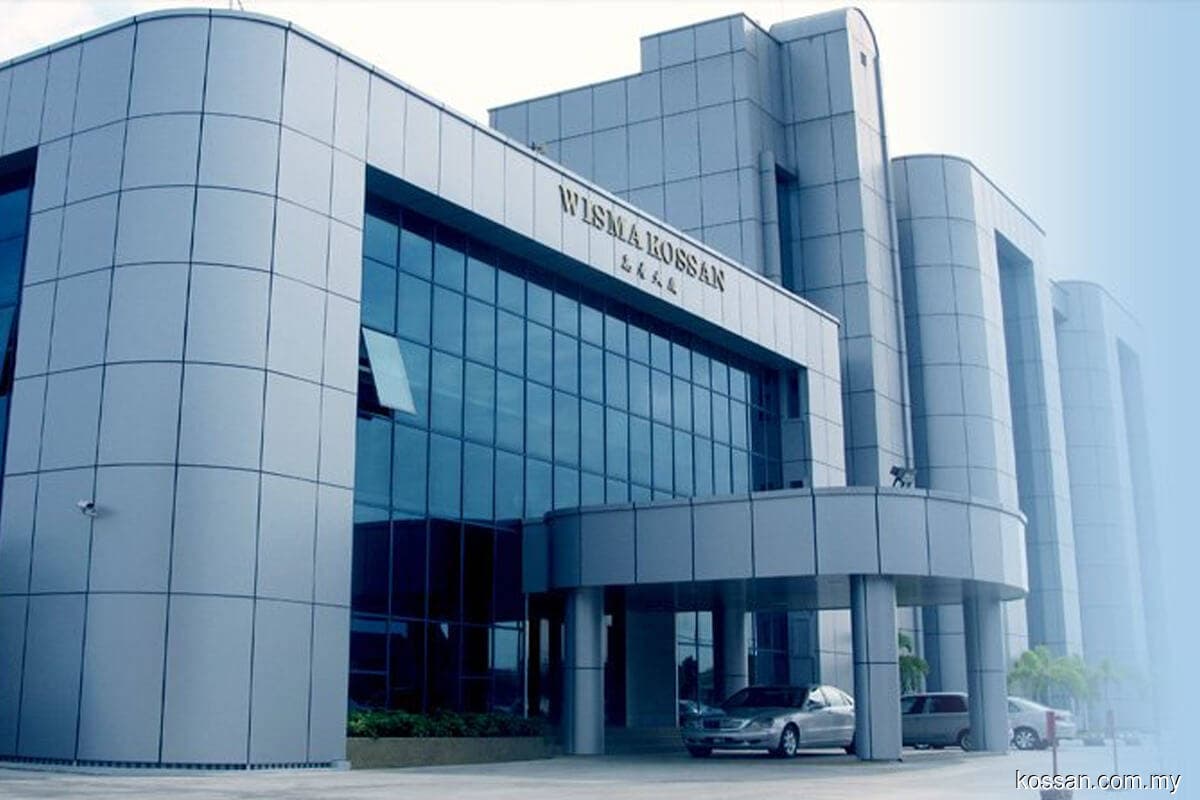
KUALA LUMPUR (Nov 18): Shares of Kossan Rubber Industries Bhd (KL:KOSSAN) rose on Monday to their highest in nearly four months, after the glovemaker unexpectedly declared a special dividend despite below-view results.
Kossan opened at RM2.29 and jumped by as much as 10 sen or 4.4% to reach its intra-day high of RM2.38 — its highest since July 30. The stock ended the day at RM2.33 — still up by five sen or 2.19% — giving it a market capitalisation of RM5.96 billion, after 11.37 million shares were traded.
The company plans to distribute eight sen per share, including a six-sen special dividend. “While a special dividend was not guided, we were not surprised and see this as once-off” ahead of the a 2% dividend tax that will come into force next year, said Kenanga Investment Bank (Kenanga IB) said in a note.
Moving forward, analysts see potential for stronger earnings for Kossan in the coming quarters, pointing to ongoing inventory replenishment and a potential shift in US demand for Malaysian gloves due to the impending tariff increase on Chinese glove imports.
January-September core net profit only accounted for about 60% of consensus full-year forecast, though “going forward, we expect Kossan to deliver sequentially stronger earnings,” said Hong Leong Investment Bank (HLIB) in a note, and maintained its “buy” rating.

The house noted that Kossan’s latest results were above its own expectations due to strong sales and margin, and raised its earnings forecast for Kossan by 8% for FY2024, to reflect higher sales volume, better average selling price (ASP), and a stronger US dollar.
Shares of Kossan have surged almost 30% so far this year amid rising interest, as investors bet on the upcoming trade diversion. Shares of larger rivals Top Glove Corporation Bhd (KL:TOGLOV) and Hartalega Holdings (KL:HARTA) have also gained on Monday.
A large majority of analysts remained bullish on Kossan — 12 out of 18 research houses have “buy” calls on the stock, while five analysts recommended “hold”, and only one rated Kossan at a “sell”. The 12-month target price stood at RM2.47, implying an upside of 4.22% from the current price, Bloomberg data showed.
Kenanga IB said that it expects the oversupply “to be less acute and gradually improve, following signs of players culling production capacity via decommissioning of selective plants, and exit of new entrants”.

Demand and supply could be balanced by 2026, as long as there is no new capacity and global demand grows 15% annually from increasing hygiene awareness, Kenanga IB added.
In the July-September quarter, Kossan reported a 28.15% drop in its net profit to RM29.44 million, dragged by higher raw material costs and unrealised foreign exchange losses. Revenue for the quarter, however, rose 25.75% year-on-year to RM507.39 million.