

This article first appeared in City & Country, The Edge Malaysia Weekly on October 21, 2024 - October 27, 2024
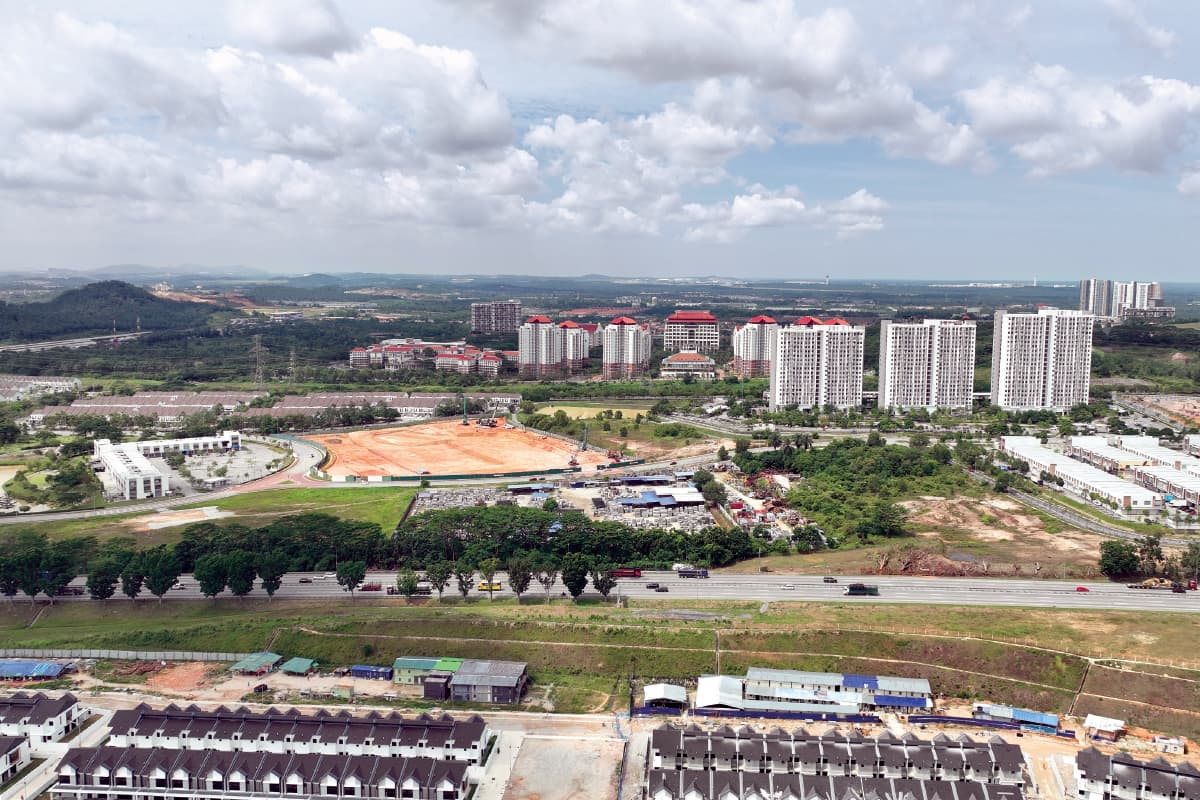
Sepang is a flourishing district in the southern corridor of Selangor. It has witnessed dynamic change with the mushrooming of large township developments in the past two decades, thanks to its strategic location near Kuala Lumpur International Airport (KLIA) and improved connectivity via major highways and the Express Rail Link (ERL).
Today, Sepang is a self-sustaining area with an array of residential, commercial and mixed-use properties. The growing population has resulted in a high demand for property.
According to the latest data from the Department of Statistics Malaysia (DoSM), the estimated population of Selangor in 2023 was around seven million. Approximately 338,600, or 5% of the total population in the state, live in Sepang.
DoSM data also reveals that Sepang has one of the highest proportions of young adults aged 15 to 30 and working adults aged 15 to 64 in Selangor. It also has a relatively smaller average household size of 2.8 people per household. All this indicates a vibrant and youthful demographic with a growing demand for housing.

“Sepang has seen rapid growth and urbanisation, driven by key developers and their developments such as S P Setia Bhd (KL:SPSETIA) with Setia Warisan Tropika, Sime Darby Property Bhd (KL:SIMEPROP) with Serenia City, IOI Properties Group Bhd (KL:IOIPG) with Warisan Puteri, and Sunsuria Bhd (KL:SUNSURIA) with Sunsuria City, which have transformed the landscape with a mix of residential, commercial and mixed-use properties,” CBRE | WTW group managing director Tan Ka Leong tells City & Country.
He notes that most of the larger property developments are clustered around the northern part of Sepang, while the southern tip is home to KLIA Terminal 1, KLIA Terminal 2 and the Petronas Sepang International Circuit.
Attractive location
“The northern Sepang area has a diverse population that comprises young professionals, families and expatriates. This location is attractive due to its suburban living environment, great transportation links and close proximity to employment centres in KLIA, Cyberjaya and Putrajaya,” Tan explains.
There is a wide range of housing options, from affordable apartments and terraced houses to upscale semi-detached and detached homes, catering to various income levels.


Tan says the improved connectivity is one of the main draws for homebuyers. The area is well connected via major highways in the Klang Valley, such as the North-South Expressway (PLUS), ELITE and Maju Expressway, as well as the ERL stations in Salak Tinggi and Putrajaya, facilitating easy access to KLIA and Kuala Lumpur city centre. Its proximity to KLIA Terminal 1 and KLIA Terminal 2 also benefits frequent travellers and those working in the aviation industry. That is why while most of the homes in northern Sepang are self-occupied, they are also popular with property investors who want passive rental income, as reflected in the stable residential property price trend.
“The property market in northern Sepang has shown resilience, with a noticeable but slower growth trend in recent years, mainly due to inflation and economic fluctuations. However, ongoing infrastructure and amenity development in key areas is supporting steady demand. As connectivity and visibility improve, northern Sepang’s property market is expected to continue growing,” Tan says.
Nevertheless, the annual growth rate of the average transacted price of terraced houses in northern Sepang has fallen from 6% pre-pandemic to 1.9% this year, mainly due to the broader economic challenges, including inflation and the overall economic impact of the pandemic, he adds.

The current average asking price at certain developments, however, is holding up firmly.
“Average asking prices [for terraced houses] are highest at Sunsuria City, followed by Avira [in Bandar Warisan] and Bandar Warisan Puteri, indicating strong demand in these prime locations,” Tan says.
According to data from CBRE | WTW, the asking price for a double-storey terraced house ranges from RM1.2 million to RM1.3 million in Sunsuria City; RM699,000 to RM725,000 in Avira; and RM400,000 to RM800,000 in Bandar Warisan Puteri.
For the rental market, the monthly asking price for a fully furnished, two-storey terraced intermediate unit in northern Sepang ranges from RM1,800 to RM2,800, while partly furnished or unfurnished units fetch RM1,600 to RM2,200. The rental yield is in line with Selangor’s average at 3% to 5%.
Similar to landed residential, the high-rise residential segment in northern Sepang, particularly in Sunsuria City, has recorded a stable transaction trend over the past few years. Asking prices at the Olive and Bell Suites in Sunsuria City are RM471 and RM742 psf respectively, while that at Alanis Residence Kota Warisan is RM418 psf and Core SoHo Suites @ KIP Sentral is RM541 psf.

The asking monthly rental for high-rise residential ranges from RM1.41 to RM3.06 psf, with Core SoHo Suites @ KIP Sentral leading the pack due to its strategic location, which is right in the heart of Kota Warisan’s commercial hub, surrounded by shoplots, a grocer and neighbourhood shopping mall.
More needs to be done to unlock potential
Henry Butcher Malaysia chief operating officer Tang Chee Meng says the performance of the property market in northern Sepang is in line with the general trend nationally.
“Our analysis of a few sample projects in Sepang indicated a steady growth of between 3% and 5% annually in transaction prices. This is in line with the general trend in the Malaysian property market. Overall, property prices there are more affordable compared with more developed parts of Selangor like Petaling Jaya, Subang Jaya and Cheras. So it attracts people who have lower budgets for housing, especially those whose family originated from the area or who currently work in the area, such as in KLIA Terminal 1 and KLIA Terminal 2 or the various industrial parks there,” he notes.
Tang foresees continued growth in the Sepang property market, including the northern part where most of the large-scale developments are situated, as infrastructure and amenities continue to improve in key areas.
“The prospects for Sepang are good. The Selangor state government recently announced and launched the IDRISS [Integrated Development Region in South Selangor] project to develop the southern part of the state, and for Sepang, there have been various projects planned. These projects, when completed, will provide a big boost to the economic development and well-being of the residents of Sepang.”


There are five incentives to drive investments to IDRISS, which was launched in March 2023: a special premium scheme, interest-free instalment payments for development charges, tax exemptions for vacant land assessment, a 50% discount on the vacant building assessment tax, and business licence fee exemption.
As at last November, the Selangor government had approved 13 projects with an estimated development area of 17,398.56 acres under IDRISS.
Other significant projects in Sepang are Selangor Aerospace Park (SAP) and Sepang Gold Coast Global Village.
In September 2023, the state government announced the 2,000-acre SAP, which will provide various aerospace engineering facilities. The park is aimed at turning Selangor into a global aerospace hub for Southeast Asia, driving its economic growth and creating high-quality job opportunities.
Meanwhile, the 988-acre Sepang Gold Coast Global Village in Bagan Lalang is in the final evaluation process prior to submission for planning permission. The project will be developed on state government-owned land, in collaboration with private entities.

Another significant catalyst is the expansion of educational hubs in Sepang and nearby areas. Institutions such as Limkokwing University, Multimedia University, Cyberjaya University College of Medical Sciences, Universiti Sains Islam Malaysia, Manipal International University and Epsom College are expected to enhance the area’s appeal. The universities’ students, faculty members and staff will create a sustained demand for housing and services.
When asked about the challenges, Tang says although the existing highways have considerably shortened the travel time between KL city centre and Sepang, people who work in KL/PJ may still find it a hassle to drive such a long distance to and from work.
“If the MRT line can be extended to serve more parts of Sepang, that will make Sepang a more viable and attractive place for people to make their home in. This will then generate a higher level of interest in the houses that are being built in the district,” he reasons.
Additionally, the shortage of public amenities, such as healthcare facilities, makes the area less attractive for families. The nearest hospital is quite a distance away.
To overcome these obstacles, Tang and Tan urge private developers and local authorities to work together to enhance infrastructure development, ensuring the availability of a comprehensive transport system and essential utilities for long-term property and economic growth in Sepang. Investment in public amenities is also crucial, with developers integrating facilities such as recreational parks and commercial hubs into their projects, while local authorities can provide incentives and proper zoning regulations.
Save by subscribing to us for your print and/or digital copy.
P/S: The Edge is also available on Apple's App Store and Android's Google Play.