

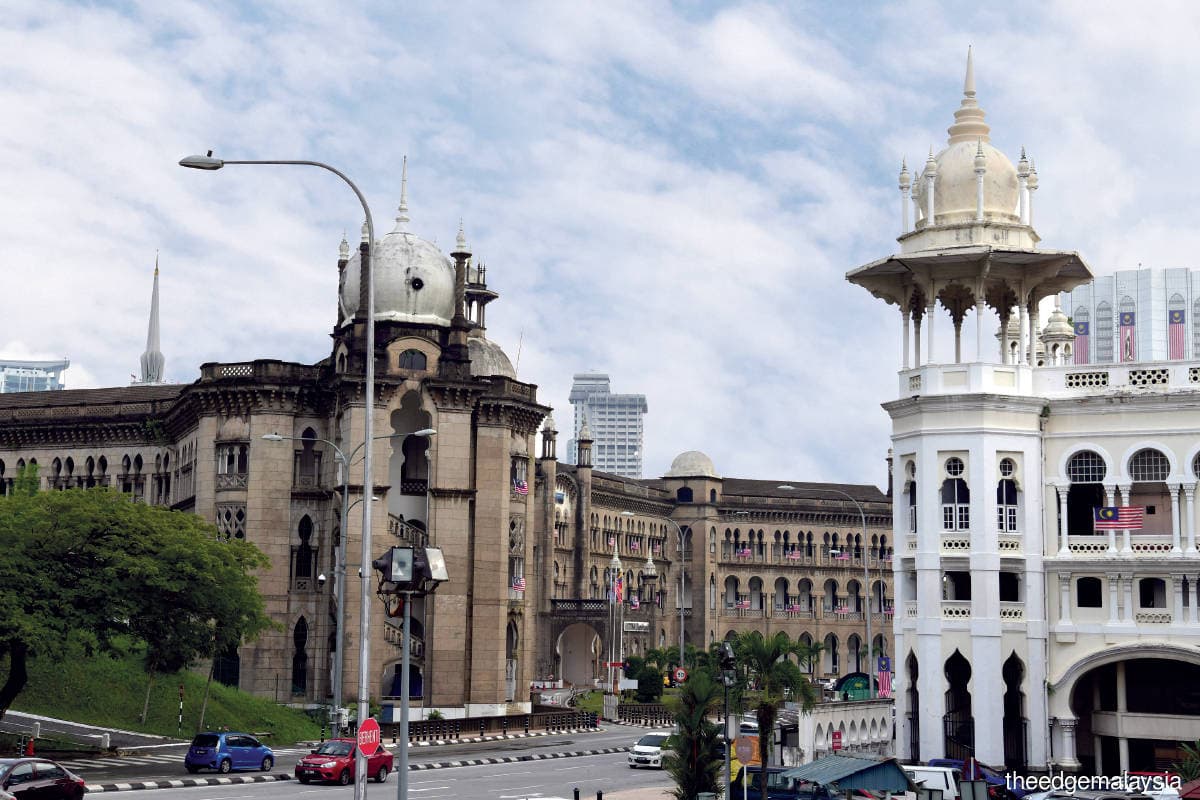
This article first appeared in City & Country, The Edge Malaysia Weekly on September 2, 2024 - September 8, 2024
While some of our historical buildings are well preserved, others have been lost to modernisation.
For instance, Stadium Merdeka was close to being demolished to make way for an office complex in the 1990s. Due to its significance as an important and iconic landmark that symbolises Malaysia’s independence, development and progress as a young nation, many activists protested the move. Fortunately, the plan fell through.
So, where do we stand now when it comes to protecting our historical and heritage assets?
Conserving historical sites
According to Malaysian Institute of Architects’ (PAM) heritage and conservation committee chair Datuk Zulkhairi Md Zain, there have been proactive efforts by the government to conserve heritage assets. Its initiatives include the establishment of the National Heritage Act 2005 (Act 645) and the submission of George Town and Melaka as nominees for the Unesco World Heritage List. The historic cities were jointly inscribed as World Heritage Sites in 2008.
Zulkhairi points out that it was an immense task to get recognition from Unesco as a lot of preparation was needed to showcase a town or city’s outstanding value as a heritage site.

Furthermore, the government announced the establishment of the National Heritage Fund during the tabling of the revised Budget 2023 in February last year. Estimated to cost RM700 million, this public-private partnership initiative is aimed at restoring and rejuvenating heritage buildings, including the Sultan Abdul Samad Building and Carcosa Seri Negara.
The fund is spearheaded by Khazanah Nasional Bhd, which is collaborating with Think City on the project. So far, the details of the plan have not been revealed.
The government also updated legislation. In 2006, it repealed the Antiquities Act 1976 and implemented Act 645.
In commending the government’s efforts, Zulkhairi and PAM deputy president Dexter Koh point out that the Antiquities Act 1976 had a narrow definition of heritage assets. It only considered buildings that were more than 100 years old as such assets, says Koh.
On the other hand, Act 645 broadens the criteria for the gazettement of heritage assets. These include factors such as age, historical significance, design, aesthetic features and technological innovation at the time they were being considered.

Buildings gazetted under Act 645 have a higher chance of being maintained properly, which ensures their longevity and presence for generations to come. All proposed plans for gazetted buildings must go through Jabatan Warisan Negara.
Protecting non-gazetted historical buildings
While there is legislation to protect heritage assets, older and historical buildings that have not been gazetted as heritage assets deserve as much attention and care.
Badan Warisan Malaysia (BWM) president Lim Wei-Ling and Arkitek LLA Sdn Bhd director Laurence Loh suggest that the government keep a detailed inventory of these buildings at the federal and state levels.
“A detailed inventory should be prepared by every local government for all of their [non-gazetted historical buildings], backed by research to ascertain their level of significance, after which guidelines should be prepared to direct how they should be conserved and gazetted under the relevant planning and heritage laws,” says Loh.
“This is to safeguard our nation’s [non-gazetted historical buildings] from being demolished, preserve them for future generations and, in many cases, enable them to continue being attractions that help drive tourism,” says Lim.

The conservation of historical buildings comes with its own set of challenges such as a lack of funding, material scarcity, as well as insufficient awareness and appreciation of these buildings.
“There are a lot of issues surrounding funding as conserving is more expensive than flattening the building to make new buildings. When you do conservation, you have to be very careful. Therefore, it takes a longer time to complete the project,” says Zulkhairi, adding that a lack of suitable materials and craftsmen is another issue.
Koh concurs, saying there needs to be incentives from the government to promote conservation efforts.
Ultimately, the success of a conservation project lies with the asset owners, says Loh. “Regardless of the cultural value of a building, the land on which it stands inevitably represents a real estate development opportunity that promises attractive economic returns. Conserving its history is not usually the first consideration in the eyes of the public at large.
“Legal protection and urban conservation policies that are grounded in sustainable development principles would be the best route to tackle this problem,” he notes.

Despite the challenges, there has been the rise of another method of conserving older buildings — adaptive reuse. This movement has been growing in Malaysia’s architectural scene, in tandem with greater recognition of the cultural, historical and economic value of heritage conservation.
One impact organisation that has actively revitalised older buildings is Think City. Established by Khazanah in 2009, its objective is to create liveable cities by activating and revitalising buildings and social spaces.
Think City was established as a response to George Town being inscribed as a Unesco World Heritage Site. It launched the George Town Grants Programme and disbursed RM16 million for 240 grants in just four years. The grants were given to projects that targeted improvement in the public realm, conservation, capacity building and content development. In the Klang Valley, it developed the Kuala Lumpur Creative and Cultural District (KLCCD) Strategic Master Plan to elevate downtown KL’s historical venues.
Think City managing director Datuk Hamdan Abdul Majeed says, “The government does its best to ensure that our built environment is protected, that our tangible heritage is recognised, cared for and celebrated, and that we put effort into ensuring that heritage matters. However, beyond what has been gazetted, there are a lot more assets that are physically present.”

He adds that these assets can be revitalised and reimagined for purposes different from their original use. He cites High Street Studio (HSS), a community hub in Jalan Tun H S Lee, as an example of a reimagined space that serves a different purpose from its original intention.
HSS used to be a row of shophouses before being renovated into a backpackers’ hostel. After the hostel closed down during the Covid-19 pandemic, the asset owner decided to repurpose it and turn it into HSS.
The hub features commercial spaces that house a café, a musical instrument store, a bookstore and Think City’s office. There is also a pocket park that is accessible to the public.
“In recent years, we have seen more older and historical buildings go through adaptive reuse where the interior space is preserved and repurposed, not just the façade,” says Lim, who lists REXKL, the Kuala Lumpur Performing Arts Centre (klpac), The Row KL and Else Kuala Lumpur as examples.
She adds that owners who have such assets could adopt an adaptive reuse approach to breathe new life into them as leaving these assets unoccupied would lead to their further deterioration.
“Maintaining and repurposing existing buildings are often more sustainable than constructing new ones. These approaches help save resources and energy that would otherwise be spent on demolition and new construction, thus reducing the assets’ environmental impact,” she explains.

Optimising spaces
Loh says historical buildings and gazetted heritage assets are valuable records of a society’s development and culture. They reflect the evolving styles and ways of life from their inception to today, serving as landmarks that help people remember and shape the identity of a place.
“Historical buildings are repositories of knowledge. They tell the story of how a segment of society evolved through time and through their use of buildings. Within a potpourri of styles, they speak about the lives and times of a place from the time of its founding until the present day,” he says.
Lim says these assets not only serve as a reference point for the next generation to understand their heritage, but also provide economic benefits.
REXKL is a good example of an adaptive reuse project that has benefited not only the building but also the economy of the area where it is located. Once an abandoned structure in Jalan Sultan, it was repurposed into a community hub that comprises many eateries, convenience stores and a bookstore, and hosts social events regularly. Since its opening, REXKL has attracted younger crowds, boosting traffic and rejuvenating the surrounding area.
Loh says while the current policies and legislation are enough to protect buildings that have heritage value, it all boils down to whether there are leaders who will champion the cause of conservation.

In contrast, Lim believes a collective effort is needed to ensure the sustainability and longevity of historical buildings. She suggests that the government appoint custodians such as corporations or non-governmental organisations (NGOs) to ensure the assets continue to be preserved in perpetuity.
“There should be a collective effort between all the relevant parties. While these heritage buildings fall under the purview of the government, it could allow corporations or NGOs like BWM to be custodians of these buildings. Under the custodianship of the corporations or NGOs, they would be responsible for taking care of the buildings and finding ways to generate income from them,” she opines.
PAM’s Koh and Zulkhairi believe that government agencies need to work together instead of working in silos. “The overlapping responsibilities and duties of each [government] agency have only made the conservation of heritage buildings convoluted,” says Koh.

Meanwhile, Hamdan believes the conservation of heritage buildings as well as the revitalisation of older buildings are crucial to create a sustainable and resilient city.
“Think City has demonstrated how buildings can be revitalised and successfully applied this in multiple buildings. From there, we can see that a city buzzes when it has a new vibe and character, resulting in a renewed, nicer and safer city,” he says.
“We are seeing this happening in George Town in Penang and Chinatown in Kuala Lumpur. This bodes well for asset owners, the city government and the public.”
Hamdan says there is a need to optimise existing spaces rather than construct new buildings. “There are already enough assets in the country that can benefit another generation. What we need to focus on is optimising the available spaces. There may be a marginal need for newbuilds but there is a greater need to optimise and regenerate existing builds.”
Save by subscribing to us for your print and/or digital copy.
P/S: The Edge is also available on Apple's App Store and Android's Google Play.