

This article first appeared in City & Country, The Edge Malaysia Weekly on August 26, 2024 - September 1, 2024
In this modern hectic world, having conveniences and lifestyle features right at our doorstep would do away with the hassle of getting caught in traffic and save us a lot of time. Hence, it is increasingly common these days to find strata commercial properties that are mixed-use developments integrated with multiple components, including offices, retail lots, serviced apartments, SoHos/SoFos, hotels, medical centres and even public transport links.
“Higher demand at locations near public transport, infrastructure, facilities and other conveniences has invariably morphed developments into high-density mixed-use developments, many of which are stratified,” says Architect Centre Sdn Bhd accredited building inspector and trainer Anthony Lee Tee in an email interview with City & Country.
This new reality has led property developers, architects and engineers to maximise density, with some developments packing bigger podiums, he says.
“As land prices escalate, coupled with the high car park lots requirement [still imposed by the authorities], the gross built-up areas increase with the density of strata units. Hence, designers are forced to go deeper by having more basement levels, leading to more complicated developments and higher costs, or building more above ground as in the case of multi-storey car parks,” Lee explains.
“The design, construction, management and maintenance of mixed-use developments are often done in phases over many years and they have become complex. Residential and commercial components are brought together as a mixed-use strata development,” he says, likening it to a 3D web of interwoven services and common areas that cater for a confluence of people.
“Moreover, these developments have shared common areas and facilities such as corridors, lifts, parking areas, trash disposal rooms and fire safety systems. All of these need to be managed welll,” says Lee.

Managing expectations
As we embrace this confluence of people, there will be a conundrum — how do we address the various requirements of those who use the common spaces? In such developments, there are residents, shoppers, hotel guests, company employees and so on, with some preferring more privacy and others needing greater accessibility.
“Fundamentally, a mixed-use integrated development is designed to assemble everyone with different purposes and house them in the same building, same development,” says Henry Butcher Malaysia (Mont Kiara) Sdn Bhd (HBMK) managing director Low Hon Keong, drawing from the property manager’s experience at mixed-use developments such as Pavilion Suites, Menara UOA Bangsar and Four Seasons KL.
He adds that the occupants must realise that they need each other despite their conflicting interests. “For example, you have a development with residential and commercial components. It’s very convenient for the residents that the mall is just a stone’s throw away. But at the same time, they are concerned about their safety because there will be many shoppers who may be able to access or sneak into the residential area.
“This is a situation that we, property managers, must always manage. We need to manage the different agendas and objectives of each component in the development. Nevertheless, it boils down to the fact that they need each other. Businesses will be affected without the residential component and vice versa. They have to work in unison.”
Low makes it a point to educate the many stakeholders that they are in this together and that potential conflicts may arise so they are better prepared to deal with them. “For instance, they are briefed on the rationale behind the different fees for maintenance,” he says.
As for the different rates, stakeholders must realise this is most likely the case as each component has a different management method and services. “Residents of a condominium that is attached to a five-star hotel, for example, may not require or prefer the management services required by the hotel,” says Low.
“Hence, different service charges have to apply to different components. We will always explain this to the stakeholders because we have to sustain each component financially and also have certain standards to maintain.”
Thus, rule number one is to ensure an equitable charge for every component, according to Low. “I consider this the cost method. It means you pay for what you are entitled to and for what you use. Let’s say you have a swimming pool in your residential component. The swimming pool charges have to be paid by the residents in the residential component only. You cannot ask a mall or an office building to share the maintenance for the swimming pool, even though they are part of the same development,” he explains.
Additionally, Low highlights the importance of ensuring the common property is well maintained. “The general common areas are the top priority. If they are not maintained well, it will affect the entire mixed-use development, regardless of how good your other components are. You can have a beautiful apartment with good interior design but when you step outside, the corridors and lifts are not maintained well, these will affect the value of the entire development.
“The common areas within a mixed-use development are everyone’s responsibility. And again, people need to be educated. Don’t just look after your component. At least dedicate some effort to the common areas. Everything is interconnected.”

The challenges
There are certainly challenges in managing such developments. Chur Associates founder and managing partner Chris Tan reckons that the greatest challenge would be dealing with the conflicting interests of the various users.
“The legitimate solution now is the creation of limited common property, hence the formation of sub MCs (subsidiary management corporations) to cater for every single usage,” he says.
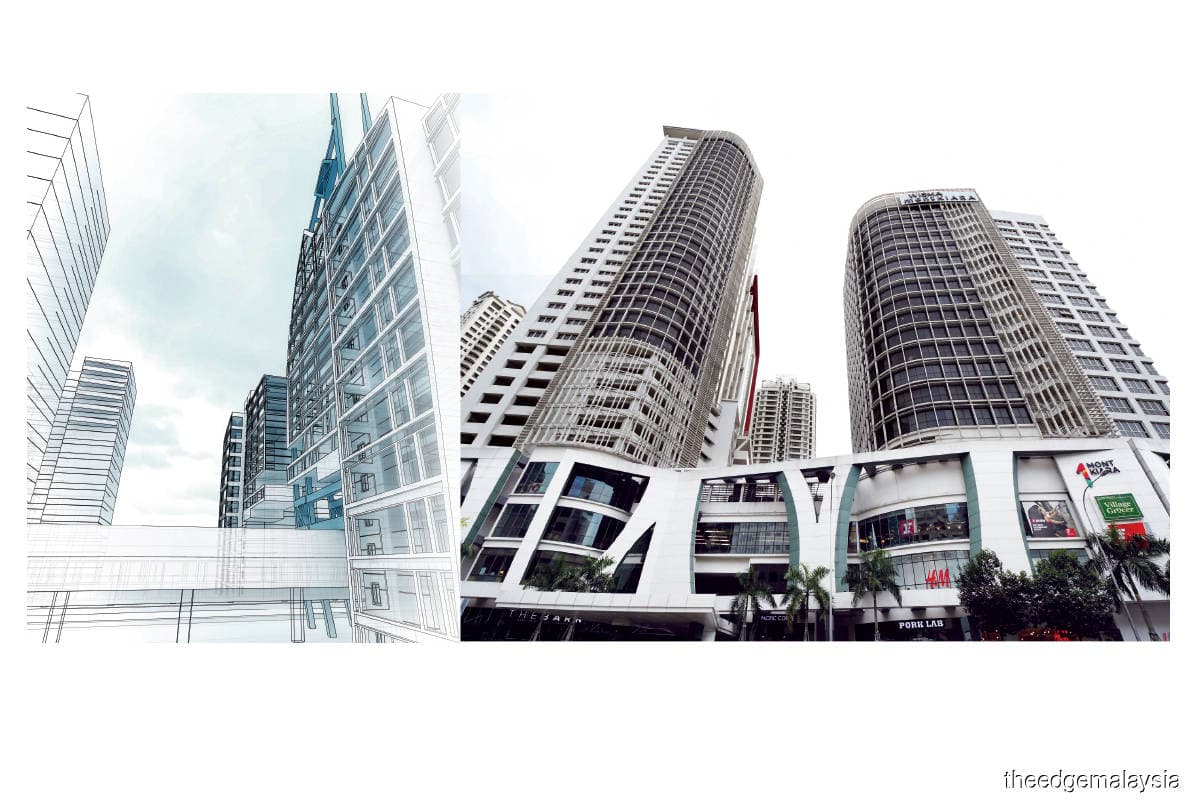
An example would be 1 Mont Kiara, which was the first mixed-use development in Malaysia to form a sub MC to address the issue of maintaining common property.
What is limited common property? It is a component of the strata development that is enjoyed by two or more of the strata owners of the development, but not everyone, Tan explains. This is in contrast to common property, which is utilised by all strata owners and cannot be owned separately, hence no individual strata title is issued.
He acknowledges that it is very challenging to create a sub MC for several reasons. “First, it can only be created by the management corporation (MC) after its formation following the issuance of individual strata titles and not any earlier during the development management period after vacant possession or the joint management body (JMB) stage,” he says.
“Plus, this can be a lengthy process. There will be a general meeting to commission the preparation of the special plan for the limited common property, another general meeting to approve the plan and to commission a 60-day polling process for a comprehensive resolution. This resolution requires two-thirds of the total share units of the entire strata development, not just those who attend the meetings, and it requires a lot of lobbying for the substantial support required by law.”
Next, there are additional costs. “There are fees payable for the preparation of the special plan for the limited common property as well as other ancillary costs to be incurred with the professional engagement of a qualified surveyor for this purpose,” he adds.
Lastly, there are administrative challenges after the creation of the sub MC, which may require more committee members, greater legal compliance, separate billings, audits and meetings.
Tan points out that the contribution to both the service charges and sinking fund is now based on share units allocated to each strata property.
“The Strata Management Act (SMA) 2013 has attempted to address the sophistication of mixed-use integrated developments by moving away from the simple main parcel size-based contribution in the past and renewed emphasis on the importance of share units that now consider factors such as the type of parcel [main or accessory] and its size, its intended or allocated use and even its location [indoor or outdoor] in both the contribution and participation,” he explains.
“Until a better weightage and consideration is introduced, it will remain an issue. Differing rates are permitted by the law only after the formation of the MC [and not any earlier] and yet the circumstances to introduce differing rates are too broad and not helpful.
“One feasible solution is to enable a ‘strata-within-strata’ at the pre-sale stage rather than the current regime of enabling limited common property only via the MC at a much later stage after the issuance of the strata title.”

Amending the law
The principal legislation that governs strata properties is the SMA 2013.
“Given that the Act was drafted with predominantly residential strata developments in mind, it is ill-equipped to deal with the sophistication of non-residential developments like offices, retail and even the increasingly popular industrial properties and warehouses that facilitate e-commerce operations,” says Tan.
He notes that the existing law is also not equipped to deal with multi-phase strata developments, particularly those that take years to complete. “The legal requirement for the filing of the Schedule of Parcels, hence the committed allocation of share units prior to the sale of any strata unit [regardless of the phases or years to be taken for the completion of the entire development], is a limitation to a developer’s innovation with regard to the dynamic commercial and regulatory environment.”
This is further complicated by additional laws such as the Housing Development Act.
“The change of government and ministers, hence the different policy directions in recent years, has also disrupted the continuity of the appropriate review and updating of the law,” he adds.
Thus, Tan reckons that the law is long overdue for a review and update because of the popularity of mixed-use integrated developments in land-scarce urban locations. He offers several suggestions to improve the management of such developments.
These include having prescribed strata management by-laws that consider non-residential usage and the challenges in mixed-use strata development; reviewing the adequacy of the current weightage factors in terms of share unit allocation for each strata title within the development; examining and improving the relevance of the JMB; harmonisation and alignment of the role of the Commissioner of Buildings (COB) and that of the Strata Management Tribunal and moving the tribunal to under the purview of local authorities, and not under the Ministry of Housing and Local Government.

Laying the foundations
There must be transparency and clarity from the start, from the design and planning stages of the mixed-use development. “A clear strata ownership demarcation [physical and legal] to delineate between private parcels, common areas and limited common areas, or even plans to create sub MCs from the onset,” says Lee, adding that the developer can mark which portions of the development to sell, whether individually, en bloc or to be retained. This will help ensure financial accountability, preventing disputes and mistrust.
“For phased developments, they must be planned carefully at each stage of construction and occupation,” he adds.
Echoing similar sentiments, Tan says the demarcation and creation of limited common property before the sale of the strata units is crucial. “Plan for a smooth transition of strata management from one phase to the next,” he adds.
Meanwhile, the maintenance should not be an afterthought. “The buildings should be designed to enable the implementation of planned and preventive maintenance and lifecycle replacement of big-ticket items from Day 1,” says Lee.
He continues: the buildings must be smart, not just sexy, while the facilities and features should be safe, designed with durable materials and remain practical — going beyond skin-deep aesthetics.
The development should have financial sustainability in mind, with the ability to continue with the long-term management and maintenance based on the collection of service charges and sinking fund. All these should be allocated through equitable and fair means. “Do the maths early,” says Lee.
Drawing from his experience visiting the many property sites nationwide in the recently concluded The Edge Malaysia Best Managed & Sustainable Property Awards 2024, he notes that many mixed-use strata developments lacked planning, resulting in long-term challenges for owners and occupants.
“This primarily results in their inability to financially and physically manage and maintain these properties properly. Thus, it leads to degradation in safety and security, non-compliance, exposure to fire and electrical risks, poor indoor air quality, leaks, cracks and even pests,” says Lee.
“Once cast in stone, managing and maintaining a mixed-use strata development is no simple affair, especially one that has many strata components. Therefore, planning becomes essential, particularly with the end in mind.”
As for HBMK’s Low, the property management team prepares the individual components to be eventually managed by sub MCs from Day 1. “Certain components can be managed together, while some of them can be separated. From the first day, we aim to set the tone right by formulating a financial plan so they can work towards forming sub MCs. This will ensure disputes are minimised between the parties in the development,” he says.
Be discerning
Lee advises potential homebuyers to not be easily captivated by the glossy brochures, fancy show units and sales offices as well as the promise of a wide range of facilities and amenities.
“Buyers are usually taken by these promises while ignoring how much money and effort [by the MCs] are associated with the maintenance and management of common property such as lifts, swimming pools, pumps, security, licences and other facilities,” he says.
“Understand the complex nature of a mixed-use strata property. For instance, the demarcation of ownership parcels. What are the common or limited common areas? Are there any adjacent construction due to future phases and expected service charges? Caveat emptor prevails. Ask pertinent questions before buying. Don’t buy [into a mixed-use development] with your eyes and ears shut,” he advises, adding that one can seek knowledge or obtain independent professional consultation to be aware of future obligations.
“Strata development is a game of leverage for collective sufficiency. Thus, collective ownership requires collective understanding and participation — equipping yourself with the relevant information and processes to be part of harmonious community living,” says Tan.
Save by subscribing to us for your print and/or digital copy.
P/S: The Edge is also available on Apple's App Store and Android's Google Play.