

This article first appeared in The Edge Malaysia Weekly on August 12, 2024 - August 18, 2024


Malaysia’s pristine marine ecosystems are facing a crisis, where thriving coral reefs and diverse fish populations are now threatened by rising sea temperatures, ocean acidification and extreme weather events.
The increased emission of greenhouse gases and the rising sea temperature significantly affect marine biodiversity, observes Professor Dr Yeong Yik Sung, director of the Institute of Climate Adaptation and Marine Biotechnology at Universiti Malaysia Terengganu.
Prolonged exposure to seawater temperatures exceeding 27°C, by as little as 1°C or 2°C, can induce coral bleaching, resulting in coral loss.
“[A rise in sea temperature] is the biggest impact that we see in Malaysia and many parts of Southeast Asia. In the last few years, we have been feeling the heat and we [humans] have more tolerance towards hotter temperatures,” says Yeong.
“For aquatic organisms in the sea or in a coral ecosystem, particularly, I would like to touch upon corals because they are susceptible aquatic organisms, which a hike of maybe 3°C or 4°C in the sea for a long period will cause corals to die.”
According to Malaysia’s Fourth National Communication Report to the United Nations Framework Convention on Climate Change, ocean warming can indirectly kill corals by creating conditions conducive to the proliferation of coral diseases.
This is particularly worrying, as coral reefs play a huge role in conserving marine biodiversity. According to reports by the Department of Fisheries Malaysia (DoF) in June, Malaysia’s coral reefs are experiencing significant mass coral bleaching from rising sea surface temperatures, with more than half of coral reefs in several marine parks affected. Affected areas include Pulau Payar in Kedah; Pulau Perhentian, Pulau Redang and Pulau Tenggol in Terengganu; Pulau Tioman in Pahang; and Pulau Pemanggil in Johor.
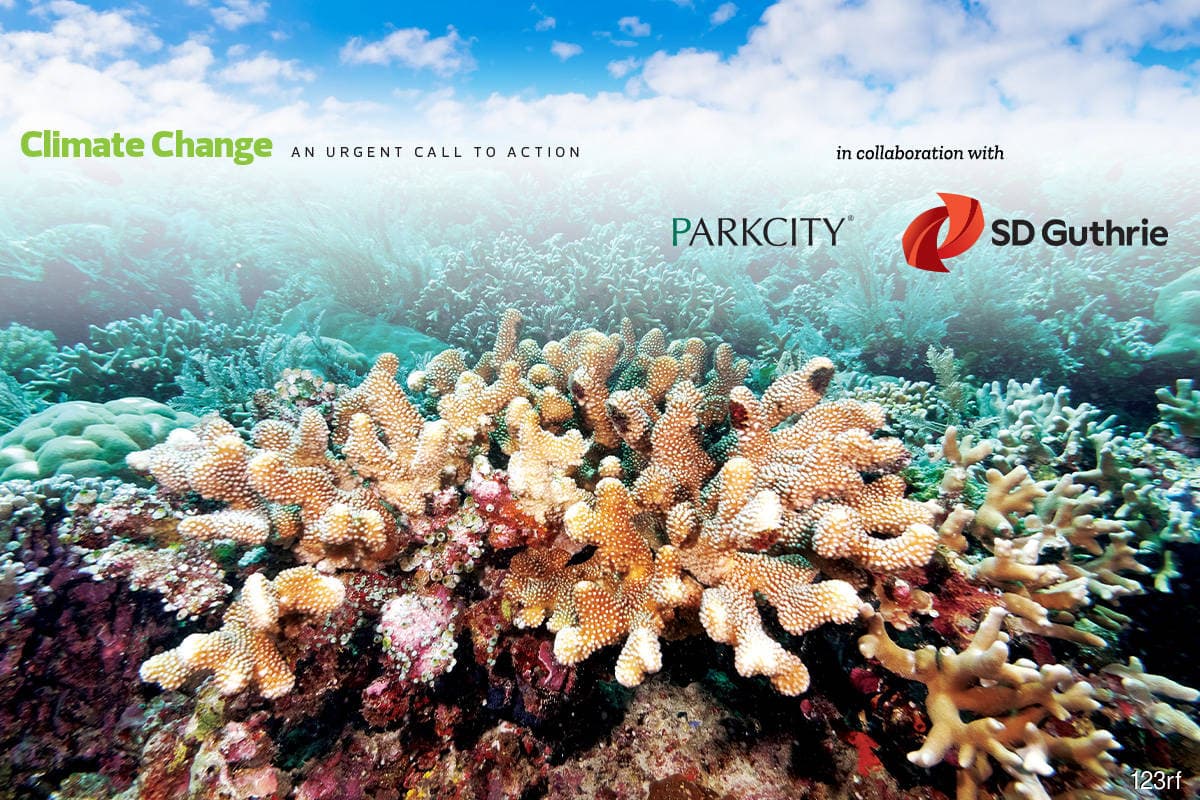
Coral bleaching is the natural response of corals to environmental stress, causing the corals to turn white and appear “bleached”. Mass bleaching refers to large-scale bleaching of various coral species over extensive areas, owing to seawater temperatures exceeding the average normal annual temperature for prolonged periods.


Coral bleaching can affect the entire ecosystem of marine biodiversity, explains Yeong. “Coral, as you know, are breeding, hiding and feeding grounds for fish, and they create a home for aquatic marine organisms and a balanced ecosystem because they have microorganisms or microalgae on them [microalgae called zooxanthellae give colour to the corals]. We have soft corals such as sea anemones. We refer to them as live corals; coral death is the death of the microalgae that colonise the corals.”
Yeong emphasises that even if global warming reaches 1.5oC above pre-industrial levels, up to 90% of coral reefs might disappear by 2050 because of prolonged ocean heatwaves.
Humans are the problem
Human activity and marine pollution have been one of the biggest culprits in coral and marine life degradation.
“For example, we open Redang Island for tourism and an uncontrolled number of tourists come to the islands without awareness. Imagine having millions of tourists in one year. I understand we need to maintain tourism income, but this is harming the marine population because the tourists are unaware,” says Yeong.
“People step on and pick corals, and [some] boats that go to the coral area will have oil leakages. Then, there is plastic contamination and waste from resorts nearby. These add up to become the main destroyers of coral and marine populations.”
As the majority of coral degradation is a result of human activity, action to reduce carbon dioxide and other emissions remains the single most important countermeasure to stop the underlying drivers of coral bleaching.
In Malaysia, DoF has urged public involvement to minimise the impact of coral bleaching and urged tourism operators at islands in marine parks to control the number of tourists taking part in water recreational activities to reduce stress on coral reefs.
Most affected reefs are in shallow waters less than 10m deep, and these sites are being closely monitored.
If bleaching surpasses 80%, DoF might temporarily restrict access to protect the affected reefs. The department stated, however, that any disruptions to tourism activities will be minimised.

DoF also stated that it was setting up a coral bleaching response committee with the help of representatives from Sabah, Sarawak, local researchers, non-governmental organisations and civil society organisations to gather information and take action.
The department also said coral reefs had economic and ecological importance, as they provide a habitat for up to one-third of marine species. The economic value of marine parks, which are largely surrounded by coral reef ecosystems, amounts to RM8.7 billion annually through various ecosystem services.
Another key factor that is damaging marine life is acidification and low oxygen levels in seawater, observes Yeong. “When the pH level changes, it will have an impact on the optimal survival of marine organisms.”
Acidification affects many animals’ ability to make shells or skeletons, while low oxygen levels can contribute to hypoxia or dead zones. Warm temperatures can exacerbate the effects of both acidification and hypoxia. Dead zones can cause mass die-offs of fish, crabs, shrimp and other marine organisms.
“Just imagine a constant environment in which oxygen is low, no organism will survive very well in that condition. And this does not occur only in the coral ecosystem in the ocean, but is also commonly seen in the mangrove area. The mangrove area is another important marine life. It is essential as a breeding and hiding ground for marine resources such as freshwater fish and shrimp.”
The impact on one species can ripple across an entire ecosystem. For example, changes in sea temperatures have affected the main habitats of fish. This prevents the fish from recovering and breeding successfully to restore their population.
“Thus, a decrease in the ability to breed successfully, coupled with the rapid loss due to overfishing, is a combination of a situation in which the fish may face a population crash more quickly. Changes in sea temperatures are also affecting the distribution of plankton, which is [an] important [source] of food for fish,” says Chitra Devi, marine programme leader at WWF Malaysia.
The fisherman’s dilemma
Coastal communities are becoming more vulnerable to the effects of more severe storms, floods, coastal erosion and sea level rise caused by climate change. This vulnerability is evident in the challenges faced by fishermen, who already toil in arduous conditions to earn a meagre living from the sea.
According to DoF, there are more than 139,419 fishermen working on licensed fishing vessels. These small-scale operators, from seaside or river communities, fish in nearshore waters or along rivers for fish, clams, crabs and other marine animals to meet local demand. In 2023, Malaysia’s fisheries subsector produced 1.79 million tonnes of edible fish, 241 million ornamental fish and 26 million bunches of aquatic plants worth RM16.5 billion.
Erratic weather patterns, rising sea temperatures and dwindling fish populations are making it increasingly difficult for small-scale fishers to survive. While large-scale fishing operations may be more resilient, coastal communities that have relied on the sea for generations are bearing the brunt of this crisis.
Evelyn Teh, executive director at ARA Research, says: “The challenges posed by climate change affect both the same way, as there will be less catch to go around when the fisheries stocks dwindle, but the key difference is that large-scale fisheries have the capital and ability to pivot to another business in fisheries such as aquaculture. In other words, they’re likely better at absorbing the shocks brought about by climate change [compared to] coastal fisheries.”
Coastal fishermen, who rely mostly on the sea for daily catches, are at high risk, especially if they lack resources to pivot to aquaculture farming.
“That is a shame because fishermen are highly skilled in what they do out at sea and their contribution to the local food security should not be undermined just because they do not haul up catches in large amounts like industrial fishers do,” says Teh.
The skills and experience of coastal fishermen, gathered over many generations, will be lost.
“This is where stakeholders in the fisheries and seafood industry need to work together to promote sustainable fisheries, emphasising the need for a science-based fisheries approach to sustain the marine resources through stock recovery, establish a commercially and ecologically viable fisheries industry,” says Chitra.
“The seafood supply chain needs to reform to adopt digitalisation of catch data and traceability systems, focusing on sustainable practices that not only conserve ecosystems but also sustain livelihoods and ensure food security.”
Save by subscribing to us for your print and/or digital copy.
P/S: The Edge is also available on Apple's App Store and Android's Google Play.