

This article first appeared in The Edge Malaysia Weekly on July 15, 2024 - July 21, 2024
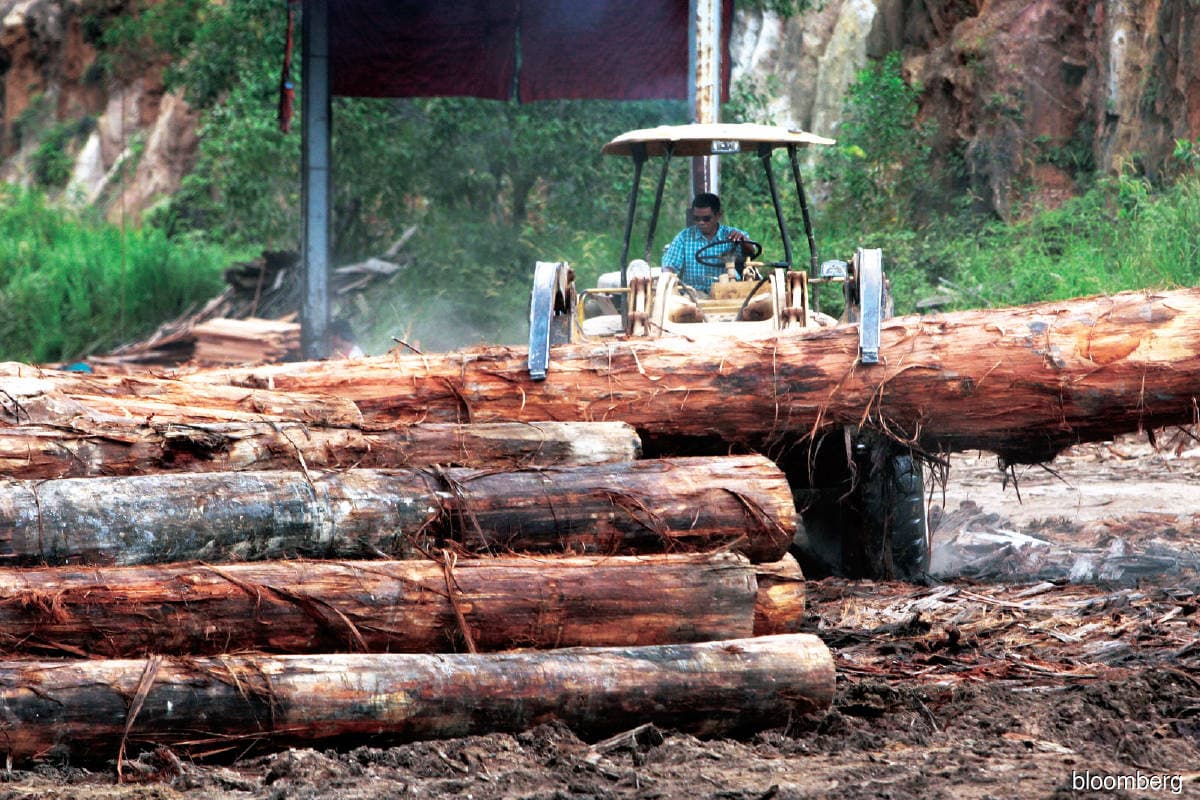
Much of the discussion on the European Union Deforestation Regulation (EUDR) has been the impact on palm oil, but other commodities such as timber from Malaysia will also be subject to scrutiny.
In fact, existing verification or certification schemes for timber products in Malaysia are not yet fully compliant with the EUDR, which will kick off on Dec 30 this year, and six months may not be sufficient for the necessary revisions to be made.
The government will have to give more assistance to industry players and provide clarity, for instance, on forest plantations, which are considered non-compliant under the EUDR if they were established after Dec 31, 2020. It will also have to lobby for Malaysia to not be placed in the high-risk category, which would result in higher levels of scrutiny for Malaysian exports.
These are the observations in a report commissioned by the Malaysian Timber Association (MTA) for its members this year. In April and May, three briefing sessions on the outcome of the report were held in Kuala Lumpur, Kuching and Kota Kinabalu for MTA members, forestry agencies and related government agencies.
The EUDR essentially bans the import of commodities and products derived from them that are associated with deforestation. For small and medium enterprises, the regulation will come into effect on June 30, 2025.

Timber is one of seven commodities covered by the EUDR, alongside cocoa, coffee, soy, palm oil, rubber and cattle.
Although Europe is not the biggest export market for Malaysian timber and related products such as furniture, it is still a point of concern for local timber players.
“Under the EUDR, timber operators who wish to continue to trade in the EU market must establish a due diligence system involving information gathering, risk assessment and risk mitigation to ensure there is no non-negligible risk that the timber products traded are from illegal sources and have not resulted in deforestation or forest degradation,” says Yong Teng Koon, author of the report and former CEO of the Malaysian Timber Certification Council (MTCC).
Last December, MTA and the Malaysian Timber Council initiated the Coalition on Sustainable Timber, bringing together forestry and timber industry associations from nine tropical timber-producing countries, such as Bolivia, Brazil, Ecuador, Indonesia, Paraguay, Peru and Nigeria.
The Coalition submitted a position paper on the EUDR to the EU in February, highlighting their concerns about the implementation of the regulation and tight timeline and emphasising the need for cooperation between the EU and these countries to promote sustainable forest management.
“[With] six more months to go, the Implementation Guidance document [for EUDR] has yet to be published and the Information System is still undergoing the application programming interface testing. In view of these developments, there have been increasing calls from both within and outside the EU, including from the Coalition, for a deferment or delay in the implementation of the EUDR,” says Yong.
The critics of EUDR also say that if the original implementation date is kept, there needs to be a longer transition or grace period, so operators will not be penalised for mistakes made in the initial stages but be given time for rectification, he adds.
Getting the house in order
Malaysian exporters who want to continue exporting to the EU will have to demonstrate compliance by providing information to the EU operators, who must complete a due diligence statement. This can be a tedious and difficult process.
The products must not be the result of any deforestation or forest degradation activities after Dec 30, 2020, the wood must be legally harvested, and the company must have the geographic coordinates of the plots of land where the wood was produced.
“Geolocation is a core component of the EUDR due diligence system. The challenge of this requirement is the sheer amount of data required, especially for operators who purchase timber from multiple sources and manufacture composite products such as chipboard and paper,” says Yong.
“This will constitute a real administrative burden and [it is] practically impossible to trace the source of all the materials used through the various processes involved in their production.”
The EUDR also requires that the full scientific names of all tree species contained in the product be provided, which is a challenge as many of Malaysia’s lesser known or underutilised tree species can only be identified to the genus level, he points out. This is another area where government assistance is required.
Yet another rather fundamental problem arises from different definitions. Before the EUDR, Malaysian timber exporters were already subject to the EU Timber Regulation (EUTR), which addresses the legality of the logged wood, and were familiar with the regional Timber Legality Assurance Systems and Malaysian Timber Certification Scheme (MTCS) by the MTCC.
Yong finds the EUDR more demanding than the EUTR because of the expansion in the list of products covered, 32 new definitions, mandatory due diligence requirements and a new cut-off date for deforestation and forest degradation-free requirements, among other things.
Among the new definitions introduced by the EUDR that are different from the MTCS’ forest management standard (Malaysian Criteria and Indicators for Sustainable Forest Management or MC&I SFM) are that of forests and forest plantations. This difference in definitions results in different baselines on which to determine if deforestation has occurred.
The EU refers to a global map of forest cover produced by the EU Observatory on deforestation and forest degradation, which uses global spatial layers of land cover, land use and tree height as at Dec 31, 2020.
“Besides the difference in the extent of the forest cover for Malaysia due to the different definitions of forest, preliminary assessments also indicated some inconsistencies [in] the forest cover map database overlays,” Yong points out. The forest agencies of the three regions in Malaysia have agreed to submit a national response to the European Commission Joint Research Centre on this matter, he adds.
While the MTCS can be revised to meet the requirements of the EUDR, Yong is pessimistic that this can be done in time. The MTCS, which is endorsed by the international Programme for the Endorsement of Forest Certification (PEFC), has to revise its forest management and chain of custody standards, he says.
Only after the consultation is done, and the results agreed upon by the PEFC board and endorsed by its members, can the standard be adopted. Then, the MTCC can align its standards with the newly revised PEFC standards. “So, it is unlikely that the MTCS can be revised in time to meet the application date of the EUDR,” says Yong.
Government must take the lead
Forest plantations were introduced in Malaysia in 2005 as a solution to reducing logging in native forests while ensuring the availability of raw materials for the timber industry.
The plan was to plant 25,000ha of forest plantations per year from 2005 to 2020, which could be in forest reserves or degraded forests. The second phase of the Forest Plantation Programme 2021-2025 was launched in recent years.
“In fact, the three regions of Malaysia have set ambitious targets to establish a sizeable extent of forest plantations under their respective forest plantation development programmes to boost supply to complement the declining supply of raw material from the natural forest,” says Yong.
Any of these plantations developed after Dec 30, 2020, will not be compliant with the EUDR as it is still considered deforestation.
In the report, Yong’s view is that the government can issue an official position on the extent of forest plantations and provide geolocation data that is EUDR compliant. He also suggests that the government come up with a national deforestation policy or legislation that covers the affected commodities to showcase Malaysia’s efforts at preventing deforestation.
So far, the prime minister and deputy prime minister have on different occasions called the EUDR unjust and discriminatory. The Malaysian Palm Oil Council recently highlighted in a statement the difficulties in complying with the EUDR and called for transparency on how the EU categorises countries as low or high risk.
Meanwhile, the Roundtable on Sustainable Palm Oil has said it is “in a good position to facilitate compliance with the EUDR for its members” and is developing a digital platform for traceability.
Of course, companies could just opt to leave the EU, which is not Malaysia’s biggest export market. The economic grouping constituted about 11% of the total export value of Malaysian timber and timber products in 2023, making it only its third biggest export market.
But as Malaysia is a trading nation, Yong believes the existing market should be maintained even as new ones are being explored.
“Over the period of 2018 to 2023, the annual export value of Malaysian timber and timber products to the EU consistently exceeded US$500 million. However, if the EUDR is found to be overly stringent and demanding, there is no stopping Malaysia [from exploring] other markets that are not regulated by the EUDR,” he says.
Save by subscribing to us for your print and/or digital copy.
P/S: The Edge is also available on Apple's App Store and Android's Google Play.