

This article first appeared in Digital Edge, The Edge Malaysia Weekly on May 13, 2024 - May 19, 2024
Picture this: While on your day job as an e-hailing driver, your car breaks down. After sending the car to a workshop, you check your bank account and there isn’t enough money to cover the repairs as your funds have been used for back-to-school supplies.
Without the car, there are no other means of making money and getting a loan from the bank would be too tedious. What do you do and how do you get this problem fixed so that you can carry on making a living? This scenario is common among the growing gig-worker landscape in Malaysia.
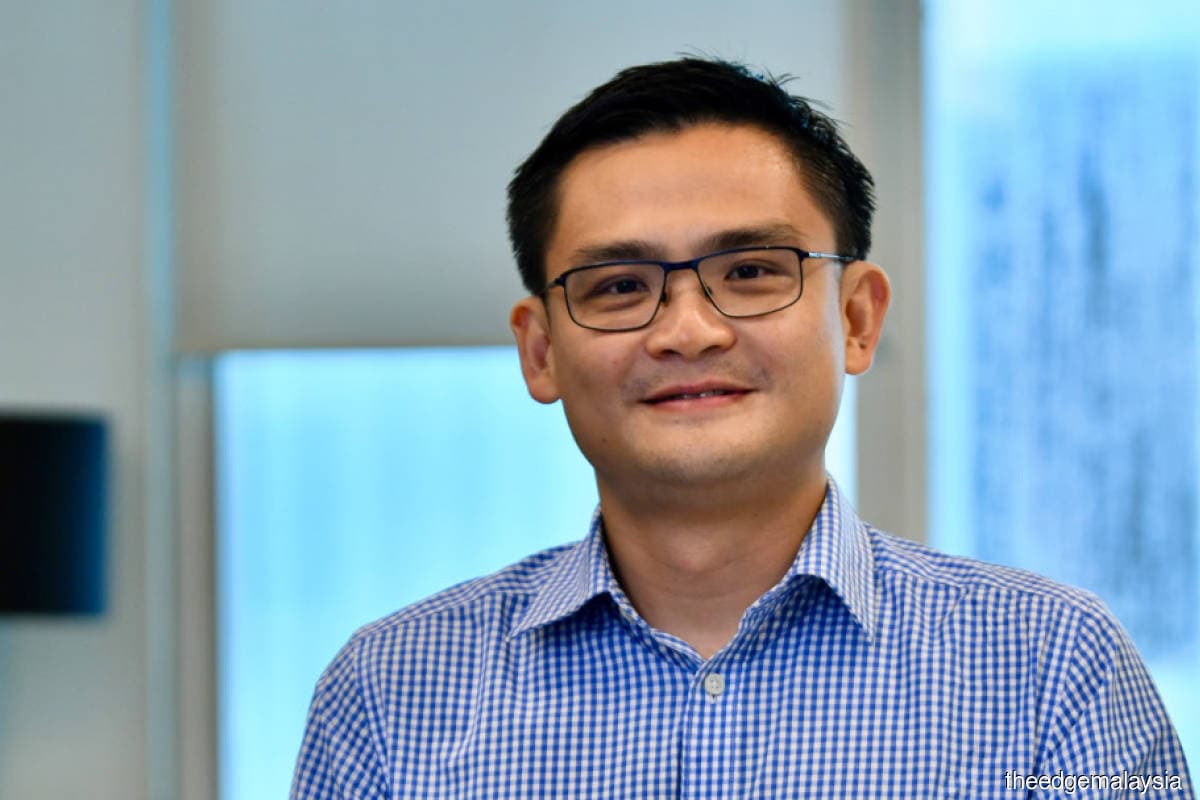
The growing gig economy, coupled with Malaysians’ difficulty in building an emergency savings fund, poses a financial conundrum. Hui Yik Seong, founder and director of Direct Lending, who worked as an accountant for a decade prior to setting up the company in 2016, noticed there was a gap in the “need-based financing” space.

RinggitPlus’ Malaysian Financial Literacy Survey 2023 revealed that 71% of respondents saved less than RM500 of their monthly earnings last year, while 67% of respondents say their emergency savings will last three months or less.
Need-based financing, as Hui explains, is only for products and services that are sought after in times of great need or in an emergency.
“We think about it this way: When a person needs a loan, it’s usually to solve a problem, such as getting something fixed. Most people need a loan when they are in an emergency because they may not have enough saved for such things. I realised if [financial aid] is managed and given properly, it can really empower people,” he says.
Direct Lending, essentially, is an alternative way for the unbanked and underserved to have access to personal loans and financing. In 2016, the company started as a “marketplace” for loans, as Hui describes it, playing an intermediary role between the borrower and private credit financing companies in the market.
Direct Lending would help borrowers with the documentation, initial assessment and whatever else is needed for a loan application. It would then pass it on to the credit company for underwriting and to decide if the borrower is eligible for funding.
“We work with non-bank lenders including the likes of credit co-operatives, licensed money lenders and credit companies. But two years ago, we decided to provide financing ourselves and had to make sure that we didn’t have any conflict of interest with the existing lenders working with us,” says Hui.

Similar to buy now, pay later (BNPL) services, Direct Lending set up its own need-based financing solution — limited to auto financing currently — two years ago. The company will pay for a needed service upfront and the borrower will pay the company back in instalments via a direct debit plan.
In this case, the borrower will carry out the checkout process through Direct Lending. Hui says the company works with a third-party acquirer to gain access to PayNet’s ecosystem to allow direct debiting
“It also minimises a customer’s effort to remember when to pay back. [This is also how we have] better control in terms of how we want the user journey to be and what the financing is used for,” he explains.
At this juncture, the company has a presence at over 1,500 car workshops across the country, including Sabah and Sarawak, and has collaborated with prominent workshops such as Petronas AutoExpert (80 workshops across the country), Autohaus KL (15 outlets) and Maxipura (nine outlets). In March, the company collaborated with MyEG Services Bhd to launch a shariah-compliant BNPL programme tailored for automotive services.
For Direct Lending auto service financing, Hui says in its first year of operation it served over 500 car owners, and this increased tenfold to over 5,000 in its second year of operation.
Direct Lending caters to three communities: those who are in the lower- to middle-income group who may not fulfil banking requirements for a loan, especially those who have variable incomes from, for example, home businesses; fresh graduates with no credit history; and micro-entrepreneurs and gig-workers who are self-employed.
The similarity between these groups is the high possibility of their not having a credit history and scoring, leading banks to shy away from them as they would be considered high risk. Hui says the company was determined to figure out a way to help this forgotten group of people access financing in a safe and affordable way.
If a person would like to apply for Direct Lending’s financing, they would need to scan a unique QR code that will be present at the car workshop, upload their MyKad details and image, and three months’ bank statements. Hui says the application process takes about five minutes and the loan will be approved (or rejected) within half an hour or so.
“Once it is approved, the car workshop can proceed to fix the car and the person can carry on with their life, earning and income. All they need to do is pay it back monthly to us on a direct debit instalment basis,” he says, adding that the company charges a flat interest rate of 1.5% currently.
It is also looking to take on a risk-based approach to loans and provide varying interest rates based on that, says Hui, but not in the near term as more data is needed to do so.
“In general, people are hesitant to share their data because of the scams that we read [about] in the news and of people who fall victim to fraud when data is not handled properly. In order for people to share their data with us, we need to deliver value to them and instil a sense of trust too,” he explains.
Hui emphasises that the company is in compliance with the Personal Data and Protection Act 2010 (PDPA) and other financial regulations set by regulators. The company also practises data encryption internally and on its website, making sure that even team members have access to data on a need-to-know basis.
When the company first started in 2016, mediating between private credit companies and applicants, towards the end of its first financial year, it was transacting about RM1 million a month. Today, the company has grown exponentially and is transacting over RM10 million a month and has disbursed over RM300 million worth of funding.
Its non-performing loan (NPL) rate is less than 3%, which the company defines as those who have not made a payment in two months (60 days) or more. Although Malaysian banks’ NPL rate is between 1% and 2%, Hui says Direct Lending’s rate is acceptable as it serves people with higher risk profiles.
“Also, a bank’s definition of an NPL is when one is 90 days overdue. Ours is 60 days because it’s a shorter-term loan and the segment of the public we serve is different,” he says.

Technology empowering loan approvals for the underserved
Hui started his career in 2001, working as an auditor at PwC, operating between Kuala Lumpur and London. After six years there — and just before the 2008 global financial crisis — he joined Barclays as an investment banker, working between London, Hong Kong and Singapore, before leaving the bank to set up Direct Lending in 2016.
Despite having lived overseas for more than a decade, his heart was still in Malaysia. At that time, technology was entering the financial services industry, planting the seeds that would grow to become today’s financial technology landscape. Hui was fortunate to witness the early days of fintech, and realised its potential, especially when it came to providing financial assistance to those from the low-income bracket and those without a credit history.
Taking a leap of faith, he returned home. He soon realised he needed to reacquaint himself with his home country and national language in order to cater to Malaysians who fall within the financing gap.
“I really needed to brush up on my Bahasa Malaysia, so every day I tuned in to the Malay radio stations and watched the Malay-dominant TV channels like TV1 and TV2,” he quips.
“I also took the time to meet all the customers we had at that time to understand their situation better in order to design a product that would suit their needs. It was a real transition from dealing with big corporations and talking to CFOs (chief financial officers) to going down to the ground and getting my hands dirty just to get a better understanding.
“I always tell my team that we cannot make assumptions in this business. We really need to talk to our customers in order to understand them and their needs before catering to them.”
It took some time for Hui and his team to figure out the best way for them to assess a person’s creditworthiness without using traditional methods employed by banks. For banks, it is common to provide pay slips and Employees Provident Fund (EPF) statements, but for the targeted group, these documents may not be available.
“Another reality is that nowadays, it’s common for people to have more than one job or have supplementary income, which is why we have chosen to make an assessment primarily with bank statements to have a holistic understanding of a person’s income and expenses,” Hui explains.
“We try to look at data that almost everyone might have. It also helps us cater to people who do not have a credit record.”
While a three-month bank statement might seem too simple, Hui says there is, in fact, a lot of data and patterns to be learnt. The bank statement is digitised and run through Direct Lending’s machine learning and artificial intelligence algorithm to digest the data and determine the comfort level for doling out funds to said individual.
“We’re trying to balance between speed, convenience, affordability and creditworthiness. This is used to determine the level of comfort but there will be human intervention to check on certain cases if the need arises,” he says.
Taking into account that most people now operate digitally with e-wallets, Hui says the company is looking at incorporating e-wallet transactions as a means to assess a person’s creditworthiness and eligibility for a loan. But ultimately, he would like to see an open banking concept used in Malaysia.
“Now, whether we like it or not, although the data belongs to the customer, it’s kept by different platforms or financial institutions. We imagine a world where the customer controls the data, where they can decide what information to share to whom at any particular time.
“So, for example, if people want to apply for something, they can choose to share information from bank account A and e-wallet B, and the sharing is done conveniently instead of downloading and sending over bank statements.”
Hui believes that the company can venture into other need-based sectors and is conducting research as to which area to go into next, be it for home repairs, medical or educational purposes. It is also in the process of finding the right investment partner to raise debt financing to lend out more funds to its customers.
Save by subscribing to us for your print and/or digital copy.
P/S: The Edge is also available on Apple's App Store and Android's Google Play.