

This article first appeared in Wealth, The Edge Malaysia Weekly on April 22, 2024 - April 28, 2024
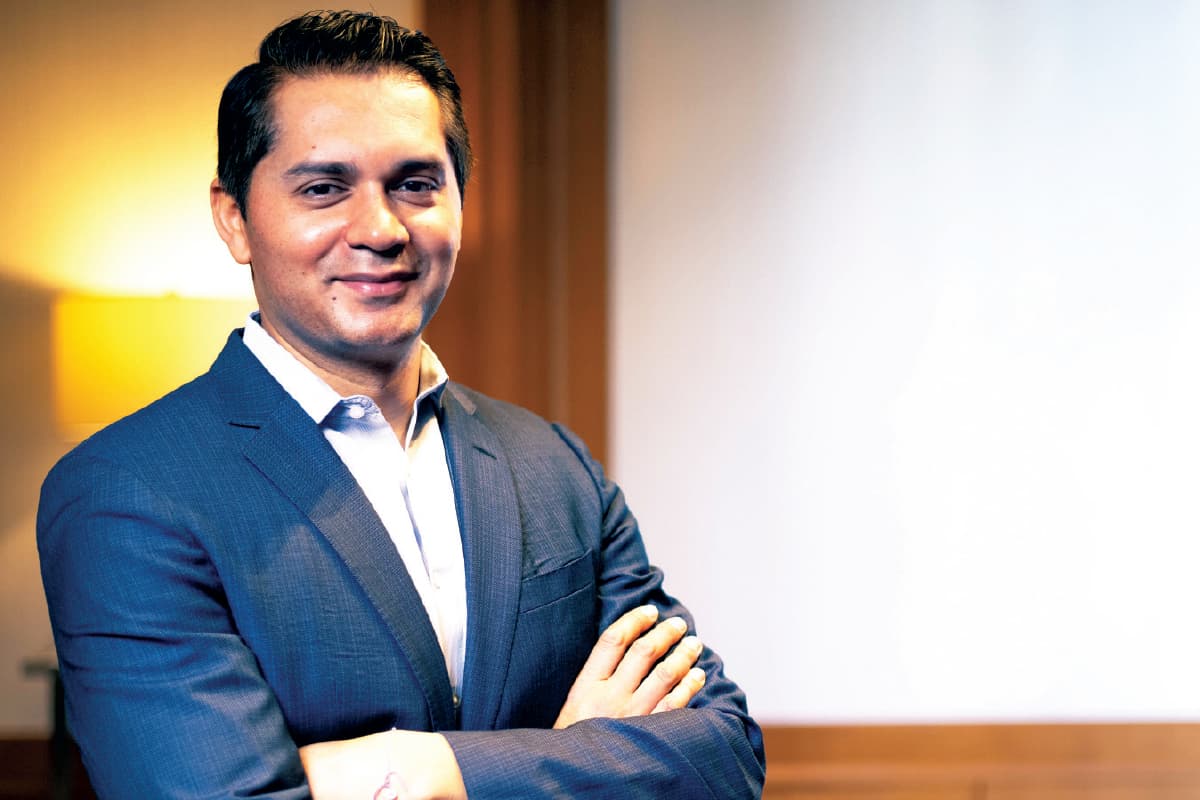
US-based B Capital may set up an office locally, enabling it to become a direct investor in companies based in Malaysia, according to its co-founder and co-CEO Raj Ganguly.
B Capital is an investment firm based in Manhattan Beach, California, led by Eduardo Saverin, co-founder of US tech behemoth Meta Platforms Inc (Facebook), and Ganguly, who spent 11 years at the Boston Consulting Group, with which B Capital formed a strategic partnership.
Ganguly was in Malaysia in February to give a talk at an event hosted by The Retirement Fund Inc (KWAP). While he spoke about his journey as an entrepreneur and investor and why the firm was a strong believer of start-ups in India and Southeast Asia, Ganguly was on another mission. On top of engaging pension funds, several of which are B Capital’s clients in the US, his aim was to meet local entrepreneurs, scout for investment deals and consider setting up an office in Kuala Lumpur.
“You would see us starting to become a direct investor in companies headquartered in Malaysia, and you will see B Capital open an office locally. We have offices today in Singapore and Indonesia; setting up one in Malaysia is a logical next step,” he says.
According to its website, the firm has assets under management (AUM) of more than US$6 billion (RM28.7 billion) and is invested in more than 160 early- to late-stage companies.
Some of the familiar names in the region that B Capital has a stake in are used-car marketplace Carro, logistic solution provider Ninja Van and coffee company Kopi Kenangan.
In recent years, the firm has been more aggressive in identifying investment opportunities in Malaysia, especially in the software companies with solutions that cater for businesses, corporations and institutions.
The sectors include artificial intelligence, healthcare, climate technology, cybersecurity, people management solutions and those in the business-to-business (B2B) space, Ganguly tells Wealth.
B Capital is eyeing companies that want to become regional leaders. In the past, the firm invested from as low as US$250,000 in early-stage start-ups to US$125 million over several years in companies eager to grow abroad.
“You probably see that our earlier investments tended more towards companies that wanted to raise Series B or Series C funds. The reason was simple. We think Series A should be participated in by local investors who know the local players and market better,” he says.
“We want to invest in companies that are expanding regionally or globally, which is where we can really add value. There is a reason we partner with BCG. It serves thousands of the world’s leading companies. The CEOs and directors of these companies are increasingly looking for access to innovative technologies.
“We are ready to provide this [connection] as the bridge between the emerging technology leaders of tomorrow and the business leaders of today. We think it is incredibly valuable.”
On VC investing
Ganguly says the firm is a long-term investor that is prepared to ride with its investee companies for five, or even 15, years as opposed to some peers that typically exit after five to seven years.
B Capital favours start-ups with reasonable valuations and adopt a balanced approach in terms of growth and profitability.
Ganguly says a “strange” phenomenon in the venture capital (VC) industry is that everybody was so excited about the start-up ecosystem from 2020 to 2021. What they overlooked was that start-up valuations were sky-high during that period. “Those were the years with the highest prices that I’d ever seen in the past 25 years of investing.”
As start-ups’ valuations took a hit and became more reasonable recently on the back of higher interest rates, many venture capitalists turned pessimistic about the industry and slowed down in investing, which Ganguly says is an irony.
“Now that prices are so much lower, suddenly people have turned negative on start-ups, which is strange. In most other industries, people are more enthusiastic when prices are low. But in the VC industry [in general], people get very excited by high prices.
“We like to invest at reasonable prices. When the VC industry is built on FOMO (fear of missing out), we try never to be driven by FOMO. Ultimately, we want to invest in great founders. We want to be top partners with them throughout their whole journey,” he says.
Patrick McGinnis, a Harvard MBA student who popularised the term FOMO, is a former university mate and a close friend of Ganguly. It is part of the reason he keeps the term close to his heart when investing.
The pandemic years when money was almost free were also the years when venture capitalists favoured start-ups that grew at all cost. Profitability was neglected, which is not the best way of investing.
While it was not obvious back then, it is now. Ganguly says some venture capitalists use “the rule of 40” to evaluate start-ups or companies that they would consider investing in.
The rule means a start-up that is performing well would have revenue growth plus profit margin of 40%. It can grow its business at 30% with a profit margin of 10% or a revenue growth of 50% and a profit margin of negative 10%.
Many venture capitalists threw profitability out of the window during the low to zero interest rate environment and focused on growth. It was essential, but was that what the broader investment community was looking for?
Without mentioning names, Ganguly says the first Southeast Asia start-up that had an IPO about three years ago, which pursues high and fast growth without emphasising profitability, has not seen its share price performing well after its listing.
“We learnt that being a high growth, negative profitability company isn’t very exciting to investors,” says Ganguly.
Today, interest rates have risen so much, Ganguly says, noting that venture capitalists have over-corrected their investment approach by focusing too much on profitability. Some forget that companies cannot cut costs (for profitability) and grow their businesses at the same time.
“A healthy balance is for a company to have 30% growth and 10% profit margin, in general. That’s what we believe investors are looking for. For a Southeast Asian start-up to be publicly listed, this is the kind of metrics it needs to have to be successful in the IPO market,” he says.
Ganguly adds that not all unprofitable companies are cut from the same cloth.
“It is very important to remember that there are two types of unprofitable businesses. The first type are loss-making businesses that spend more money to acquire customers and service them than to make money from them.
“The second type are unprofitable companies that make money on a customer basis but aren’t profitable on a company basis, as they are reinvesting all of their free cash flow in their business as they grow.
“For B Capital, we focus on the second type of business — companies with profitable business models, but that are making the right decision to reinvest all of their money in the firms. That’s a very important distinction for us. Not all unprofitable companies are created the same.”

Why Malaysia?
The co-founders of B Capital are big believers in start-ups in Southeast Asia, including Malaysia.
Ganguly says it is partly because more foreign investments are flowing into the country to build infrastructure for the next phase of economic development, including data centres and undersea cables that carry telecommunication signals across stretches of oceans.
There is also a local semiconductor hardware ecosystem that is mature, consisting largely of the outsourced semiconductor assembly and test (OSAT) and automated test equipment manufacturers.
They provide start-ups and companies in the country with a strong foundation to venture further into the software space, a focus area of B Capital.
“Our focus is AI-enabled software and technology. We are looking for meaningful ones built on advanced semiconductors technology. It is a really interesting space for us to work with in Malaysia, as there is great hardware expertise here,” says Ganguly.
For instance, he says, the firm invested in a company in the US that uses some of the most advanced chips in the market to provide high-end cloud computing solutions to enterprises and businesses.
“I see Malaysian companies with the ability to build something like this, which are cloud computing companies built on the backbone of having access to various semiconductor hardware,” he says.
Local start-ups and companies could also leverage on open-source large language models (LLM) to build middleware, software that lies between an operating system and the application running on it, to develop AI solutions for enterprises and businesses, he adds.
LLM is a computer programme that has been fed a large number of examples to be able to understand and generate human language. It is essentially a “language robot” that can be used to develop chatbots or help humans in all kinds of written tasks and translations.
“Our belief is that countries such as Malaysia don’t need to focus on building their own new foundational LLM. Those are very expensive undertakings, which even countries such as India can’t do. It’s more for the likes of the US and China.
“We are interested in investing in people who are using open-sourced LLM to develop new types of software for enterprises — for instance, to help them in people management or to help healthcare companies discover new drugs,” he says.
Government and institutional support is a factor that caught B Capital’s attention, given its importance in the success of new and emerging start-ups with innovative solutions, he adds.
Malaysia has the advantage of relatively lower labour cost, especially for regional and global players that generate profits and revenues in US dollars while having their cost denominated in the local currency. The average cost of engineers in Malaysia is half that of Silicon Valley, according to Ganguly.
“Malaysia does not have a huge population, but it is a great market for many global companies, as it is very internet connected, with a penetration rate of 125%. It is a big reason that companies expanded into Malaysia.”
Ganguly notes that, locally, the founder mentality has been growing and maturing through the emergence of more repeat founders.
Many start-ups he met are going through accelerator programmes organised by VC firms such as 500 Global and Gobi Partners.
“It is great to see the ecosystem getting built. Many are done through local firms. What’s being done locally is already impressive. Hopefully, we can be part of the Malaysian start-up ecosystem story,” he says.

One or two start-ups might test the IPO window this year
Opportunities may abound in Southeast Asia, but not without challenges. The region needs more exits and liquidity to attract more global investors.
“A large amount of capital has gone into the region; great companies have been built. We are fortunate to be an investor and some of the founders were friends to us. But we need more exits,” says co-founder and co-CEO of B Capital Raj Ganguly.
He says the Hong Kong stock market is going through a difficult time, making it unviable for the listing of Southeast Asian companies. The remaining options are for companies to list in the US or locally.
Dual-listing would be interesting, which means a company is allowed to list on two exchanges, he adds.
More acquisitions need to happen in the region as well, says Ganguly. “Many corporates have been sitting on the sidelines. Trillions of dollars are waiting for valuations to become more realistic.
“The valuations of companies that were funded in 2021 probably don’t make sense today, but there are many great companies out there.”
He adds that the region might see one to two start-ups testing the initial public offering (IPO) window in the second half of this year. More importantly, these companies need to see their share prices stay above their IPO prices after listing and continue to grow.
Realistically, the region would see more liquidity in the market only in 2025. “Hopefully, though, we will see some liquidity coming in before that.
“Right now, the hottest stock market is not very far from Malaysia, which is the Indian stock market. It’s another interesting opportunity. We wonder whether regional businesses in Southeast Asia can expand into India and get listed there. It has been one of the best-performing stock markets recently,” says Ganguly.
Save by subscribing to us for your print and/or digital copy.
P/S: The Edge is also available on Apple's App Store and Android's Google Play.