

This article first appeared in Forum, The Edge Malaysia Weekly on April 22, 2024 - April 28, 2024
At my Chinese New Year gatherings this year, some friends divulged that their calendar was filled with “appointments” to conceive “dragon babies” before the “deadline”.
It’s fascinating how many in modern society still adopt feng shui as a guide in important decisions in life, despite the glaring absence of robust scientific backing for such beliefs.
As a philosopher, I was taught to always verify the information that comes my way. When I encounter statements like “Features such as calmness, loyalty and reliability incline Wood Dragons towards a successful life”, it immediately brings to mind a cognitive bias known as confirmation bias. It is the tendency to selectively focus on, interpret or recall information that confirms one’s beliefs while conveniently ignoring, misinterpreting or forgetting contrary information.
For believers, evidence that confirms the auspiciousness of the Year of the Dragon, like “children born in the Year of the Dragon are 14% more likely to obtain a bachelor’s degree”, would be treated favourably. And any contrary evidence that reveals that this is probably just a self-fulfilling prophecy, or a result of subsequent investments made by parents, would be dismissed.
At this point, you may be wondering what harm a little confirmation bias can do to our lives. Yet, upon deeper examination, this seemingly harmless cognitive bias that governs our beliefs on distant stars is the very force that fuels the increasing polarisation here on earth.
Prime Minister Datuk Seri Anwar Ibrahim himself is aware of the danger of polarisation. In his speech at the 78th session of the United Nations General Assembly last September, he lamented that “we are living in a deeply polarised world”. And he made impactful and empathetic statements on humanitarian situations across global issues like the ongoing war in Ukraine and ethnic violence in Myanmar, highlighting concerns over the threat of these issues on human rights and international laws while sounding a clarion call to make peace and settle differences.
This makes me wonder, if we can talk about international problems with such openness, can we say the same about the political and cultural issues happening domestically?
Any Malaysian would know that the country is rife with polarisation. Politically, our leaders of different parties have a hard time seeing eye to eye with each other due to identity-based ideological divides. Every election is an opportunity where political parties rally ethnic support, frequently stoking our human nature’s susceptibility to confirmation bias to make their own narratives appear more plausible.
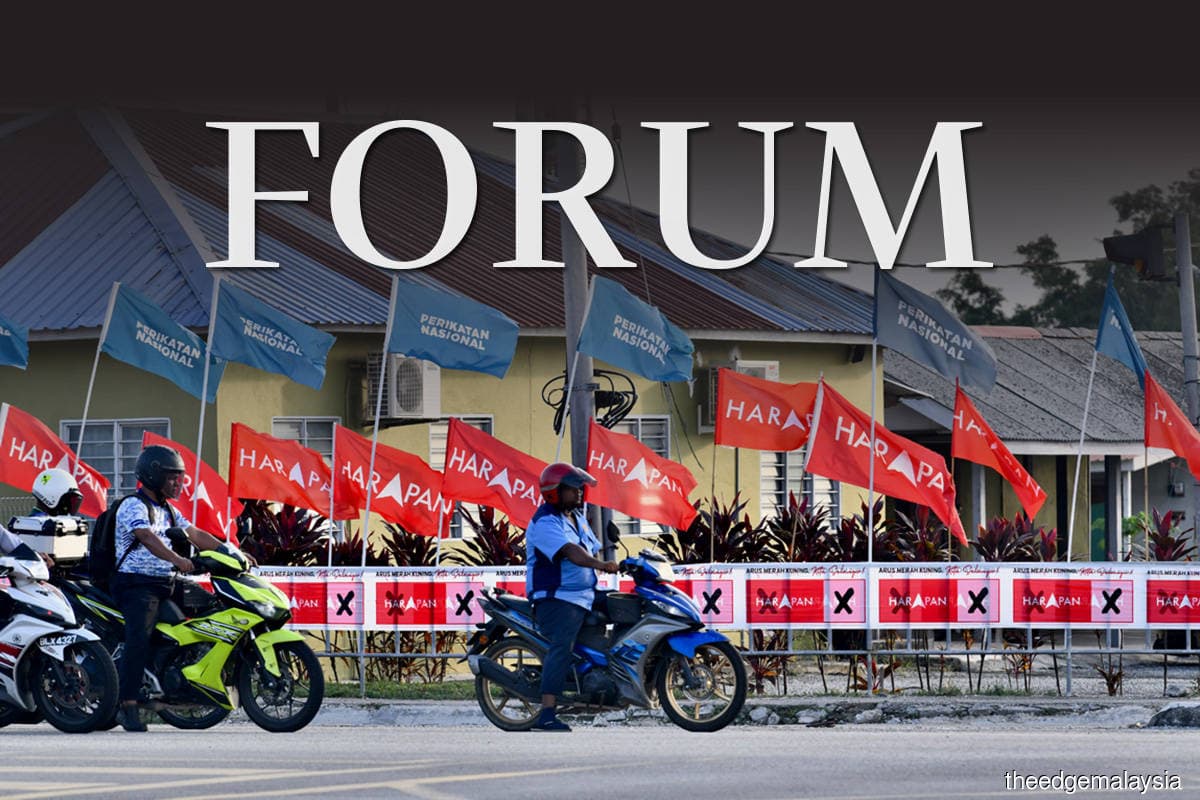
As evident in the state elections in August last year, leaders of the unity government alluded to the so-called “Green Wave” to sway ethnic minorities worried about an alleged rise in Islamisation in Malaysia. On the other end, the Perikatan Nasional opposition campaigned on Malay and Islamic values, feeding their supporters’ fears of non-Malay minorities gaining influence in the country.
The “Green Wave” phenomenon is itself considered a confirmation bias with analysts and politicians predisposed to seeing the rise of Islamic influence by selectively focusing on evidence that supports this narrative. It was later debunked by former deputy minister of international trade and industry Dr Ong Kian Ming as a “lazy shorthand” that does not adequately capture the electoral complexities of Malaysia.
Similarly, PAS leader Tan Sri Abdul Hadi Awang can be said to exhibit confirmation bias through his claim that DAP was continuing a plan started by British colonisers to undermine the bumiputera and Muslim position, a claim that appears to be grounded on existing prejudices without concrete evidence.
These biased narratives can lead the people to seek and recall selected information provided by politicians that aligns with their pre-existing identity beliefs, thereby reinforcing negative perspectives of other ethnic groups.
Outside of politics, confirmation bias continues to reign supreme. In our ethnically, religiously and gender-diverse society, confirmation bias has a dangerous tendency to lead to extreme polarisation based on exclusionary attitudes within different identity groups, fostering an “us versus them” mentality.
It is not uncommon to hear news about discrimination in the housing market against certain races based on negative pre-existing beliefs about them. For instance, a report filed by an Indian tenant on a claim made by a Chinese landlord goes: “We don’t allow cooking but since you’re Chinese, it’s okay. We don’t want foreigners and Indians to make the place smelly with their cooking.” Here, we see the landlord selectively ignoring cases of unhygienic cooking practices by Chinese and cases of hygienic cooking by foreigners and Indians, when hygiene and race clearly have no logical connections.
Extreme views against the lesbian, gay, bisexual, transgender and queer (LGBTQ) community continue to persist in our society, manifesting in unequal treatment and even attempts to “rehabilitate” and convert individuals, when we selectively ignore the diverse and valid experiences and identities of the LGBTQ community.
While confirmation bias can reinforce beliefs about the superiority of one’s identity, it can also backfire and lead to the dismissal of the potential within one’s own group. For instance, the then prime minister Tun Dr Mahathir Mohamad was famously known to make the unfounded claim rooted in confirmation bias, that Malays are lazy, complacent and are not endowed with the capacity to do business. He selectively chose to ignore contradictory evidence as “outliers”. But this is clearly a myth. Scientifically, there is a growing consensus on race as a social construct, attributed to the impossibility of mapping human genetic and phenotypic variation along racial lines.
Do these instances not strike you as absurd? Yet, confirmation bias remains an insuperable mental hurdle given how beliefs are formed and maintained.
According to the philosopher Willard Van Orman Quine, we can picture our beliefs as interconnected in a web-like structure, with core beliefs at the centre and peripheral beliefs extending outward. Core beliefs, like mathematical principles, laws of nature and logic, or beliefs related to our identity, are more firmly held, whereas peripheral beliefs, like personal preferences or controversial information, are more malleable and subject to change based on experience. And to safeguard our web fortress of beliefs, it makes sense to selectively incorporate information that fits within our existing web rather than abandoning our core beliefs.
While there may be virtues in safeguarding our web fortress of beliefs, whether it is the comfort derived from feng shui predictions, or the efficiency from streamlining daily information, confirmation bias can make it incredibly hard for us to even consider information that contradicts our own moral, religious and political beliefs, thereby fostering an environment where misinformation, prejudice and animosities can thrive unchecked.
Unfortunately, confirmation bias has found a foothold in our society because of the way education is structured. In my paper, “Practical Philosophy and a Perspective on Oppression and Liberation in Malaysia”, I talked about how the education system in Malaysia is based on a “banking model” where teachers deposit information to students. The system places a strong emphasis on the regurgitation of information, with little opportunity to allow revision of beliefs based on diverse viewpoints.
To counteract this, an education model that can adequately prepare Malaysians for navigating a world of information and misinformation is one where students are constantly encouraged to deconstruct and reconstruct their web of beliefs through collaborative dialogues and critical thinking exercises. Initiating this shift requires Malaysian parents and citizens to look beyond the allure of feng shui predictions and biased identity narratives, earnestly embracing an ethos of open-mindedness and rationality.
To a discerning reader, the thought that this article may itself be a confirmation bias in action will surely occur. I cannot entirely rule out the possibility — to do so would negate the validity of this article. So, I invite you to actively question, challenge and pose any alternative viewpoints you may have.
Chew Zhun Yee is the co-founder and managing director of the Malaysian Philosophy Society
Save by subscribing to us for your print and/or digital copy.
P/S: The Edge is also available on Apple's App Store and Android's Google Play.