

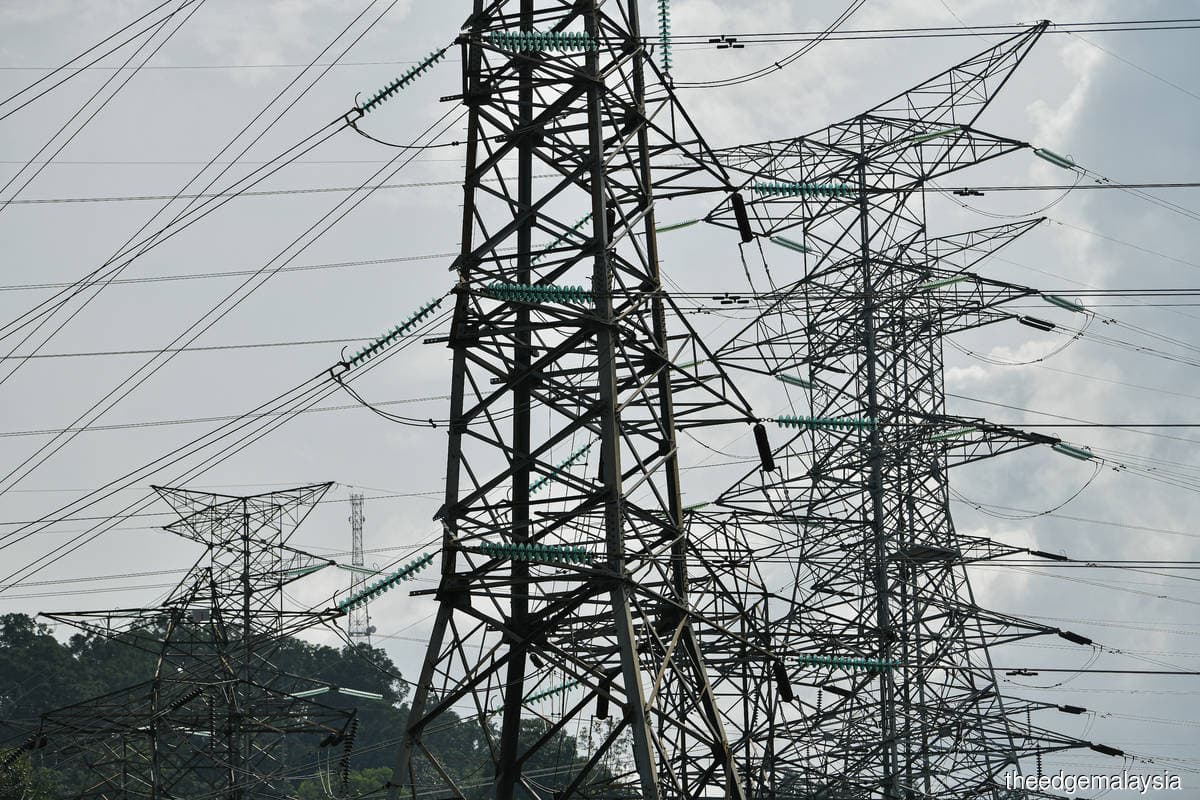
KUALA LUMPUR (March 18): The power reserve margin or backup power supply in Peninsular Malaysia is projected to remain sustainable at about 28% to 36% from 2024 to 2030, according to Deputy Energy Transition and Public Utilities Minister Akmal Nasrullah Mohd Nasir.
Akmal said that the power reserve margin remains above the minimum level capable of meeting the demand for electricity supply in the event of disruptions in power plant operations.
"This level of power reserve will be maintained as the Planning and Implementation Committee for Electricity Supply and Tariff (JPPET) plans to ensure affordable electricity supply costs," Akmal said in response to Datuk Seri Amirudin Shari (Pakatan Harapan-Gombak) during an oral question-and-answer session in the Dewan Rakyat on Monday.
The power reserve margin, which measures the available capacity beyond what is required to meet normal peak demand levels, includes electricity generated by power plants operated by energy-generating companies utilising gas, coal, and renewable energy sources, Akmal added.
Additionally, he said that the JPPET, which primarily determines electricity supply planning and the direction of the country's electricity supply industry, had projected demand for electricity supply in the peninsula to be 19,480MW in 2024, and increase to 20,049MW by 2030, reflecting a 2.9% increase.
Factors contributing to this increase include economic activity growth, industrial development such as the establishment of data centres, the resumption of economic and social activities post-Covid-19 pandemic, and higher electric vehicle projections.
On a separate matter, to support the country's energy transition initiative and reduce the carbon footprint, Akmal said that the ministry had announced the Integrated Clean Energy Programme for 2024, anticipating a direct investment value of RM12 billion in the clean energy industry, and the creation of at least 36,000 job opportunities.
Akmal said that the government is also extending opportunities for industrial participation through initiatives such as the Large Scale Solar (LSS) programme, which offers a quota of 2,000MW, and the New Enhanced Dispatched Arrangement (Neda), which provides a quota of 400MW.
“Neda particularly encourages development projects from non-solar sources, such as wind, small hydro, biogas, biomass, and hydrogen," he added.
For more Parliament stories, click here.