

This article first appeared in Wealth, The Edge Malaysia Weekly on February 26, 2024 - March 3, 2024
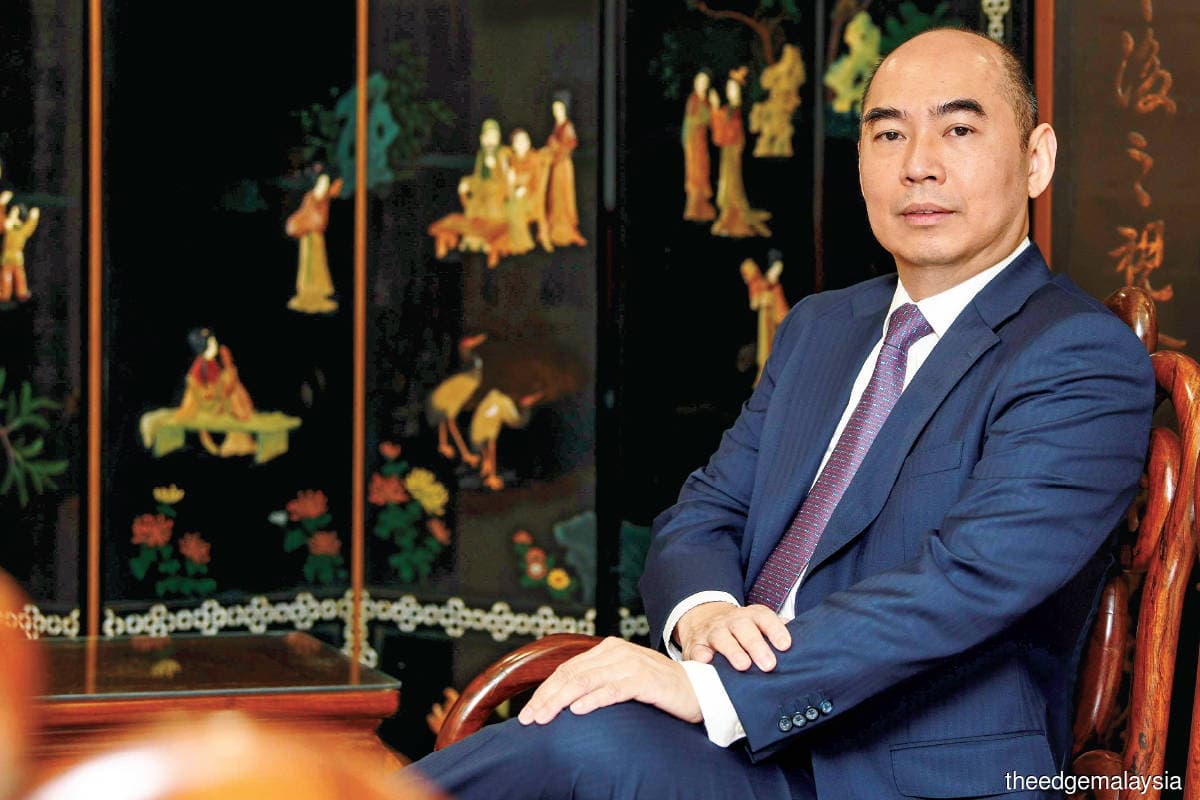
Datuk Ng Yih Pyng, managing director of Tomei Consolidated Bhd, is a big believer in gold, one of the oldest asset classes in the world. This is not unexpected, given the business that Tomei is in.
Yih Pyng has travelled the world to build his network and learnt from the best. Just as gold can be melted into liquid and forged into solid forms, Yih Pyng likes to be flexible in running his business and investing. And, when opportunities knock, he does not hesitate to seize them.
Yih Pyng is a son of the late Tan Sri Ng Teck Fong, who founded Tomei in 1968 as a factory to manufacture and design gold and jewellery. Tomei later branched out into other areas, including gold refinery and the wholesale and retail markets.

Teck Fong was a respected figure in the Chinese-speaking business community, with many regarding him as a Confucian merchant (rushang) who was trustworthy, generous and humble. His influence on Tomei can be easily seen upon a visit to the company’s headquarters on Old Klang Road, near the Klang River.
Teck Fong died in 2021 at 84, but his office remains untouched and well kept. A three-storey colonial era Chinese building named after Teck Fong sits beside Tomei’s headquarters, just like Teck Fong’s office is adjacent to his son’s. A bronze statue of him takes pride of place at the entrance to Tomei’s first-floor office area.
“He left an indelible mark on the Ng family and the culture of the company,” Yih Pyng tells Wealth in an interview.
Yih Pyng, who holds a masters degree in corporate finance from Iowa State University in the US, has a slightly different approach from that of his father when it comes to managing funds.
While Yih Pyng believes, like his father, that one should always keep a certain level of liquidity to weather unforeseen challenges, he prefers gold over cash and is more open to taking on debt to seize market opportunities or pursue new ventures.
“I’m not a strong believer in cash. Its value diminishes over time. By putting it in the bank for interest, the returns are low. On the other hand, the price of many commodities, including gold, appreciates [at a higher rate than cash] over the long term,” he says.
“I’m a finance guy who tends to think from the perspective of the efficient use of funds. I also believe appropriate gearing can help you improve your ROI (return on investment) and ROE (return on equity).”
Yih Pyng’s philosophy on wealth applies to his personal portfolio as well; he does not hold a lot of cash, preferring to invest it in gold or Tomei’s shares.
Tomei’s shares have a net tangible asset value of about RM2.90 per share, but was trading at RM1.22 as at Feb 8 on Bursa Malaysia. “Sometimes, I would buy up the company’s shares, as it is a proxy to gold and is traded at a discounted price,” he says.
Favouring real estate, he bought shoplots to collect rent. He felt rather comfortable spreading his bets across gold and real estate until the pandemic hit in March 2020. The crisis prompted him to further diversify his personal investments.
Investment opportunities had emerged during the early period of the pandemic, with blue-chip stocks traded at historically low prices and offering investors attractive yields. Yih Pyng put some money in these companies, including an established local bank stock that offered investors more than 7% in annual dividends.
“I’m a long-term investor who isn’t in a rush to sell my holdings just because share prices rally in the short term. I hold on to them and gradually grow my portfolio,” he says.
The Chinese adage “one cannot do two things with one heart” holds true for Yih Pyng, who prefers to focus on Tomei. Naturally, he favours established asset classes and blue-chip stocks that require less attention and monitoring.
At the company level, the increase in Tomei’s inventory and relatively lower level of cash over the years partly reflect his preference of holding gold rather than cash. Its larger inventory can also be attributed to a boom in the company’s retail business in FY2021 and FY2022.
Its FY2022 revenue was the highest in at least a decade, according to Bloomberg.
As for its debt level, Tomei’s 2022 annual report says the group monitors its capital management by employing the net gearing ratio method, calculated as total debt (net of cash and bank balances) to total equity. “The group reported a net gearing ratio of 0.50 as at the end of the financial year [2022], a decrease by 0.07 as compared to 0.57 last year,” the report says.
Unique perspective on gold
Sitting in the driver’s seat offers Yih Pyng a unique perspective on gold. He is not just a passive investor in the commodity but also operates a business based on it.
As an asset class, gold does not generate high yield for the general investor but, for Yih Pyng, it is raw material for the products that his company sells, which generates profits for Tomei and its shareholders.
Gold is flexible as much as it is solid. If certain products cannot be sold in a given season, it can always be repackaged for the following season and the losses are mitigated.
“A good thing about gold is that we can sell it over time, unlike a shirt designed for the Year of the Dragon, which cannot be sold the following year. I can melt gold and redesign it for the Year of the Snake. I have that flexibility. We are also an integrated player, involved in factories, refineries and wholesale and retail. We are agile,” Yih Pyng says.
Another reason he is not worried about having more inventory is that gold is traded mainly in the US dollar, and it is a natural hedge against inflation and the dollar. When the dollar depreciates, the gold price appreciates and vice versa.
“There were times when the correlation between gold and the dollar broke down but, overall, it follows such a trend,” he says.
With its inventory, he says, the company also generates returns from gold trading activities, but they are mostly not short-term speculative trades. It also hedges its gold position in the market as its business grows in volume.
Yih Pnyg favours gold for its defensive nature. People buy gold and jewellery not only to preserve wealth, but also as an inheritance. There is a strong cultural and emotional element in it.
“This line of business is about culture as much as it is about fashion. It is also viewed as a currency. It’s very different from many other things sold in the market. No matter what race you are, you use gold as a gift on various occasions. It’s a culture, and the culture should be retained,” he says.
Following the trail of gold
One would have thought that Yih Pyng was handpicked by his father to take over the company, but that is not so. He helms the company because of his instrumental role in its initial public offering. He was also the key figure in growing the company’s retail business, including setting up branches in top-rated shopping malls such as Suria KLCC and 1 Utama Shopping Centre.
Naturally, he assumed the top post of Tomei despite being ranked third among four siblings.
Yih Pyng was also the one who accompanied his father around town and learnt from him the most. He recalls going with Teck Fong to Puchong, Kuantan and other places to acquire gold shops. They would return home late at night to discuss the deals.
“He would talk to me about how best we could execute the purchase. It was a bit like a corporate exercise, which was very interesting,” he says.
Yih Pyng is more adventurous and outgoing than his siblings, a trait he inherited from his father. Upon returning from the US and having worked at Tomei for a while, Yih Pyng wanted to expand the company’s business overseas, starting with Singapore.
In his 20s, being young and ambitious, Yih Pyng would wake up at four o’clock in the morning and drive all the way to Singapore with a bag of gold accessories weighing more than 20kg. He would visit gold shops, walk up several flights of stairs with the bag, and sell Tomei products.
The return journey was not easy either, as industry players made barter trades in those days. They paid Yih Pyng with gold bars, which he would carry back to Malaysia in the same bag.
Yet, all that was not enough of an adventure for him. So, he took a plane to the Middle East and started selling gold there, visiting one shop after another. It was more challenging dealing with clients in the Middle East. Profits were not great and, during the fasting period, some clients would make him wait until midnight to pay him.
“I would take a car from Dubai to Abu Dhabi, wait till midnight to receive the payment, and take another ride back to Dubai. It was usually three or four o’clock in the morning by the time I arrived.”
Yih Pyng also went to Hong Kong to carry out door-to-door sales, only to find that gold shops there traded only with merchants with approval from their headquarters. That prompted him to visit the headquarters to learn more about the application process.
Travelling the world taught him the most about doing business, and he made good friends who were willing to share industry insights and knowledge with him.
Upon returning home, Yih Pyng negotiated with a bank to introduce zero per cent instalment plans for Tomei’s customers, something he learnt from his peers in Hong Kong. He computerised Tomei’s business operations, which he learnt from peers in Singapore. He was also one of the first who introduced white-gold products to the Malaysian market, a trend he observed while travelling the world.
Tomei’s export business has not grown as much as the local business. Trade in the Middle Eastern market, which has good potential, was halted during the global financial crisis of 2008/09. Yih Pyng did not focus on exports because he did not want to spread the company’s resources too thin.
Today, Tomei group has a subsidiary in Vietnam involved in the manufacturing of semi-finished jewellery.
On family values
Like many first-generation business founders, Yih Pyng says, his father’s main intention for starting Tomei was to support the family. And Teck Fong would always prioritise family events even when he grew busier over time.
“My father placed great emphasis on the family, and he raised his children like this. We were all very busy, and my father was no exception. But we always made it a point to travel together once a year and celebrate our birthdays together,” he says.
“He had so many Chinese New Year dinners to attend, but when there’s a family gathering, he would give it priority. The same values were passed on to us.”
Teck Fong would attend three dinners a day during Chinese New Year and, upon returning home, had his wife cook a meal because he barely had time to eat during the dinner functions.
Teck Fong hoped his children could grow up together harmoniously, which is partly reflected in their upbringing.
For instance, as property in Singapore was inexpensive back then, Teck Fong bought a house there for his children, who were attending secondary school in the city state, so they could live together. Yih Pyng’s maternal grandmother lived with them to take care of them.
He says: “She washed our dishes and prepared our meals. She stayed mostly at home, as she was already quite old and spoke only Hokkien. It was the same for us siblings. We went to school and then back home. We seldom went out.”
Yih Pyng and his siblings attended the same university in the US and took care of each other. “My brother studied in Canada and eventually went to Iowa State. My elder sister, who had just completed the ‘O’ level, wanted to follow in his footsteps and study overseas.
“Our parents wanted us to stay close to each other and my mother was worried that my elder sister would be alone in the US. We didn’t have smartphones back then. So, my parents decided that my elder sister would also study at Iowa State and live with my brother.
“When my brother graduated, I became the one who accompanied my elder sister. My younger sister would join me there later on,” says Yih Pyng.
As much as the Ng family is tight-knit, they spent less time with their father than they would have liked after having their own families and as Tomei’s business grew by leaps and bounds. The Covid-19 pandemic was a blessing in disguise, though, as it was a rare period in which they could gather together often again, like old times.
“We were studying in Singapore and then the US. When we returned to Malaysia, he was president of the Federation of Chinese Associations Malaysia and really busy.
“That one year during the pandemic was a period that I value the most. I saw him age. He passed away exactly a year after the lockdown,” says Yih Pyng.
Tomei and the Ng family owe their success to Teck Fong, a good leader and father who placed a lot of trust in his management and children, says Yih Pyng. “He was supportive of everything that I did. Sometimes, I wondered whether he fully understood my plans. He would always listen and let me go ahead with them.”
Teck Fong treated his friends and other people equally well. People from all walks of life attended his wake and everyone had good words about him.
“Everyone I meet these days would tell me about my father. They say he was a good person and a good friend. He had so many friends from all social classes. I know that he helped many people without making it known. Some people like to boast about their good deeds. He didn’t.
“We receive kindness from people around us because of him. I think it is our duty to maintain the kind of reputation he had built and to live up to people’s expectations of our family. It isn’t always easy,” says Yih Pyng.
He is particularly grateful that his father always gave him and his siblings the freedom to make decisions when they were running Tomei’s business as second-generation successors. And he always had their backs.
“I remember a conversation with him about passing the baton to the next generation. When he was in his 50s, I told him that if we made mistakes now, he could still help us. But imagine when he is in his 80s and we make a major mistake; there isn’t much he can do, right? He agreed and gave us space to run the show while watching over us.
“He believed that one had to learn by doing. He always gave this analogy about driving a manual car on a slope. He can tell us a hundred times how to do it but, if we don’t do it ourselves, we will never learn. We have to be in the driver’s seat, drive the car ourselves and make mistakes. Just don’t crash the car.”
Save by subscribing to us for your print and/or digital copy.
P/S: The Edge is also available on Apple's App Store and Android's Google Play.