

KUALA LUMPUR (Feb 19): The validity of a conversion certification should not be the sole factor in determining the religious status of a 37-ear-old woman at the centre of a court battle to be declared as a non-Muslim, the apex court heard on Monday.
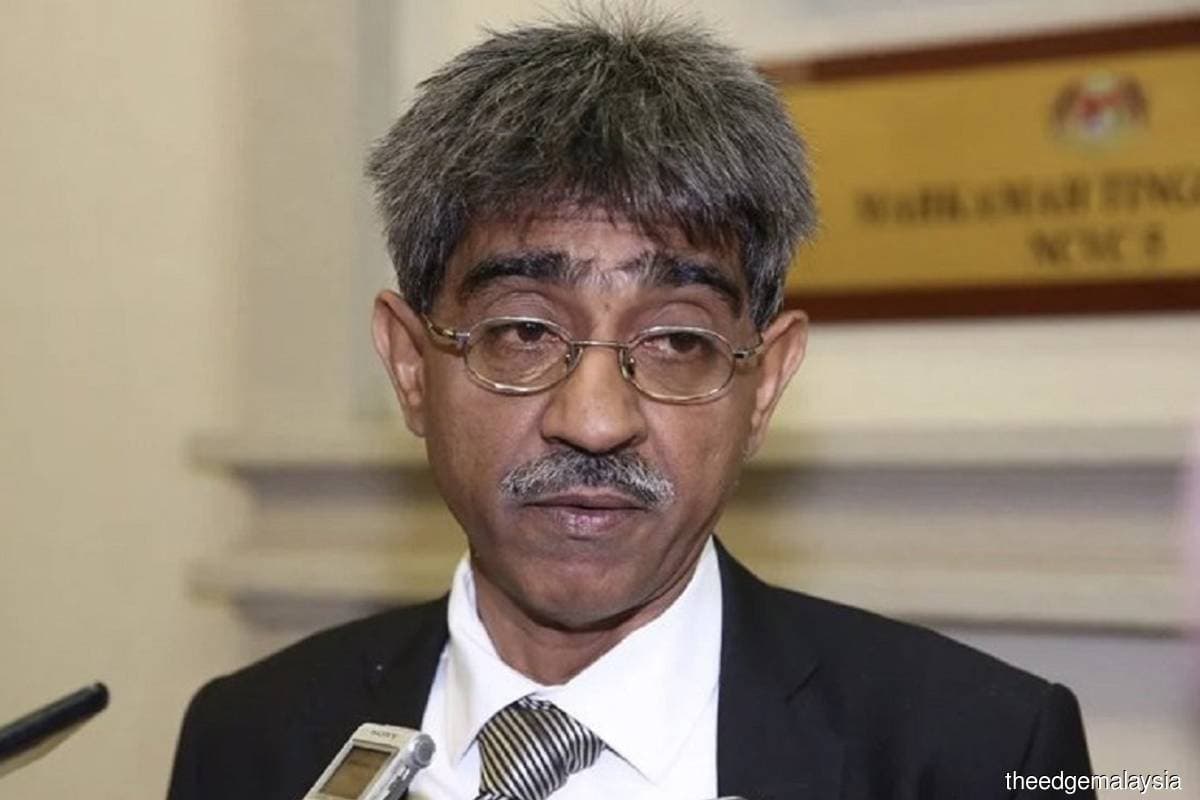
Rather, the court has to consider the facts of this particular case which is nuanced from other precedents set in recent conversion cases, lawyer Mohamed Haniff Khatri Abdulla argued on behalf of Selangor Islamic Religious Council (Mais), a respondent in the case.
This includes prior finding at the Syariah Court that she is a Muslim, which "cannot be brushed aside" and therefore the matter cannot be re-ventilated in the civil courts, Mohamed Haniff told a three-member apex court panel led by president of Court of Appeal Tan Sri Abang Iskandar Abang Hashim.
"[We can't say] that the certificate of conversion was a nullity and therefore [it is the] end of case, it is our humble submission that is not the correct approach at all in these types of cases.
“Whether it is an ab initio (never a Muslim in the first place), or renunciation case, [there has to be] careful examination of the matrix of the case," Mohamed Haniff said.
The woman — whose identity was withheld at the request of her lawyers — was born to a non-Muslim couple. She was converted to Muslim around the age of four by her mother, who embraced Islam in 1991.
A conversion card was issued to the woman two years later in 1993.
The date of the card's issuance is pivotal, as the woman contends that between the alleged conversion and the issuance of the card, there was a change in the Selangor state enactment which involves conversion of minors.
Convoluted legal journey through Syariah and civil courts
She contended that at the point of her conversion in May 1991, the administration of Muslim Law Enactment 1952 was still in force then, with Section 147 which explicitly states that no person who has not obtained the age of puberty shall be converted.
The woman's father, who separated from the mother, did not know about the conversion, and did not give approval or consent for his daughter's conversion up until his death in 1996.
The woman had also averred that she had been practicing the Hindu religion, frequenting temples, and that her mother and stepfather had allowed her to profess and practise her chosen faith.
The woman first filed a summons in the Syariah High Court against the Federal Territory Islamic Religious Council in 2013, seeking a declaration that she was no longer Muslim, among others. This was dismissed in July 2017.
She subsequently appealed against this decision in the Syariah Court of Appeal in August 2017, but this was dismissed in January 2021.
She then took the matter to the civil courts through an Originating Summons (OS) in May 2021. In December that year, the High Court made a declaratory order that the woman was not a person professing the religion of Islam.
Judge Datuk Dr Choo Kah Sing, among others, noted that this was not a case of the woman renouncing the Islamic religion, but that the woman was never a Muslim to begin with. Therefore, referring to precedents, he ruled that the civil court had the jurisdiction to hear her case.
The High Court judge also found that the woman's alleged conversion with her mother in May 1991 was unlawful, and she was not "validly converted".
However, the Court of Appeal reinstated her as a Muslim in a 2-1 majority decision in January last year.
COA judge Datuk Yaacob Md Sam along with judge Datuk Mohd Nazlan Mohd Ghazali ruled that the woman had failed to establish that she was not a person who professed the religion of Islam, and that her suit in the High Court fell outside the jurisdiction of the civil courts.
Judge Datuk P Ravinthran, who delivered the dissenting judgement, affirmed the High Court decision and dismissed Mais and the Selangor state's appeals.
Appellant points to evolving nature of constitutional law
At the hearing on Monday, Mohamed Haniff argued that the woman took up her case at the Syariah Court some 23 years after her alleged conversion. She could have raised the issue that her conversion was null, but failed to do so, Mohamed Haniff said.
Selangor state legal adviser Datuk Salim Soib @ Hamid, appearing for the state who is the second respondents in this matter, argued that during the Syariah Court proceedings, witnesses — including the woman herself — were called to testify.
The woman, who was 27 then, said that she can recite and understand the "kalimah Syahadah" or proclamation of faith. This, he argued, showed that she was a Muslim and should not be treated as an ab initio case.
He, however, confirmed to the panel, upon their query, that the conversion certificate was never referred to during the Syariah proceedings.
The woman's counsel Datuk Malik Imtiaz Sarwar countered that there were multiple assertions made during the Syariah proceedings that his client never professed the Muslim religion and has maintained this from the get-go.
Anyone who read widely about religion would know of the proclamation of faith, Malik said. A single, isolated incident where she claims that she can recite it, doesn't conclude that she behaves in a way that is consistent with someone who voluntarily embraced Islam, he added.
Malik said that the Syariah judge at that point made his decision against the backdrop of the prevailing law at that point — the Lina Joy case of 2007 — which states that any person considered a Muslim in law, the Syariah code would apply to them.
He however reiterated that the law has since evolved with the apex court's 2021 watershed decision in Rosliza Ibrahim where the court drew a distinction between renunciation and ab initio cases.
A nine-member panel chaired by Chief Justice Tengku Maimun Tuan Mat unanimously held that Rosliza was not a Muslim and that the Syariah Court was the avenue for renunciation cases where else the civil courts was the avenue for ab initio cases.
Notably, Rosliza had taken her case straight to the civil court and there were no Syariah court proceedings in her case.
Federal Court judges Datuk Mary Lim Thiam Suan and Datuk Abu Bakar Jais, who were also part of the three-member panel on Monday, were actively asking questions throughout the two-hour long submissions.
Parties were making submissions on Monday, following proceedings last month. The panel has asked for some further additional written submissions from parties and reserved their judgement.