

This article first appeared in Digital Edge, The Edge Malaysia Weekly on February 12, 2024 - February 18, 2024
The role of robotics and automation has become increasingly paramount and as the world navigates a slew of challenges from climate crises to global health emergencies, the need for innovative solutions has never been more pressing.
While robotics and automation stand as steadfast companions in addressing these challenges, it is also important to nurture a generation of forward-thinking tech leaders. Youth participation and interest in the field are imperative to create a tech-driven nation.
“Through education and hands-on experience, we have the power to mould future innovators who will harness the potential of these technologies to shape a brighter and more sustainable future,” says Ilylia Kamaruzaman, founder of Roboticist Malaysia, a robotics learning centre in Kuala Lumpur.

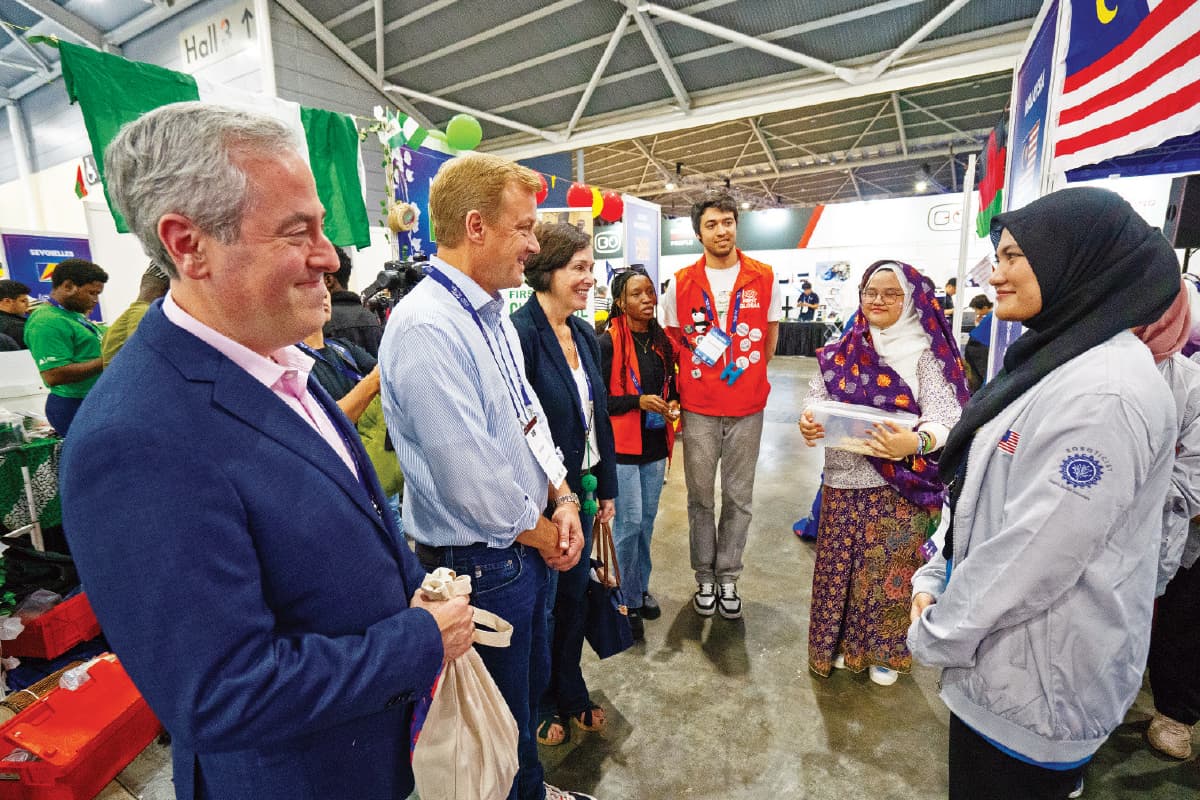
With the guidance of Roboticist Malaysia, a group of eight students from Sekolah Menengah Sains Hulu Terengganu between the ages of 14 and 17 made the country proud when their robot named Adek was selected to represent Malaysia at the For Inspiration and Recognition of Science and Technology (FIRST) Global Challenge 2023 — an annual international robotics competition organised by FIRST in collaboration with LAM Research Corp and held at the Singapore Expo — last October.
In 2009, when Ilylia first introduced Roboticist Malaysia, an educational platform that offers robotics programmes for kids and youth, not many were aware of the impact of science, technology, engineering and mathematics (STEM) education. Robotics was even more far-fetched.
“I realised that children, if not properly pushed, learn nothing in the long term [in robotics]. I wanted to set a standard where we prepare them for the workforce, which means that everything that they learn has values and something that can impact them, even within such a short period,” she tells Digital Edge.
To further encourage youth participation in robotics and automation, Roboticist Malaysia helps students from all walks of life to not only participate in robotics competitions locally and internationally but also teach them the basics of coding and computer programming.
Khayra Zokree, documentation and media leader of the Malaysian team, expresses pride in her team being able to represent Malaysia on the international stage and compete against participants from more than 190 countries.
“We are extremely proud to have made it this far. I am amazed by the endless possibilities of STEM and what it can do for us. We were introduced to the competition, which was our first global challenge, last year. I participated in this challenge last year and I am honoured to be given the chance to take part again this year,” says the 17-year-old.
There has been an uptick in interest in STEM education among students annually, thanks to consistent engagement through events like FIRST Global.
Student enrolment in STEM education in schools rose to 45.73% as of August last year, an increase from 40.95% recorded in 2021, according to the Ministry of Education.
This is seen as a step in the right direction. In 2021, the ministry found there was a huge gap in numbers between students pursuing humanities and those opting for STEM subjects.
In 2019, Upper Form 6 humanities classes had a total enrolment of 42,257 students, while the science stream had only 4,877 students. The following year, the number of science students fell to 3,853, marking a significant decline.
This is also echoed in a study conducted by the National STEM Association, which found that since 2020, only 19% of secondary school students have ended up choosing science subjects.
Ilylia believes participation in robotics competitions like FIRST Global has helped students hone soft skills and develop a passion for STEM education. She also hopes that the total of RM100 million allocated in Budget 2024 for the empowerment of STEM will enhance the education ecosystem.
“The idea is not for them to, in the end, become professionals. If they become professionals, that’s great. But at least with the kind of exposure that we’re giving them now in school, whether or not they end up in a higher education institution, they would have already fulfilled certain things required by the industry.
“Even if they qualify as technicians, they will become very skilled STEM-related operators or technicians because the skills are already being given to them,” she adds.
Sowing the seeds of curiosity
On top of undergoing a rigorous selection process to compete on the global stage, Khayra shares that the key to success and meeting all the criteria for the robot is to maintain simplicity.
“Last year, our robot was complex and difficult to build. It made it hard for us to fix any issues. This year, we stood by the motto that simplicity equals efficiency. We tried to make our robot not only as simple as possible but also as efficient and functional as it can get,” she says.
Each student has specialised skills training including robot programming using JavaScript, mechanical understanding, and robot building and designing.
However, the team hit a brick wall when they were unable to reach their mentors (who were based in Kuala Lumpur) face-to-face, which also made it difficult to develop a physical robot.
“The inaccessibility was one of the hardest obstacles we had to go through. We had coaches and mentors from Lam Research and also from Roboticist, but we did not manage to meet [them] in person because we were in Terengganu and they were in Kuala Lumpur,” says Khayra.
Despite the setback, the team persevered. The young roboticists had virtual calls with their assigned mentors every day and addressed issues with their robot prototype. Many calls later, the robot was fully developed and assessed by the mentors and judges.
The robot developed by the Malaysian team was built in line with FIRST Global’s theme, “Hydrogen Horizons”. The event challenges participants to use their creativity and problem-solving skills to design and build a skilled robot from a standard kit of parts.
Teams must then navigate their robot in the simulated world to produce hydrogen and use it to store, transport and convert energy. The simulation used blue balls for oxygen and green balls for hydrogen.
“The robot that we built is on an industrial level that you can see at factories. We also learnt a lot from other teams that used advanced technologies like artificial intelligence to detect the number of balls around.
“Our mentors were constantly motivating us and providing us with resources so we could get inspiration from other teams and build the robot to be much more efficient,” says Khayra, who hopes to further her studies in mechanical engineering after completing her Sijil Pelajaran Malaysia examinations this year.

Establishing effective collaboration
To encourage the next generation of innovators and also instil the importance of sustainability, Lam Research (the title sponsor for FIRST Global) believes that making science and technology as exciting as any other sport can inspire the world’s two billion youth to pursue STEM fields.
“We envision these young minds evolving into collaborative leaders who unite in addressing the world’s most urgent challenges. As you know, our industry is growing rapidly, and we are going to have thousands of jobs that we need to fill around the world. We wanted to ensure that we do our best to foster innovation in every corner of the world,” says Stacey MacNeil, chief communications officer and group vice-president of environment, social and governance at Lam Research.
Lam Research engages in the manufacturing and servicing of wafer-processing semiconductor equipment. It operates in the US, China, Europe, Japan, South Korea, Taiwan and countries in Southeast Asia.
In line with FIRST Global’s goal to cultivate interest and passion for science and technology among students, Lam Research generously donated US$10 million last year to help organisations inculcate STEM education across the world.
“They [the people at FIRST Global] have an ambition to have every country from around the world participate in robotics. They encourage interest in STEM and education through the robotics competition. But they also really foster collaboration and teamwork. And what Dean Kamen will call ‘cooperatition’ [a portmanteau of competition and cooperation],” adds MacNeil. “We wanted a global organisation with a great brand and connections around the world — with the same kind of mindset in terms of getting young students engaged in education, particularly in STEM, and hopefully pursuing a career in engineering, technology and science as well as addressing growing sustainability challenges using technology.”
Save by subscribing to us for your print and/or digital copy.
P/S: The Edge is also available on Apple's App Store and Android's Google Play.