

This article first appeared in Capital, The Edge Malaysia Weekly on December 25, 2023 - December 31, 2023
Wong Chew Hann
Head Of Equity Research
Maybank Investment Bank Bhd

The year 2023 stood out for US federal rate hikes, ringgit weakness, continued geopolitical tensions and escalation of conflict in Gaza. For Malaysia, the year saw a flurry of blueprints, master plans, roadmaps and legislations that aim to “transition” the economy over the medium to long term. These include the Madani Economy, National Energy Transition Roadmap (NETR), New Industrial Master Plan 2030 (NIMP 2030), 12th Malaysia Plan Mid-Term Review (12MP MTR), Hydrogen Economy and Technology Roadmap (HETR) as well as the Public Finance and Fiscal Responsibility Act (FRA).
Key elections in the US, Indonesia and Taiwan next year would be interesting to watch, but, locally, 2024 can be deemed as a year of execution and delivery. Fiscal reforms and economic restructuring are high on the agenda to bring the country’s balance sheet back on stronger footing. The implementation of targeted fuel subsidy rationalisation will be a key element, given that fuel and energy are the largest items in government spending on subsidies and social assistance. Moreover, blanket fuel subsidy is at odds with NETR and NIMP 2030, especially in relation to the overall objective of net-zero greenhouse gas emissions by 2050.
On the macroeconomic front, we expect slower global growth in 2024 as the US economy “soft lands” and China’s growth slows. However, Asean’s exports and manufacturing hold brighter growth prospects. For Malaysia, we forecast GDP growth to be firmer in 2024 at 4.4%, versus our estimate of 3.9% in 2023. This is underpinned by resilient consumer spending, sustained private and infrastructure investment momentum, and recoveries in trade-related services and manufacturing industries, namely tourism and electronics.
For equities, the tail-end of global monetary policy tightening is a tailwind, while a stable domestic interest rate policy outlook, economic transformation via the NETR and NIMP 2023, and rising foreign direct investment (FDI) momentum are the key catalysts. Corporate earnings growth should improve in 2024 and we maintain our end-2024 FBM KLCI target of 1,610.
In our “Malaysia 2024 Outlook & Lookouts” report, we list six investing themes for 2024. Here, I will focus on Johor, Sarawak and Penang, which also straddle the renewable energy transition, rising FDI momentum and tourism recovery thematics.
‘The three sisters’ — Johor, Sarawak and Penang
Johor, Sarawak and Penang contributed an estimated 26.1% to Malaysia’s real GDP in 2022 (Johor: 9.4%; Sarawak: 9.3%; Penang: 7.4%). Catalytic developments in these three states, coupled with longer-term growth plans, could bring excitement in the coming year.
The Johor-Singapore Special Economic Zone (JSSEZ), for one, will bring higher FDI momentum, especially by MNCs that want to co-locate in both Singapore and Johor for strategic reasons. With higher economic activity ahead, we can expect new infrastructure developments. Budget 2024 has big-ticket allocations for Johor, such as RM931 million for the construction of additional lanes for the North-South Expressway from Yong Peng Utara to Sedenak Phase 2, and RM928 million for the USM Teaching Hospital Phase 1 in Kota Tinggi. The Johor state government has also identified three LRT lines totalling 30km in length in Johor Bahru to complement the Johor Bahru–Singapore Rapid Transit System Link.
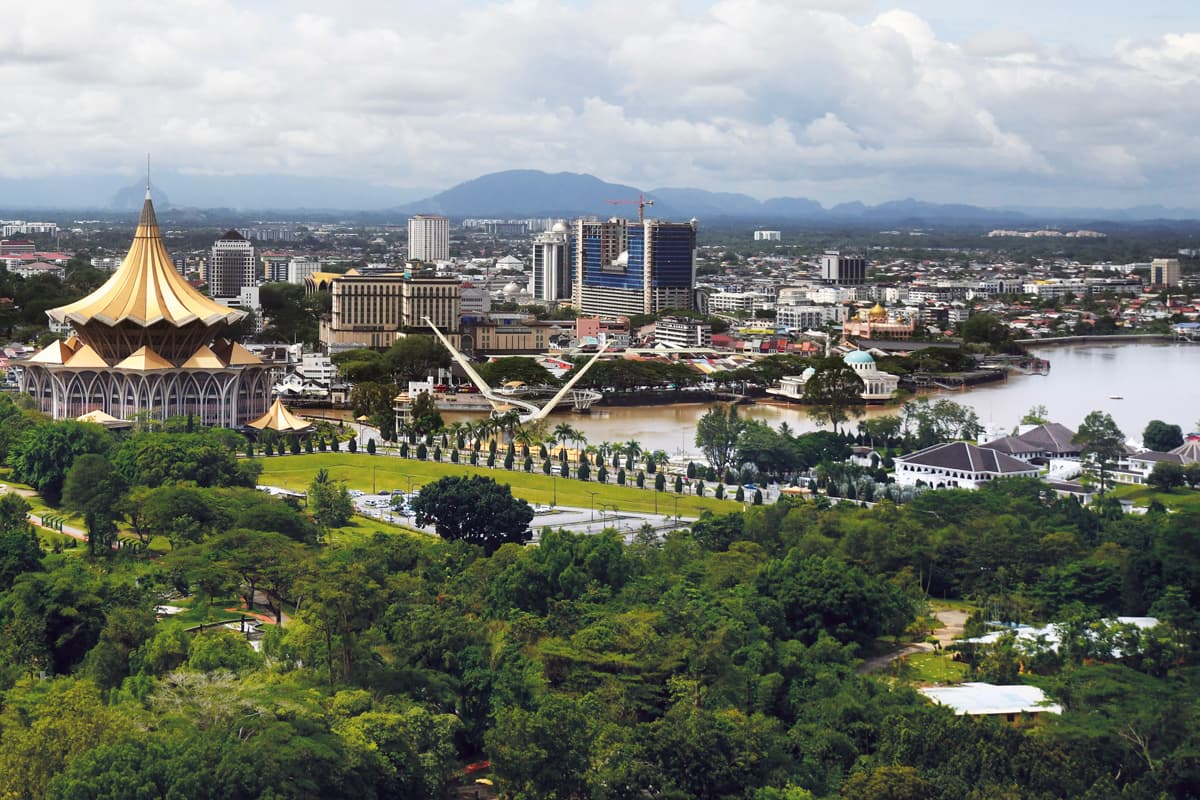
Moving across the South China Sea, Sarawak has taken an early lead in its green agenda through several hydrogen initiatives. In May 2019, the state launched Southeast Asia’s first integrated hydrogen production plant and refuelling station for its hydrogen-powered vehicles. Three months later, Kuching introduced three hydrogen-powered buses, making it the first city in Malaysia to use zero-emission buses. Fast-forward to August this year, Sarawak began on-road testing of its Autonomous Rapid Transit (ART) hydrogen vehicle (H2V), said to be the world’s first hydrogen-powered smart tram. An initiative under the Kuching Urban Transportation System (KUTS), ART H2V aims to start carrying passengers from 2025.
According to its Premier Tan Sri Abang Johari Tun Openg, Sarawak is also poised to be a commercial hydrogen producer by 2027 to meet its hydrogen economy aspiration. The Hydrogen Economy and Technology Roadmap, unveiled at end-2023, provides a deployment pathway to scale up the hydrogen economy and technology to drive both supply and demand. Sarawak is also looking to export up to 1GW of hydro-generated power to Singapore via a 700km undersea transmission line.
In Penang, several major infrastructure projects in the pipeline can enhance the Pearl of the Orient’s appeal as a destination for FDI and tourism. Among others, the Penang International Airport (PIA) expansion to lift terminal handling capacity to 12 million passengers per annum (mppa) is critical to the island’s long-term economic growth and trajectory. Pre-pandemic 2019, PIA handled almost 9 mppa, above its capacity of 6.5 mppa. This year, the airport is expected to record almost eight million passengers, with the number expected to grow to nine million in 2024.
For Penang’s property market, the Bayan Lepas LRT will be an immediate game changer. The Silicon Island, The Light Waterfront Phase 2 and Andaman Island projects have the potential to redefine the future dynamics of the property sector on the island. The 2,300-acre Silicon Island project also has huge potential in drawing in FDIs and in job creation. Silicon Island is akin to the Bayan Lepas Industrial Zone established in the early 1970s, and that has been instrumental in propelling Penang’s high-tech industrialisation journey.
With macroeconomic fundamentals on Malaysia’s side and roadmaps in place, the country needs to double down and stay the course to drive and support the longer-term sustainability agenda. Having said that, key risks include higher-for-longer US interest rates, escalations in the Russia-Ukraine war and Middle East instability, and China’s property sector flaring up. Another black swan event — such as another pandemic — will derail global growth again.
Save by subscribing to us for your print and/or digital copy.
P/S: The Edge is also available on Apple's App Store and Android's Google Play.