

This article first appeared in The Edge Malaysia Weekly on December 18, 2023 - December 24, 2023
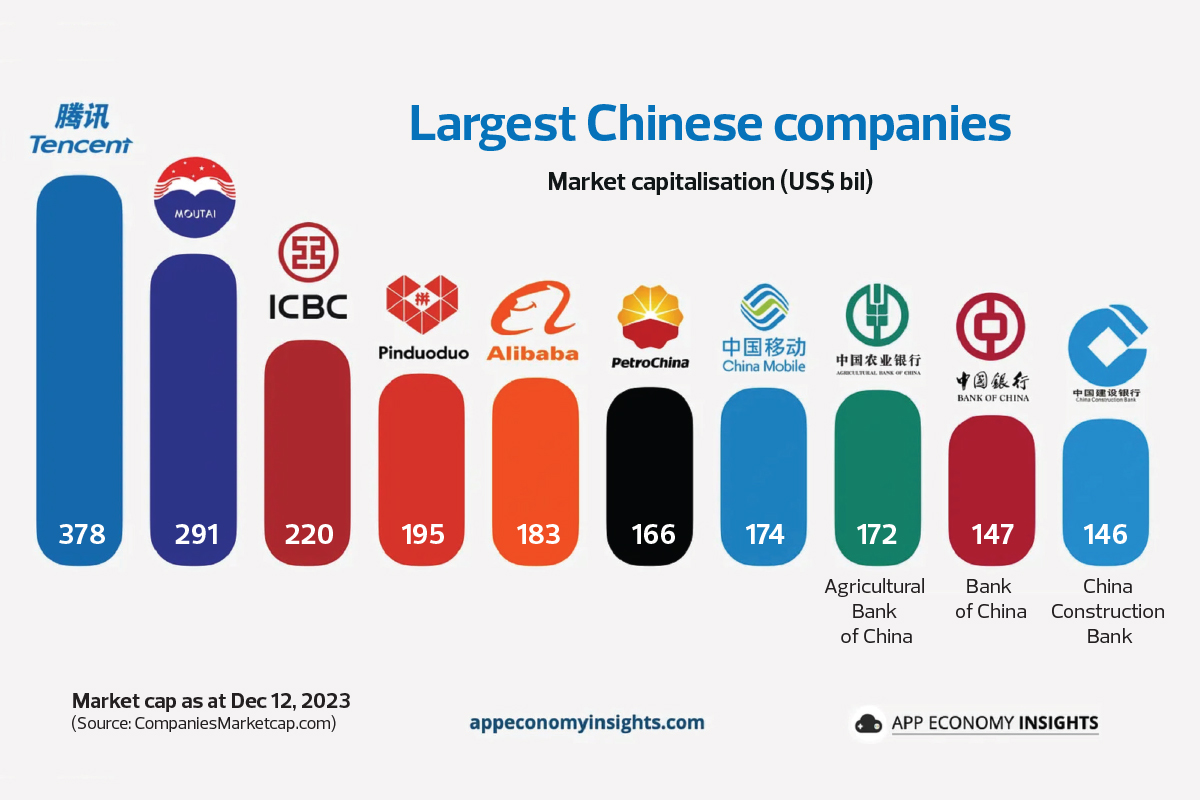
ONLINE shopping platform Pinduoduo Inc, owned by listed PDD Holdings Inc, recently overtook e-commerce giant Alibaba Group Holding Ltd to become China’s No 2 internet player behind video gaming, music and messaging supremo Tencent Holdings Ltd with a market value of US$378 billion (RM1.78 trillion). The change of leadership among China’s tech giants has as much to do with the fading of Alibaba as the rise and rise of new players such as PDD, TikTok owner Bytedance Ltd and apparel e-retailer Shein Group Ltd, whose addictive apps aren’t just dominating the domestic market but are also big global players.
The engine powering PDD’s phenomenal growth and its market capitalisation of US$195 billion is America’s most downloaded app, Temu, an online marketplace of heavily discounted goods based in Boston, Massachusetts, which in turn is controlled by PDD that is based in Ireland, a European tax haven. Temu and Shein are popular among Gen Z consumers for their low-cost, trendy merchandise. Unlike Amazon.com, which aims to deliver within hours or by the next day from a network of local warehouses across the US, Temu takes several days to deliver directly from China, yet customers hardly seem to mind since they are getting a great price.
Temu and Shein are leveraging a real-time retail strategy using platforms such as TikTok, Instagram and Facebook to identify and respond promptly to emerging trends that they constantly monitor on social media. If Taylor Swift embraces a new fashion trend, you can bet Shein and Temu are already on it. And, oh, no one can match their price point. Temu doesn’t just sell US$4 T-shirts (less than a Starbucks Venti latte), it also sells five pairs of socks for just US$1.69, excluding shipping costs.
For Gen Z users, Temu and PDD are not their parents’ e-commerce sites, Alibaba or JD.com. Founded in 2015, a year after Alibaba’s initial public offering (IPO), Pinduoduo pioneered social commerce — or e-commerce that leverages social media. The main attraction of PDD is its group buying function. Here’s how it works: When a user selects an item on Pinduoduo, he or she can choose to participate in group buying. The more people who join in, the lower the price you will pay for whatever it is that you are buying. That also incentivises buyers to share links to what they are buying with friends or broadcast it to their followers on social media. The business model is also conducive to influencers on TikTok or Instagram.
Another differentiating factor: PDD’s main base is in rural China as well as in third- and fourth-tier cities that e-commerce incumbents Alibaba and JD had shunned in their push to grow in big cities and expand margins. That left a gaping hole in the rest of China, which PDD deftly exploited. Even now, half of PDD’s total gross merchandising value (GMV), or the value of goods sold on its platform, in China comes from lower-tier cities and rural areas.
PDD’s revenues grew to US$9.62 billion, or a whopping 94% annualised in the July-September quarter, way ahead of its main rivals Alibaba’s meagre 9% growth and JD’s even more paltry 1.7% growth, during the same period. Revenues from Temu soared 315% in the same quarter to nearly US$4 billion. Barclays Capital forecasts PDD’s profits to surge to US$10.8 billion this year from US$6.7 billion last year. The e-commerce firm’s net profits are forecast to grow to US$12.1 billion next year. PDD’s stock is up 68% this year while shares of rival Alibaba — with a market capitalisation of US$183 billion — are down 23% and those of JD have fallen 55% this year.
Wooing Gen Z via TikTok
Once the poster child for Chinese innovation, Alibaba has struggled to keep up with changing consumer habits in China as Pinduoduo helped move online shoppers to social commerce and Shein and Temu leveraged TikTok to woo away Gen Z consumers. Alibaba shares have plunged 79% from their October 2020 peak when it was forced to pull the plug on the Hong Kong IPO of its fintech affiliate, Ant Group.
Temu and Shein are seen as flag bearers of the next wave of fast fashion, taking the reins from incumbents such as Spain’s Zara, Swedish apparel retailer H&M Hennes & Mauritz AB and Japanese retailer Uniqlo’s parent Fast Retailing Co Ltd. The business model of Zara and its ilk was simple: Master the complex apparel supply chain and logistics, source for inexpensive materials, make the cheapest clothes on earth and ship them quickly to stores around the world.
Unlike the casual apparel chains of the 1980s and 1990s like GAP, Old Navy, American Eagle Outfitters or Levi Strauss that dominated the space as they spent a ton of money on designers as well as marketing, the fast fashion retailers shamelessly copied designs from fashion capitals of the world like Paris, Milan, London and New York, faxed the designs to sweatshops from Urumqi to Hanoi where they would be promptly replicated, and churned into apparel that was shipped to store shelves across the globe within a few weeks compared to the six to eight months it would take their conventional casual wear rivals.
In the developed world, an average young person wears more than twice as many clothes as her or his peers 30 years ago. With inexpensive clothes, fast-changing fashion trends and addictive social media, closets are being updated more often than ever. In the aftermath of the pandemic, consumers have become more cost-conscious due to inflation and higher interest rates. Enter Shein and Temu with new technology and more efficient supply chains to remake the fast fashion space. Sure, they still copy from Milan or Paris runways but instead of faxing replicas, they now use PDF files of designs or ripped-off photos from Instagram and TikTok that are then WhatsApped to sweatshops in Xinjiang, Vietnam and Bangladesh.
So, how “fast” really is this new fast fashion and how much has the casual apparel business been transformed in recent years? Old-line casual apparel players like GAP Inc and PVH Corp, which owns brands like Tommy Hilfiger, Calvin Klein and Van Heusen, move garments from the design board to shelves in three to five months while at Zara, the process takes no more than two weeks. Shein, however, does it all in just three days.
Let’s say a designer unveils new styles at lunchtime Friday in Milan. Within hours, images and videos from the fashion show are at Temu or Shein factories. By Sunday night, they have the apparel in a bunch of colours on their websites. Click “Buy” as you sit in your suburban New Jersey home on Monday and you could have that dress or shirt at your door by Friday, although some dresses might take longer.
Shein and Temu also have a to-die-for range of styles. GAP adds only a few dozen styles every season and Zara adds up to 2,000 new styles every month while Shein adds between 2,000 and 10,000 new styles every day. Temu, whose slogan is “shop like a billionaire”, has also deftly used gamification of the shopping experience and generous rewards to make cut-price online shopping fun. Buy a lot of stuff on the platform and you see confetti on your smartphone screen alongside a note that your reward is on its way. Buy more and you get a chance to spin the roulette wheel for another prize. Recommend a bunch of friends to Temu and you might be rewarded with a T-shirt, water bottle or a tote bag. The more you shop or your friends shop, the more rewards you collect.
Temu currently has more than 160 million active users, over 82 million or so in the US and another 80 million outside the US. In the 15 months since its launch, Temu has become the third most-visited e-commerce platform in America, behind Amazon and Walmart. It now accounts for 17% of the US market in the discount retail category behind Dollar General with 43% and Dollar Tree with 28%. Amazon recently cut its commissions on apparel under US$15 to just 5% from the 17% it previously charged, to effectively compete with the Chinese challengers. Temu had set itself an annual target of achieving an audacious US$16 billion GMV this year, which would exceed that of its main competitor, Shein. Analysts expect Temu’s GMV to hit at least US$14 billion to US$15 billion this year, just short of the ambitious goal. Going forward, “Temu will be the biggest growth driver for PDD with a long runway ahead of it despite being a loss generator in the foreseeable future”, says Jiong Shao, Barclay’s China internet analyst.
The riches in those rags
With a tight grip on materials and manufacturing costs, low inventories and by constantly updating styles, the new fast fashion chains maximised profits by making stuff that had less than 50% of the quality for about a quarter of the price, catapulting their owners like Zara’s founder Amancio Ortega (net worth US$96 billion) and Fast Retailing’s Tadashi Yanai (US$37 billion) to among the world’s richest. PDD and Temu’s founder Colin Huang is worth US$50.3 billion while Shein’s founder Chris Xu is currently worth US$11.2 billion, ahead of the firm’s IPO next year.
Detractors say Shein and Temu, like Zara and Uniqlo before them, have routinely cut environmental corners amid pressure to slash costs and speed up production. They use toxic textile dyes that make the fast fashion industry one of the world’s largest water polluters. Critics also allege that Chinese-owned Temu and Shein are relying on Uighur forced-labour camps in Xinjiang. Temu and Shein deny the allegations. They have also tried to distance themselves from China. Shein last year moved its operational headquarters to Singapore. PDD is now legally based in Dublin and Temu insists it is based in Boston, not China.
The breakneck growth of Temu and Shein has also been powered by a tax loophole called “de minimis exemption”, which allows packages below US$800 to enter the US duty-free, sparing US Customs the bother of collecting tiny amounts. Over the past 10 years, shipments using the exemption have grown from US$40 million a year to US$40 billion in the last fiscal year, with Chinese e-commerce firms being the biggest beneficiary. One billion packages entered the US in the fiscal year ended Sept 30 under the exemption — more than twice the level in 2019. Shein and Temu now account for a third of the imports under the di minimis loophole.
What’s Temu worth?
“The way to value Pinduoduo is to separate its domestic China business and Temu,” says Barclays’ Shao, who values Temu at US$50 billion or 3.5 times price-to-GMV multiple on US$14 billion in annual GMV for 2023. (Shein, which recently filed to go public next year, is targeting a US$90 billion valuation. It last raised funds at a US$66 billion valuation just five months ago.) If Temu were to hit its original US$16 billion GMV target this year, a 3.5 times price-to-GMV multiple would take its valuation to US$56 billion. Shao believes such robust growth is sustainable over the next two years.
What’s next? Shein and Temu are suing each other for copyright and trademark infringements while fashion designers are suing both for stealing their designs straight off the catwalks. It could be years before the courts decide who is right and who should be banned. US Congress is also likely to remove the tax loopholes that have helped Shein and Temu’s growth, though getting legislation through a deeply divided Congress will likely take time. By then, innovative players like PDD would have latched on to some new social media trend and moved on.
Assif Shameen is a technology and business writer based in North America
Save by subscribing to us for your print and/or digital copy.
P/S: The Edge is also available on Apple's App Store and Android's Google Play.