

This article first appeared in Forum, The Edge Malaysia Weekly on December 18, 2023 - December 24, 2023
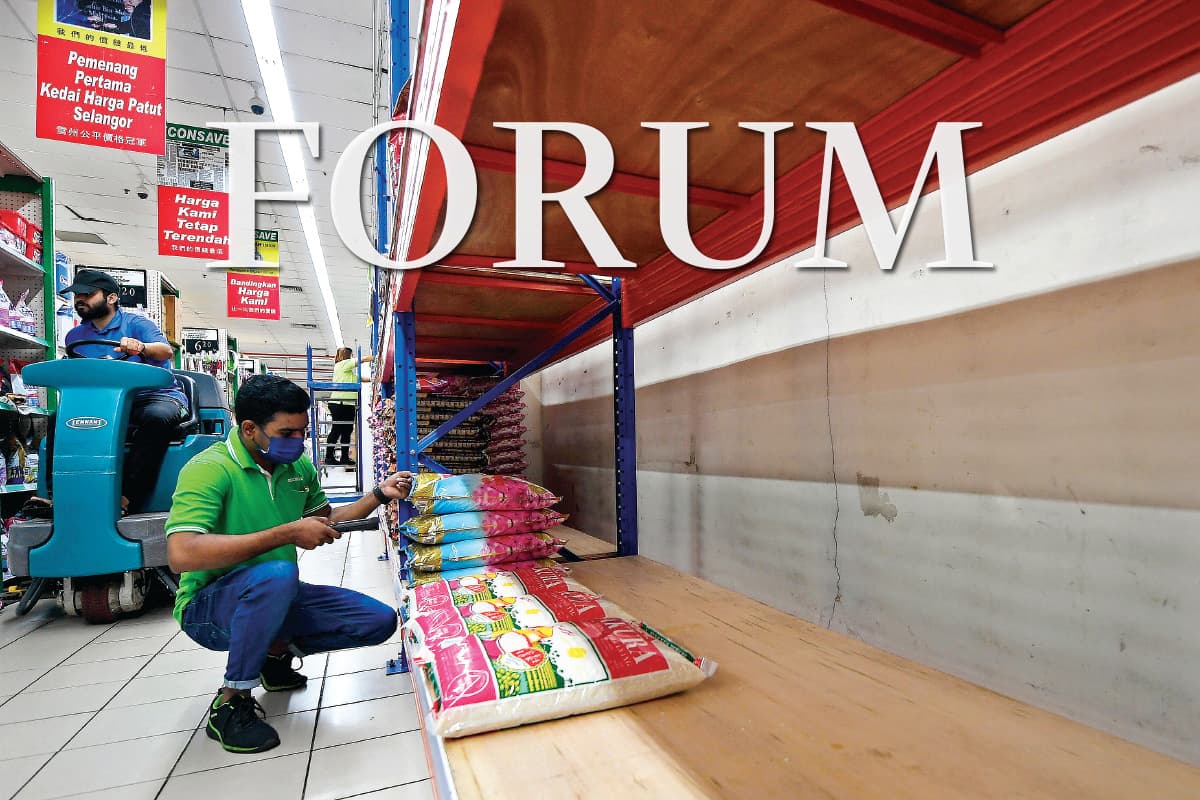
The recent shortage of white rice has created greater awareness of food security in Malaysia. The global supply chain disruptions caused by Covid-19 lockdowns, intensification of the trade war between China and the US, the Ukraine-Russia war and climate change have put the country’s food security at risk.
The situation has increased the country’s dependency on food imports, which rose to RM75.7 billion in 2022, from RM63.7 billion the year before and RM38.9 billion a decade ago.
Three years ago, Malaysia ranked 43rd on the Global Food Security Index (GFSI), with a heavy reliance on imports for essential food products. Fast forward to 2022, Malaysia is now in 41st position on the GFSI. At a glance, Malaysia seems to be doing well as far as ensuring the sufficiency and productivity of food are concerned. Between 2000 and 2016, Malaysian rice productivity increased annually by 1.6%, although paddy acreage only grew by 0.03% in the same period, according to a 2021 research by Khazanah Research Institute. This progress in production, however, did not lead to a comparable rise in food security, as consumption rose by 1.7% annually, more than wiping out all the gains in terms of productivity.
The scale and intensity of the food security issues have undoubtedly shaken policy- and decision-makers alike, and forced them to acknowledge that it presents a challenge that they must consider in their policy equation in the future.
Malaysia needs to undertake a holistic rethink involving the development of the agriculture sector and transformation of the country’s food ecosystem. In the pursuit of resetting the agriculture sector, equal importance and emphasis must be devoted to creating an enabling ecosystem.
Catalysts and incentives are necessary to create this enabling ecosystem to transform the food security value chain. However, this begs the question as to who the incentives actors and the catalytic agent are to steer the transformation of the food security value chain.
Therein lies the need to consider potential pathways involving key stakeholders and industry players.
Pathways for initiating transformation
Two main pathways for creating incentives and initiating the transformation would be repurposing and recalibrating both public and institutional investments pathways and policies.
We are already seeing considerable progress along these interconnected pathways, albeit and arguably on a smaller scale. For example, the government has pledged to address these issues through the National Agrofood Policy 2.0 and the allocation of RM3 billion to improve paddy yield, while on the institutional investor side, more funds are dedicated for impact/sustainable investing such as Dana Perintis by Kumpulan Wang Persaraan (Diperbadankan) (KWAP) and Dana Impak by Khazanah, where food security, apparently, is one of the target investment themes.
From a business perspective, more agro-businesses also recognise that their future success and competitiveness will hinge on their commitment to help solve society’s problem. Hence, we can see significant shifts in their business model. Realigning incentives along these pathways can drive positive changes throughout the value chain but it requires well-coordinated and well-executed individual and collective actions.
Repurposing public investment and policies pathway
It starts with the action of the government — from the local to the national level — to stimulate rapid and widespread change. The influence of government on policies pertaining to land use, as well as those involving consumer protection, trade, finance and other policies are integral to accelerating the transformation agenda. The government could repurpose investments within the infrastructure space to focus on improving the country’s agriculture irrigation system, which currently scores very low in the GFSI component, that is, 10.3% versus the global average of 20.5%. At the same time, it can also promote the use of recycled water to ensure greater water-use efficiency.
Other considerations include diversifying Malayia’s trade partners and source of imports for critical commodities such as fresh meat, of which 78% is imported from Australia, and cabbage of which 94% is imported from China. Learning from the South Korean experience, the government could also explore the idea of establishing the “Rice Belt” in the affiliated countries to secure stable supply within the distribution channel abroad, which could then be supplied back to Malaysia. Knowledge, expertise and equipment sharing to improve rice cultivation and production for this initiative will tremendously benefit both Malaysia and these affiliated countries. Although there is lack of impactful evidence, investments in agriculture and food technology research and development (R&D) are indeed crucial and need to be further intensified, especially given the current situation.
The unfolding climate crisis, attributable to the alarmingly regular catastrophic weather events, is depressing crop yields and will require a climate-resilient agriculture solution combined with a strong policy response. Compounding this conundrum further is the lack of available land for food agriculture as the preference remains heavily tilted towards industrial crops given their significant contribution to the Malaysian economy.
The need to invest in yield-enhancing food technology through R&D is certainly compelling from an R&D expenditure standpoint, as Malaysia’s R&D expenditure in agriculture appears to be considerably unimpressive at a mere 0.8% of GDP compared with 5% in South Korea and 2.7% in South Africa.
Institutional investment pathway
As one of the main catalytic agents to spur Malaysia’s economy, institutional investors are increasingly seeking opportunities to make a positive impact to address these climate and societal risks through their sustainability agenda. The numbers are overwhelmingly clear. In recent years, sustainable investments have witnessed tremendous growth and will continue to be the case. Environment, social and governance assets under management globally are expected to grow to US$53 million by 2025 from US$23 million in 2016. Thus, it would not be an understatement to expect a similar growth trajectory in Malaysia amid institutional investors’ desire to create an impact as they pursue their sustainability agenda.
As institutional investors find it challenging to balance risk and return when investing in projects that support food system transition, an appealing option could come in the form of adopting a blended finance mechanism. A Food Security Fund could be established to create optimal risk-return profiles by investing in enabling environments (fund market development and capability building costs), creating flexible and favourable debt or equity, and/or using insurance policies and guarantees to protect investors against losses as positive track records develop.
To enable institutional investors to make an impact, it is also imperative to upscale the intermediaries, that is, asset managers and financial institutions (banks, investment funds) that have proven track records in deploying investment capital. Building capabilities for existing intermediaries through their investments can create a credible track record of returns, especially with the help of the public sector or donor agencies, which will inevitably boost their credibility further.
More investment in green and sustainability bonds will likely be a strong catalyst to these transformation efforts as it will attract investment into sustainable food systems projects. In 2022, although the green and sustainability bond and sukuk issuance in Malaysia is still small — about 2% of outstanding corporate bonds — the potential for growth in sustainable bonds, especially within the context of food security, is immense.
On the other hand, within the private market domain, Singapore’s growing overseas approach could also be adopted where institutional investors inject capital in local agriculture companies to expand overseas and export their produce back to Malaysia. This strategy should be part of the overarching strategy as it provides some degree of predictability and mitigates the risk of being overly dependent on one source of supply. Venturing abroad not only addresses the supply issue, but it also helps resolve other constraints inherent within the food security ecosystem, such as land and labour.
Transforming the food security value chain and creating the right incentives to address the food security agenda is indeed challenging. This transformation requires mutually reinforcing actions as well as a concerted effort at all levels — be it individual players within the food security ecosystem, as well as at country, regional and global levels. There is no one-size-fits-all approach to incentivising food systems transformation, and surely this will not be a straightforward matter. Chosen initiatives would have to be carefully managed by the appropriate agencies with targets around increasing the domestic productivity and reducing dependency on imports.
These transitions, if managed well, can offer a historic opportunity for Malaysia to generate a more inclusive growth trajectory and wealth affect that could reduce poverty for rural communities. Managed poorly, the issue of food security will persist indefinitely and will further exacerbate the risks related to hunger, social instability and the environment.
Wan Najwa Wan Sulaiman is a strategist with a government-linked investment company
Save by subscribing to us for your print and/or digital copy.
P/S: The Edge is also available on Apple's App Store and Android's Google Play.