

This article first appeared in The Edge Malaysia Weekly on November 13, 2023 - November 19, 2023
It was certainly an eventful year for Kuala Lumpur Kepong Bhd (KLK), which received The Edge Billion Ringgit Club (BRC) awards for the highest growth in profit after tax over three years among plantation companies, as well as Big Cap companies with a market capitalisation of RM10 billion to RM40 billion.
A remarkable record-high net profit of RM2.26 billion in its financial year ended Sept 30, 2021 (FY2021) — more than double the RM772.6 million it made in FY2020 — helped it clinch the win alongside another planter. The solid feat in FY2021 was the result of high crude palm oil (CPO) prices, one-off gains and strong performances in its key business segments. Even without the one-off gains, KLK’s performance still exceeded market expectations.
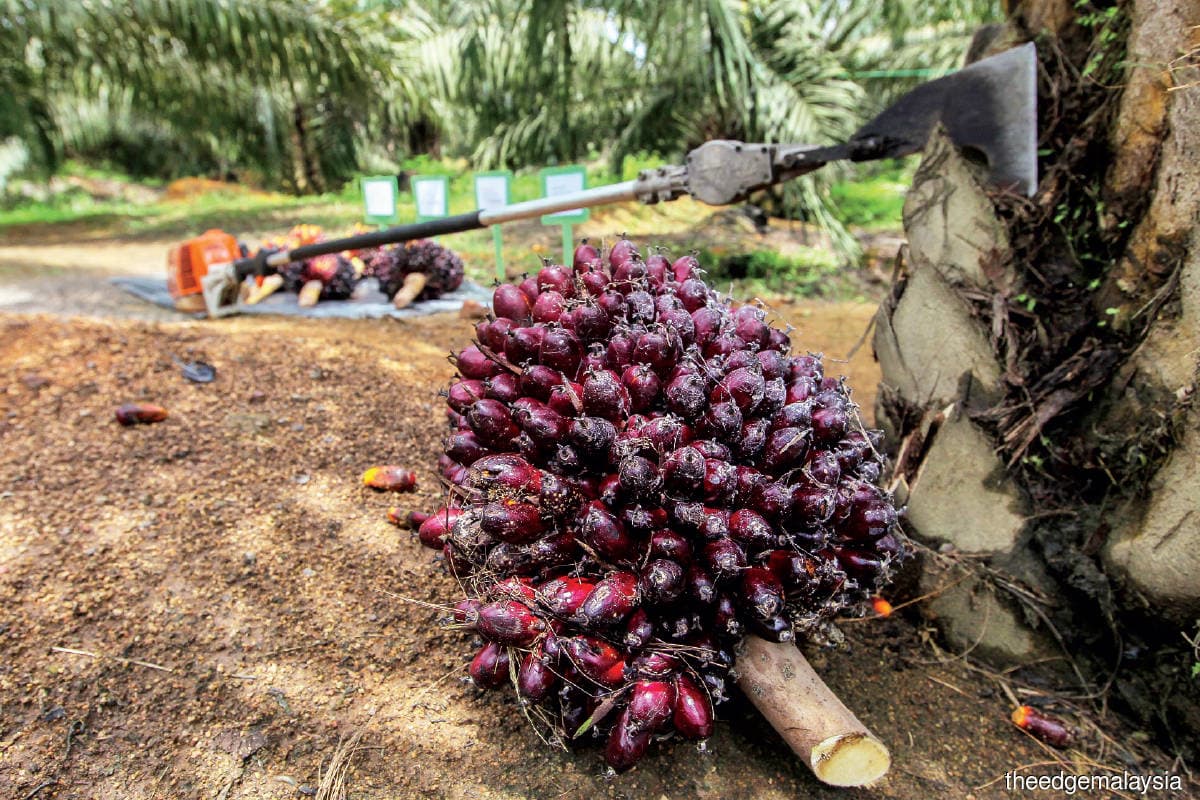
The group is mainly involved in oil palm plantations, manufacturing and property development.
In FY2022, its net profit fell slightly to RM2.17 billion as its investment holdings segment suffered a loss of RM12.4 million. Nevertheless, its three key business segments recorded better performances, and there had been a profit contribution from the newly acquired subsidiary PT Pinang Witmas Sejati as well as higher income from KLK Sawit Nusantara Bhd.
KLK achieved a risk-weighted three-year profit after tax compound annual growth rate (CAGR) of 37.5% over the awards review period, beating all but one of its big-cap peers to secure a joint win of the BRC award this year.
The group was thrown into the spotlight in recent months over its failed attempt to acquire a 33%-and-one-share stake in Boustead Plantations Bhd (BPlant) from Boustead Holdings Bhd for RM1.15 billion cash or RM1.55 a share. The deal, announced in late August, fell through in early October after some politicians and lawmakers voiced concerns of it weakening bumiputera interest.
Analysts were neutral to mildly positive on the termination of the deal as they had viewed the offer price as being expensive and earnings-dilutive on KLK over the short term, albeit a good investment for the long term.

“We are mildly positive on the latest development, as we did not expect the proposed acquisition to be earnings accretive [at least in the near-to-medium term] given BPlant’s low earnings and interest expense from the proposed acquisition. Besides, we note that around 45% of BPlant’s planted areas are aged above 20 years [which will be due for replanting in the near-medium term],” Hong Leong Investment Bank Research (HLIB Research) said in an Oct 5 report after the deal collapsed.
Going forward, many wonder if there will be more merger and acquisition (M&A) manoeuvres from KLK. As at end-June, the group had a healthy cash balance of RM2.78 billion and a net gearing of about 40.6%.
The road ahead will be more challenging for KLK, with analysts expecting its FY2023 earnings to come in significantly lower than the previous year. HLIB Research sees the group turning in a net profit of about RM1.3 billion compared with the previous year’s RM2.17 billion.
For the first nine months of FY2023, its net profit fell 57.9% year on year to RM717.95 million on the back of a 11.4% decline in revenue to RM17.87 billion. The weaker performance was due to a lower-than-expected fresh fruit bunch (FFB) output and a poor showing at its manufacturing segment, particularly the oleochemical business.

Commenting on its prospects following the results, KLK says for the plantation segment, it expects both FFB and CPO yields to be marginally better than a year ago. Nevertheless, it cautions that this year’s production costs are high, mainly owing to elevated prices of fertilisers, chemicals and energy, among others.
It notes that its manufacturing business, especially the oleochemical business, has been affected by high energy costs and sluggish demand from Europe, in particular. “However, management is undergoing aggressive restructuring in Europe to contain the worrying losses,” it says.
At the time of writing, Bloomberg data shows that eight analysts have a “buy” call on the stock, while nine have a “hold” and two, a “sell”, with the 12-month consensus target price at RM23.59. Among the 14 analysts who updated their calls in October, price targets ranged between Macquarie’s RM21 (neutral) and Citi’s RM26.20 (buy). The stock closed at RM22.40 on Oct 24, giving the company a market capitalisation of RM24.16 billion.
Save by subscribing to us for your print and/or digital copy.
P/S: The Edge is also available on Apple's App Store and Android's Google Play.