

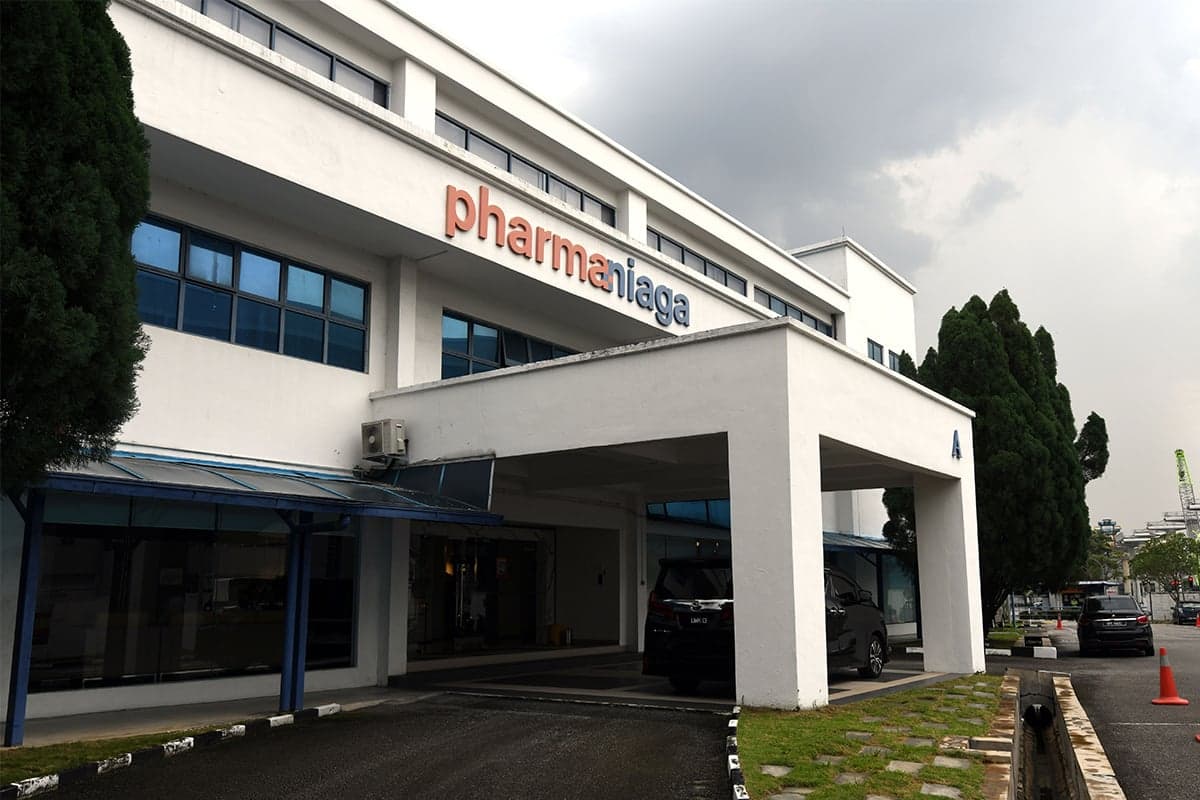
KUALA LUMPUR (Oct 30): There was no written agreement on the procurement of ventilators by the Ministry of Health (MOH) through Pharmaniaga Logistics Sdn Bhd (PLSB) during the Covid-19 pandemic, resulting in no party being able to be held accountable for the malfunctioning of 104 ventilators, a Public Accounts Committee (PAC) report revealed.
According to the report on the management of the pandemic published on the official Parliament website on Monday, deliberations, assessments and procurement decisions for ventilators were expedited via the WhatsApp application, bypassing standard procedures.
This was due to the exceptional circumstances during the Movement Control Order (MCO) and the urgency of the situation, the report said.
“The legal adviser of MOH was not referred to when in the process of preparing PLSB’s appointment letter,” the report added.
MOH had approved an allocation of RM30 million as down payment to be paid to PLSB for the procurement of 500 ventilators, out of which 136 units were provided from April 1 to May 19, 2020 for a cost of RM20.125 million.
However, MOH informed the company that the ventilators were not compatible on June 4, 2020, with only 28 units working. Further repairs and replacements resulted in just an additional four units being usable.
Added with the RM2.9 million for repairs, the government spent a total of RM23.03 million for the 136 ventilators, where only 32 were working at the end.
The report also identified discrepancies between MOH and PLSB concerning the warranty status of all 136 ventilator units. While PLSB's quotation document mentioned a warranty, it did not cover all 136 units and lacked proper documentation.
The PAC's investigation conducted during proceedings on June 15, Aug 22, Sept 14 and Sept 21 found that PLSB supplied various brands of ventilators from China and this is the first time that MOH bought these brands of ventilators.
“After the ventilators arrived, it was found that the ventilators did not pass the terms and conditions — even though Health Ministry specialists had done prior checks on specifications based on supplied brochure. The defective ventilator can only be used after being upgraded,” the PAC said in its report.
The PAC said it identified a common issue with all the ventilators: the Type A plugs received were incompatible with Type G electrical outlets used in Malaysia.
It said while the ventilators could be switched on after the plugs were upgraded, each ventilator had different problems in terms of hardware, accessories and software.
Payment for the remaining balance of RM1.075 million for audits, commissioning and maintenance of the ventilators is still under discussion between MOH, PLSB, and IDS Medical Systems (M) Sdn Bhd — the company appointed by PLSB to repair and upgrade the ventilators.
“PLSB did not sign any contract with the supplier and informed the PAC that all documents for orders and tenders showed that the warranty of the ventilators was between the Malaysian government and the supplier.
“PLSB was only involved in managing the delivery of ventilators to the MOH facilities, and assist MOH in contacting the manufacturer to invoke the warranty of unusable ventilators,” the report said.
PLSB, a wholly-owned unit of Practice Note 17 outfit Pharmaniaga Bhd, was described by the PAC as lacking experience and expertise in medical equipment procurement, although it has been the strategic logistic partner for MOH and supplies over 700 pharmaceutical items and consumables under its concession.
That being said, the Secretary of the Procurement and Privatisation Division at MOH explained that the Malaysian Competition Commission (MyCC) has conducted a study on the company's monopoly and concession to the government.
"MyCC concluded that the PLSB contract does not constitute an abusive monopoly and that PLSB actively contributes to the development of local logistics companies while supplying the MOH," he added.
The malfunctioning ventilators initially came to public attention through the Auditor General's Report 2021 Series 2, released in February. The report revealed that out of the 136 ventilators acquired through emergency procurement, a significant 108 were non-operational, leaving only 28 functional units.
This issue resulted in a substantial financial burden on MOH, amounting to RM13.07 million. Unfortunately, the ministry was unable to seek compensation for the 93 non-functional units primarily due to the absence of proper procurement documentation between the supplier and the ministry.
The ventilators, supplied by PLSB, were procured using a cash-and-carry approach, involving their purchase, testing, upgrading and immediate utilisation to address the pressing urgency of the situation.