

This article first appeared in Wealth, The Edge Malaysia Weekly on September 25, 2023 - October 1, 2023
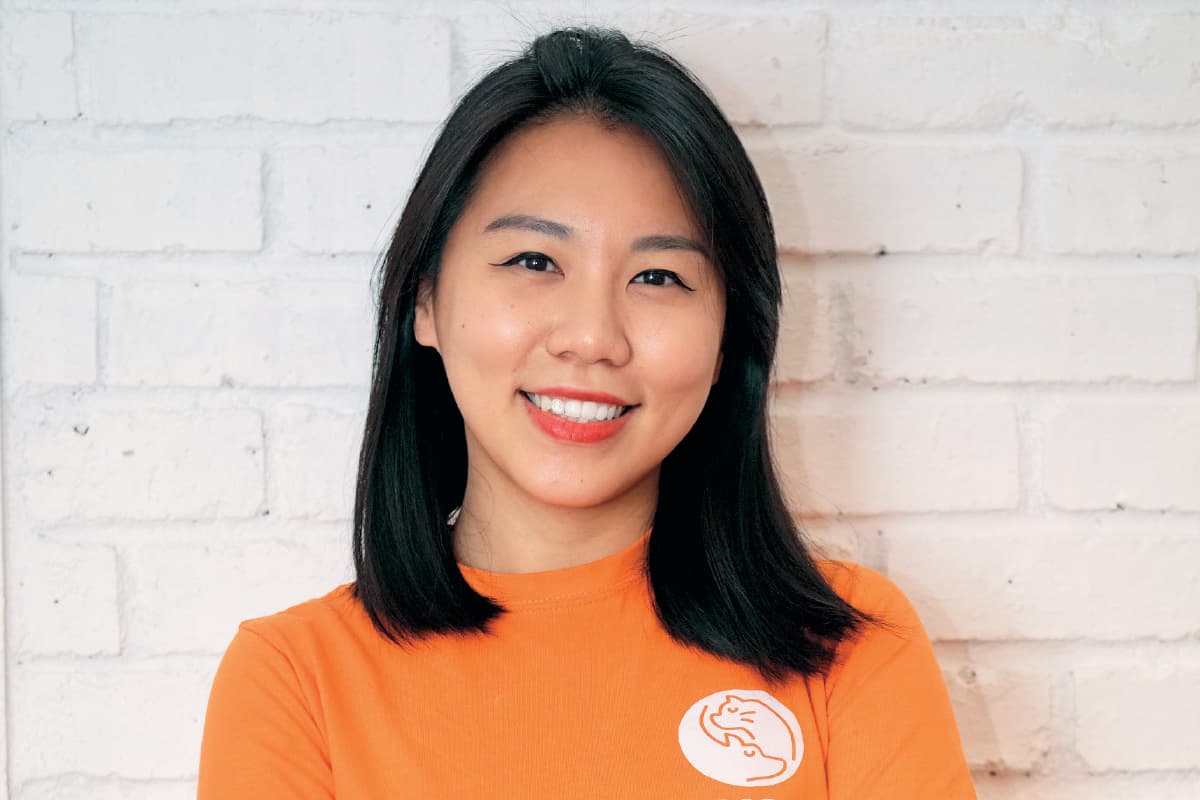
Her Duit, a personal finance platform that aims to dismantle the barriers that prevent women from taking charge of their financial matters, has garnered about 15,000 followers on Instagram since its launch three years ago.
Founder Michelle Chin started Her Duit in 2020, when she was looking for something to do during the Covid-19 pandemic. She noted that there were very few women-focused personal finance platforms locally. As businesses came to a halt during the health crisis, she had the idea of filling such a gap.
“I was looking for something purposeful and meaningful to do during the pandemic to fill my time, something that would allow me to utilise my skills in personal finance, marketing and podcasting. I consumed a lot of podcasts,” says Chin.

“I think at that point in time, there wasn’t anything online that was very women-centric when it came to personal finance. So, I thought of starting something like that. It is actually common in the US and other parts of the world.”
A podcast was also launched during that period, with 31 episodes uploaded online at the time of writing. Her guests included Scarlett Chai, country manager of Luno Malaysia, and personal finance blogger Suraya Zainuddin. They shared their insights on a wide range of topics, from budgeting and spending to investing in unit trust funds, property and stocks, as well as the psychology of money and freelancing.
Yet, why is there a need for a personal finance platform dedicated to women when most financial tips and advice can be applied across the board?
Chin, who is co-founder of pet insurance start-up Oyen Sdn Bhd, says the key difference is in how the content is delivered. She observes that many existing platforms were launched by men, and their content is either product-centric or largely filled with cold, hard facts, jargon and numbers. Also, the presentations are pretty straightforward and sometimes lack a sense of aesthetics.
“It’s not that they intentionally do this. But I think how men perceive and digest information is very different [from women]. Their content can be too technical. But personal finance doesn’t need to be technical or difficult,” says Chin.
“Adding to that is that women generally like things that are a bit more aesthetically pleasing and visually stunning. So, why is personal finance content not meeting the demands of women, who make up half the market?”
Many reports note that the amount of wealth amassed by women has been at a record high in recent years. In a November 2022 report, Swiss-based private banking firm Julius Baer quoted the Boston Consulting Group when pointing out that women hold about 40% of the global wealth on average, and this could rise at a compound annual growth rate (CAGR) of 7.2% this year, outpacing the CAGR of 5.2% projected for men.
Locally, women are taking a stronger interest in investing, according to data provided by Bursa Malaysia. As at March, women represented 36% of the new Central Depository System (CDS) accounts opened year to date, up from 32% in 2022 and 34% in 2021 during the corresponding period.
The regulator also mentioned that female investors made up a third of its total trade value in 2021. The total trade volume of women investors surged a whopping 194.1% between 2018 and 2021.

Growing up with a mother who tracked her daily expenses
Chin says there are other reasons why women are looking for personal finance content that can be more easily digested. She points out that society, particularly in Asia, has placed a lot of expectations on women such as taking care of the home, the children and the elderly. All this work requires much time and energy, and isn’t income generating.
“This is a reason why personal finance content for women needs to be repackaged to become more digestible and appealing to them. Don’t assume that they have the time to read up technical information on financial products and services and have a lot of time to research these. The truth is, they don’t have the time,” she says.
It is also because women are generally less knowledgeable when it comes to managing their finances and investing. Not because they are less capable but partly due to mental and social barriers.
Some women had grown up observing their mother playing the role of a housewife, spending most of her time taking care of household matters without making any financial decisions. And even when they take charge of the finances, they don’t invest in financial instruments that come with higher risks and rewards.
So, Chin aims to make the content on Her Duit attractive enough to Malaysian women so they develop an interest in money matters and want to learn more about the topic. She has a bachelor’s degree in mathematics and understands financial modelling and formulas. She is also passionate about marketing and branding.
Before co-founding Oyen, Chin worked with Digi’s venture capital arm Digi-X for more than five years as its head of growth marketing, head of digital marketing and product lead.
Her financial savviness comes from her upbringing, which she attributes to her mother. Unlike most Asian women in the early years who ended up being housewives due to a lack of opportunities, her mother was a career woman who worked in the property sector, and was the family’s primary breadwinner.
“She is a very career-driven person. And her goal in life is to climb the corporate ladder and make a lot of money to provide for the family. My brother and I always looked up to mom. She was the one who insisted that we studied abroad. She gave us the opportunities to receive a better education,” says Chin.
“It might sound a bit weird to people that I like to track my budget every day, which was what my mom taught me when I was young.”
On top of that, her mother had a reimbursement policy for purchases such as books.
“I would give my mom the receipt, and she would give me back the money. The reasoning is that I spent money on books, which are educational and enriching. The money for purchasing them need not come out of my own pocket,” Chin explains.
“But if it was for fun, like watching a movie, I would have to pay for it myself. There was a fixed amount that I could claim from her each month for certain things.”
Personal finance is actually … personal
An important thing that Chin learnt from her mother’s reimbursement policy when she was a kid was that personal finance was something “very personal”.
She points out that each person prioritises different things in their lives and manages and invests money differently. There is no one-size-fits-all when it comes to managing one’s money. So ideally, one should manage his or her own money, not just in terms of budgeting, but also investing.
“From my point of view, which is not conventional, I think personal finance is very personal. Money is a big part of our lives. My take is that you should be interested in managing your own money, or find a way to be interested in it,” says Chin.
“Your money plays a very important role in your life. And I feel that you shouldn’t outsource that kind of power to a third party, taking away such an important component of your life from yourself.”
There are reasons why a person would want to engage a financial planner or adviser for money matters, but the primary reason shouldn’t be because he or she doesn’t care about the money and fully delegates the responsibility to somebody else.
“The mindset should be like, ‘Okay, this is what I can do with my money. But with a financial adviser, I will be able to enhance my knowledge even more. I wish to talk to the adviser about these particular areas that I don’t know enough about’,” she says.
“I do think it’s good to engage someone if you’re seeking help to better manage your finances, but not because you want to outsource it and avoid it.”
Chin’s advice to women who have yet to kick-start their personal finance journey? Have the courage to start small. Don’t be afraid of making mistakes, as they are bound to happen without exception to anybody.
“What’s important here is taking the first step. It could feel overwhelming, but you just need to start investing, for instance, with only RM100. Just start somewhere. As long as you start small and start early, the cost of your mistake will not be as high as someone who starts late,” she says.
“There is no way in the world that you won’t make mistakes. Just make small ones and it’s okay.”
In fact, Chin admits to making a mistake when she was investing in the stock market during the pandemic in 2020. Partly due to greed, she followed the tip of a “market guru” without conducting her own research and ended up losing some money after buying a stock.
Having learnt her lesson, Chin now invests most of her money in exchange-traded funds (ETFs), which are low-cost investment instruments that passively track the performance of specific indices. She avoids investing in unit trust funds as they come with much higher fees and charges, which could affect their long-term performance.
“After all, if you look at the composition of some of these unit trust funds, it is very similar to that of the index [they benchmarked against],” she points out. “So, why am I paying so much when they are just largely investing in the same companies?
“I think a lot of people have access to ETFs today. It is very easy to buy into [through local and foreign brokerage firms].”
Robo-advisors, or online platforms that allow the public to invest as little as RM10 or RM100 via a mobile application, is another option for women who want to start investing.
Robo-advisors such as StashAway help investors build an investment portfolio based on their risk profile. It also allows them to invest in a limited number of ETFs curated by the platform, helping investors to avoid analysis paralysis when they have too many options in front of them, says Chin.
Save by subscribing to us for your print and/or digital copy.
P/S: The Edge is also available on Apple's App Store and Android's Google Play.