

KUALA LUMPUR (Aug 9): After ruling Selangor for 15 years since 2008, the three-term Pakatan Harapan (PH) government has established an admirable scorecard in terms of economic development.
Department of Statistics Malaysia's data shows that while the country's gross domestic product (GDP) per capita stood at RM54,863 last year, Selangor’s stood a tad higher at RM59,908, while Kelantan’s was the lowest at RM16,567, followed by RM23,126 in Perlis, RM25,967 in Kedah and RM32,199 in Terengganu.
Since incumbent Menteri Besar (MB) Datuk Seri Amirudin Shari took over in 2018, the state saw the elevation of four local councils — the district councils of Kuala Langat, Kuala Selangor, and Hulu Selangor were upgraded to municipal councils between 2019 to 2021, while Subang Jaya was upgraded to city council in 2020.
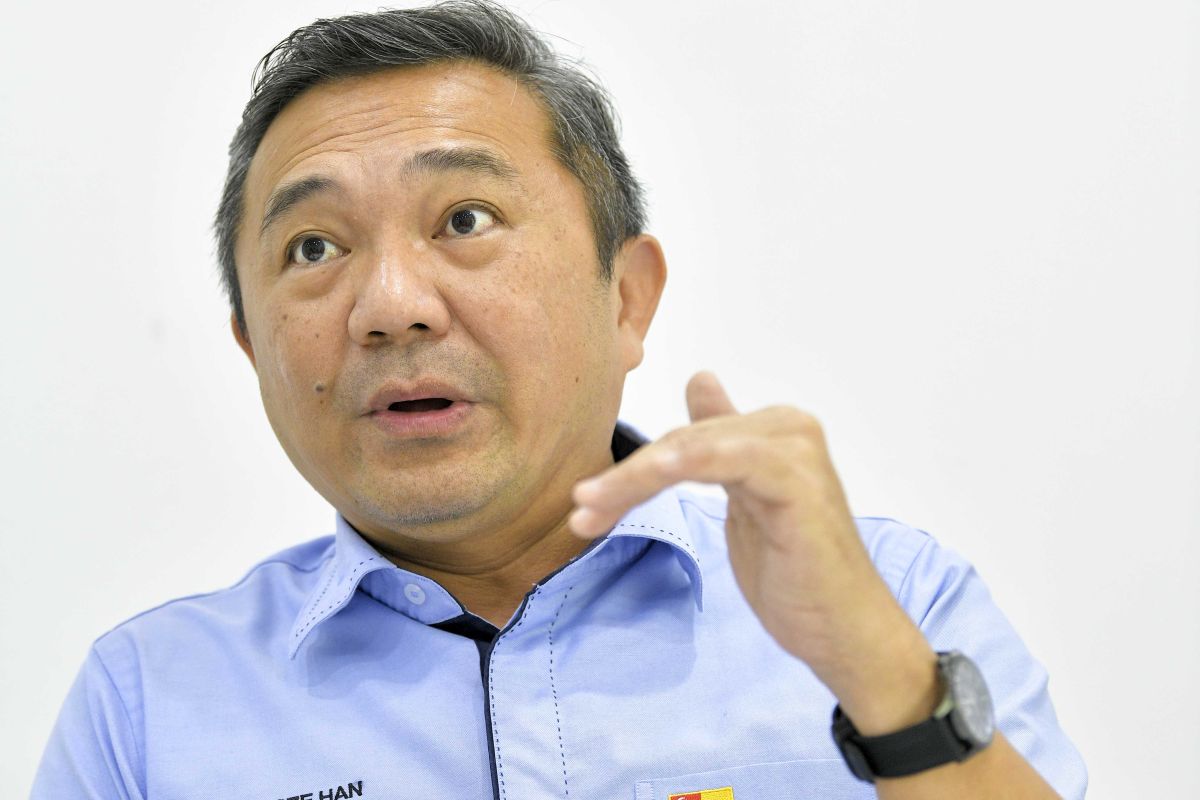
The state, which contributes 25% of the nation's GDP, was also the first in the nation to legalise online- or home-based businesses as the rising digitalisation trend in the local economy raises regularisation needs. It is also the first in legalising confinement centre businesses to encourage more women to return to the workforce, said Ng Sze Han, a member of the Selangor caretaker government’s executive council.
According to the state government's mouthpiece Selangor Journal, an online news portal under the Menteri Besar Selangor Inc, the state reserves reached RM3.4 billion, nearly 10 times higher than the RM400 million in 2008 when the state changed government for the first time; and RM1.3 billion higher compared with RM2.1 billion in 2018 when Amirudin took over the MB position.
Nonetheless, Ng acknowledged that the turnout rate of PH supporters on polling day would be a wild card to determine whether the coalition could win a fourth consecutive mandate from the people after partnering with long-time rival Barisan Nasional (BN).
“That is my worry,” said the 52-year-old, who is also DAP’s national assistant treasurer, referring to the voter turnout rate for the upcoming state election in Selangor.
“We are hoping that all the voters in all the six states will look at this state election as equally important as the GE (General Election).
“The stability of the Unity Government at the federal level very much depends on the outcome of the coming state elections,” he told The Edge in a recent interview.
In GE15 last year, the Selangor voter turnout rate was 80.3% of the 3.68 million registered voters, versus 85.9% of the 2.42 million registered voters during GE14 in 2018, and 71.2% of the 2.05 million registered voters during GE13 in 2013.
Ng’s concern is understandable, especially as key opponent Perikatan Nasional (PN) has been able to demonstrate a capability in rallying thousands of supporters to events like candidate-naming ceremonies and nomination day — reflecting a stronger willingness by voters to turn up and cast their votes come polling day on Saturday (Aug 12).
Having said that, Ng is confident that Selangor PH is well-positioned to retain its two-third majority at the state assembly, given its track record in delivering economic growth over the past one-and-a-half decade.
“Of course, we still have a lot of room to improve. But if you compare our achievements in terms of the economy, we are still the best in the country,” he said.
Selangor’s contribution to the nation’s gross domestic product (GDP) stood at 25.5% last year, the highest amongst all states and federal territories, followed by the combined contribution of Kuala Lumpur and Putrajaya, which stood at 15.9%.
“Our goal was to achieve a 25% national GDP contribution by 2025. But surprisingly last year, we achieved our goal three years ahead of target,” he said.
Should PH be given the mandate to govern Selangor again, Ng said the state government’s focus will continue to be on enhancing the quality of life for the people here and creating more high-income jobs.
“I think this is what the youth, especially, are looking forward to. They want more job opportunities; and in Selangor, we are able to provide the greatest number of job opportunities in the whole country.
“Although the birth rate is getting lower, the population keeps increasing, because we have a lot of people migrating to Selangor, for two simple reasons: first, there are more job opportunities; secondly, a better quality of life,” he explained.
The fertility rate in Selangor has dropped to 1.5 children/woman in 2021, from 2 children/woman in 2011, according to the Department of Statistics Malaysia, while the population grew to 7.05 million in 2022, and the department's preliminary data indicates that it will grow to 7.2 million this year.
The state’s population stood at 6.99 million in 2020, and 5.5 million in 2010, keeping it consistently the most populated state in the nation over the years.
Ng, who will be defending the Kinrara state seat, also opined that PH’s continuity in leading the state government over the next five years would help fortify the stability of Prime Minister Datuk Seri Anwar Ibrahim’s administration at the federal level.
“Only with a stable government can we attract more foreign direct investments and also domestic investments. This is a priority for most of the people now, so I think at this moment, the best formula in politics in Malaysia is to have the Unity Government,” he said.
The upcoming state election on Saturday is widely viewed as a test to the formula, which has been the subject of criticism by PN leaders since the Anwar administration was formed less than a year ago, particularly with the appointment of Datuk Seri Ahmad Zahid Hamidi as the deputy prime minister when there is an ongoing trial of 47 criminal charges against the Umno president.
“This is, so far, the best formula, and we do not encounter big problems explaining it to our core supporters. I guess the problem is more towards convincing previous BN supporters to also vote for PH candidates,” said Ng.
With less than a week until polling day, Selangor is set to remain a highly focused battleground amongst the six states, not only because of the increasing vulnerability of the PH stronghold, but also due to the fact that the state is the nation’s economic heavyweight.
Visit this link for everything about the State Polls 2023