

This article first appeared in The Edge Malaysia Weekly on July 10, 2023 - July 16, 2023
IN a move to propel growth and enhance its business stickiness, industrial adhesive producer Techbond Group Bhd had in February acquired Malayan Adhesives and Chemicals Sdn Bhd (MAC) — a half-century-old adhesive and chemical specialist — from the business empire of prominent tycoon Robert Kuok.
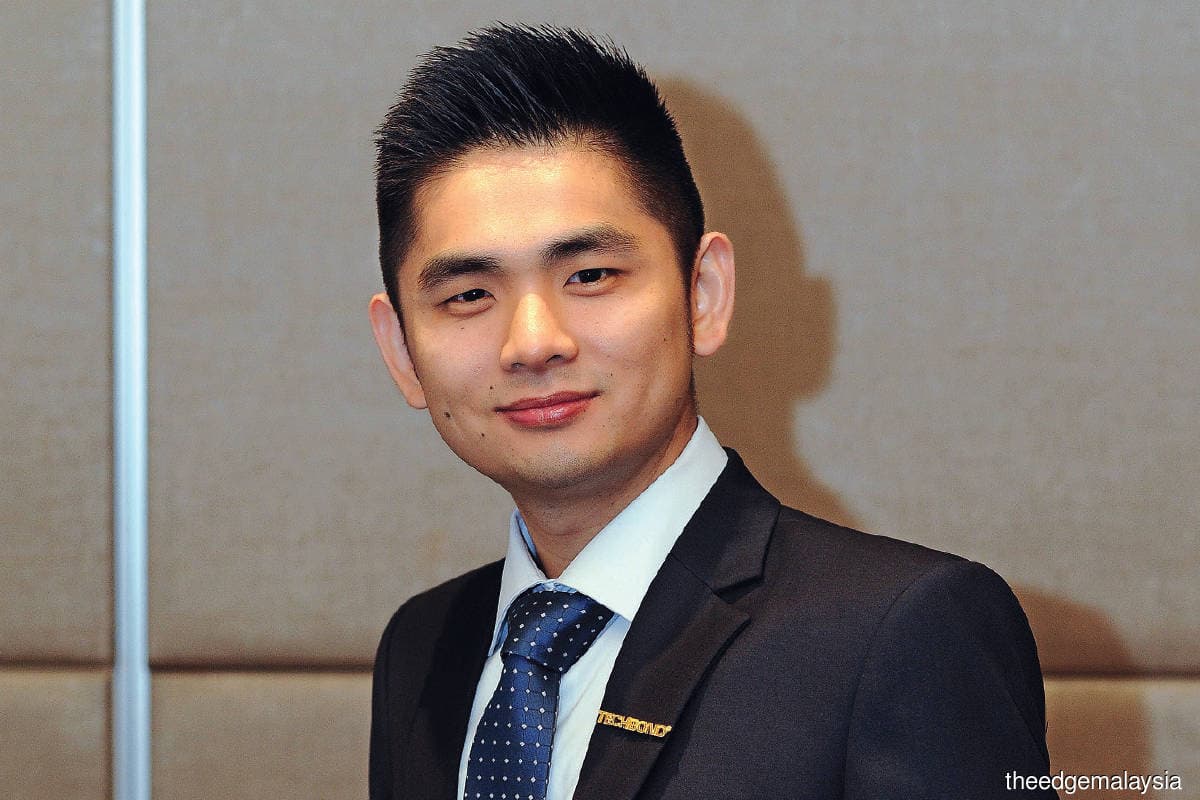
Techbond deputy managing director Lee Seh Meng points out that the RM57.25 million all-cash deal is the group’s first major mergers and acquisitions (M&A) deal since its listing on the Main Market of Bursa Malaysia in December 2018.
“The acquisition of MAC is in line with Techbond’s long-term strategy to expand our product range and geographical reach. We see strong synergies between Techbond and MAC. All this while, MAC has sold its products mainly via distributors, whereas Techbond has been selling directly to end-customers and through distributors.
“Our plan is to capture a larger market share by broadening our product range and leveraging each other’s network to cross-sell our products. This will increase our value proposition and enhance customer stickiness,” he tells The Edge in an interview.
Started by the Kuok Group of Malaysia and its then joint-venture partner Mitsui Toatsu Chemicals Inc of Japan about 58 years ago, MAC was set up to produce and distribute a range of formaldehyde-based products to cater for the plywood industry.
At end-December last year, Techbond announced its plan to acquire a 100% stake in MAC. The vendor of the 99.57% stake was Chemquest Sdn Bhd, in which PPB Group Bhd has a 55% stake and Kuok Brothers Sdn Bhd, 45%.

The acquisition of the controlling stake in MAC from Kuok’s companies was completed in February, while the purchase of the remaining 0.43% stake from minority shareholders was completed early this month.
According to Lee, MAC produces adhesives, resins, additives, formaldehyde and phenoset microspheres, which are used in various industries such as plywood, particleboard, medium-density fibreboard (MDF), inorganic insulation materials and recycled paper manufacturing.
Its products are exported to more than 25 countries. Interestingly, MAC’s manufacturing base is located in Shah Alam, Selangor, which is a stone’s throw from Techbond’s plant.
It is worth noting that formaldehyde glue made up about half of MAC’s turnover of RM55.76 million in the financial year ended Dec 31, 2021 (FY2021).
“The key market for MAC’s urea-formaldehyde is the woodworking industry, which Techbond is also serving. However, it should be noted that MAC’s urea-formaldehyde adhesives are very different from Techbond’s water-based adhesives.
“The particleboard makers need urea-formaldehyde adhesives to produce their chipboard and MDF products, not ours. Our water-based glue only comes in when the particleboard players laminate the skin onto their products,” explains Lee, who is the son of Techbond managing director and major shareholder Lee Seng Thye.
According to the junior Lee, over the years, Techbond has been selling its products to the woodworking industry, but only at one tier, which is the surface tier, and not the inner tier. Following the acquisition of MAC, Techbond is now effectively a one-stop adhesive provider for the woodworking industry.
“We are interested in selling our products to the export market but this will not be an easy task as urea-formaldehyde adhesives in liquid form have a very short shelf life.
“Hence, we are exploring the possibility of developing urea-formaldehyde adhesives in powder form through our in-house R&D (research and development) to potentially export this product overseas. However, it is currently at the early stages of exploration,” he elaborates.
Techbond is 72%-controlled by Seng Thye via his private vehicle Sonicbond Sdn Bhd. Being a homegrown pioneer in developing and manufacturing industrial adhesives and sealants, the group has internal R&D capabilities in developing and enhancing new formulations to fulfil the requirements of its customers.
“We plan to strengthen our R&D activities under the enlarged group, enabling us to co-develop new adhesive products to capture a larger market share and carve out more niche markets for Techbond.
“Besides, we are leveraging the Techbond management’s experience to enhance MAC’s operational efficiency to further unlock the value of MAC,” says Lee.
Techbond has manufacturing operations in Shah Alam, as well as Binh Duong, Vietnam. In June 2021, the group also commenced operations at its Vietnam-Singapore Industrial Park II A (VSIP 2) in Vietnam, which houses its upstream polymerisation plant.
Big potential in microsphere business
Lee reveals that prior to the MAC deal, Techbond had negotiated a few other M&A deals, which did not come to fruition.
“These M&A targets were also related to our adhesives and polymer businesses. Eventually, we chose MAC, not just because we like its urea-formaldehyde adhesives business, but we also see huge potential in its phenoset microsphere product,” he says.
Microspheres are used as fillers in materials like paints, coatings, adhesives and composites to improve properties such as density, strength and viscosity.
MAC is currently selling its speciality microsphere products — phenolic microspheres — to the aerospace industry.
“Microsphere has the function of reducing heat transfer and, therefore, it is very useful for the rocket industry. From our understanding, MAC is one of the few manufacturers in the world that can produce phenolic microspheres, whose weight is at least 10 times lighter than the normal material.
“We foresee that there will be higher demand for phenolic microspheres in the future. Given their distinctive qualities, they are a higher value product,” says Lee.
Furthermore, given their unique attributes, the use of phenolic microspheres could potentially be expanded into other industries such as automotive and paint.
MAC recorded a profit after tax of RM2.04 million for the first seven months of FY2022, and RM3.7 million for FY2021.
Although Techbond just acquired MAC a few months ago, Lee says the former has already identified certain things it could do for the latter. “The pandemic has certainly impacted MAC’s overall efficiencies, hence, we see a lot of opportunities for improvement. We are putting in our initiatives to enhance its efficiency.”
Lee is confident MAC’s profits will improve progressively. “Many years ago, MAC’s profit once hit the RM10 million threshold. This demonstrates what MAC can achieve and what its potential is. We are buying for its track record and its future growth, which we are very excited about. In fact, we looked into MAC before we were listed but we couldn’t afford it at that time.”
Year to date, Techbond’s share price has declined 7.5% to close at 37 sen last Wednesday, giving the company a market capitalisation of RM193.3 million. The counter is currently trading at a historical price-earnings ratio of 19 times.
Techbond saw its earnings fall 2.7% to RM11.2 million in the financial year ended June 30, 2022 (FY2022), down from RM11.51 million a year ago. The weaker performance was largely due to lower demand from customers in Vietnam during the lockdown imposed on the country.
The group reported net profit of RM5.74 million for the first nine months of FY2023, which was 15% lower than the RM6.75 million reported the year before, owing to higher input costs and administrative expenses.
As at 9MFY2023, Techbond’s net cash position stood at RM2 million.
Save by subscribing to us for your print and/or digital copy.
P/S: The Edge is also available on Apple's App Store and Android's Google Play.