

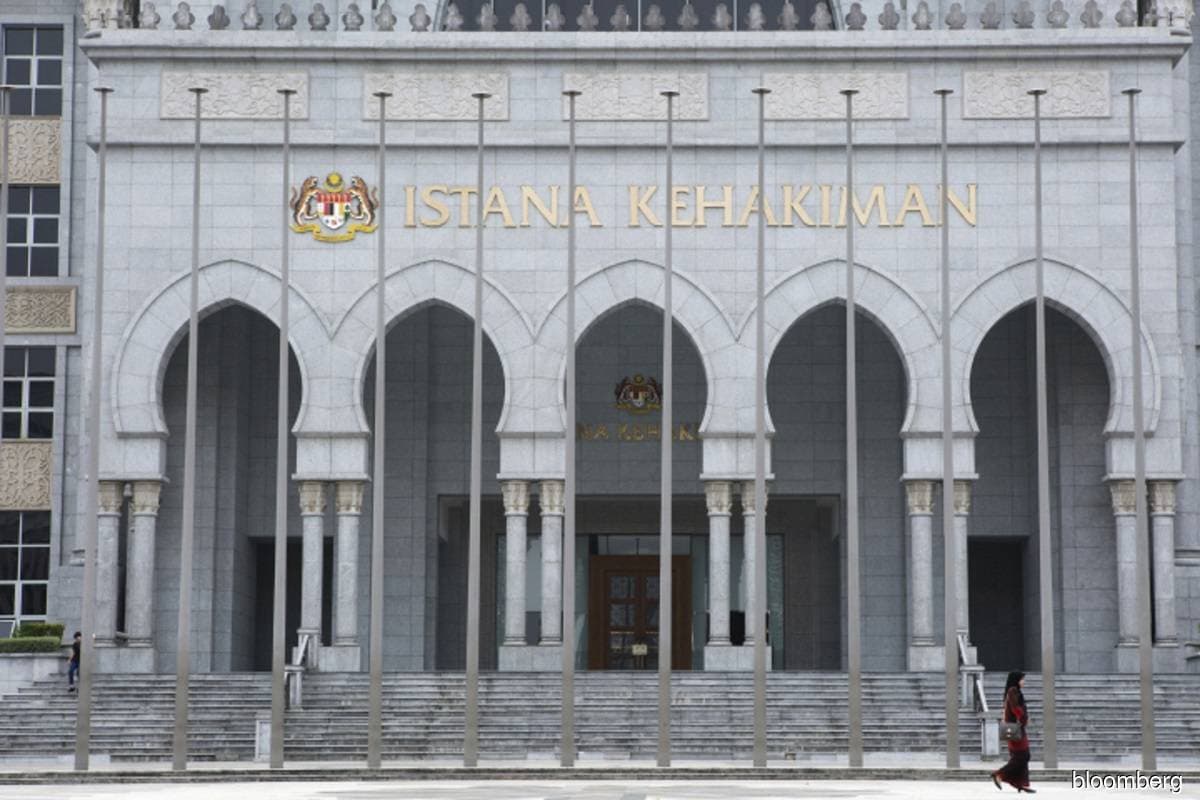
PUTRAJAYA (July 6): The Federal Court has rescheduled to Sept 26 the hearing of single mother Loh Siew Hong’s leave to appeal against the Court of Appeal's decision that allowed the Perlis Islamic Religious and Malay Customs Council (MAIPs) to intervene in her divorce proceedings.
The rescheduling of the hearing, which was initially set for Thursday (July 6), had to be done as Loh’s counsel had some urgent family matters to attend to.
The replacement date was fixed by the Federal Court’s senior assistant registrar Rasidah Roslee.
The Sept 6 date was confirmed by MAIPs' lawyer Danial Farhan Zainul Rijal and Loh’s lawyer J Gunamalar.
Loh is appealing against the Court of Appeal decision in February, where the appellate court allowed the Perlis state religious body's appeal to intervene in the custody order granted to Loh over her three children. This makes the council a respondent in the matter.
The single mother filed her leave application in early March.
In civil cases, litigants must first obtain leave (permission) before proceeding with appeals to the apex court.
The three-member panel said that based on Order 15 Rule 6 of the Rules of Court 2012 and Section 96 of the Law Reform (Marriage and Divorce) Act 1976, it would confer that MAIPs had a legal right to intervene.
In June last year, High Court judge Evrol Mariette Peters dismissed the religious body's leave application to intervene, finding that MAIPs had failed to show that it was an interested party in relation to the children.
MAIPs has since filed its application to vary the custody order in Loh's case involving all three of the underage children who were converted to Islam by Loh's ex-husband Muhammad Nagahswaran, without her consent.
Among others, it is seeking supervised access to the children twice a week for guidance and basic religious education, and to take them to observe Islamic celebrations.
It has also sent a letter to the High Court, seeking to recuse Peters from presiding over its application to intervene.
In the letter, MAIPs claimed that Peters was mistaken in her judgement when she touched on the case's merits, namely the children's religion and the variation order, which was not in the High Court then.