

This article first appeared in The Edge Malaysia Weekly on June 19, 2023 - June 25, 2023
OVER the next few weeks, up to early August, the six state assemblies that were not dissolved during the 15th general election will automatically dissolve (if the respective Menteris Besar do not do it first), paving the way for state polls that would be a gauge of the people’s acceptance of the coalition government after more than six months in Putrajaya.
The focus of the elections will be on whether the “Madani” government led by Prime Minister Datuk Seri Anwar Ibrahim can secure a simple majority of the seats in at least three of the states that the Pakatan Harapan-Barisan Nasional coalition — or more popularly known as the unity government — is currently in power.
Looking at the states that are up for the polls, two of them are the country’s economic powerhouses — Selangor and Penang — while three — Kedah, Kelantan and Terengganu — will be the barometers of the government’s popularity among the ethnic Malays. Meanwhile, Negeri Sembilan, which is similar to Selangor demographically and benefits from the spillover in development from its more developed neighbour in the north, is not as industrialised nor as urban.
From an economic perspective, what is at stake in the six state elections?
Kedah catching up, but Selangor and Penang still lead
Selangor and Penang are among the most economically important states in Malaysia, owing to their high level of industrialisation and commerce.

From the gross domestic product perspective, Selangor, where the economic pulse of the country — the Klang Valley — is located, made up 23.57% of the country’s GDP in 2021, according to the latest available data from the Department of Statistics Malaysia (DOSM).
In 2021, Selangor contributed RM364.27 billion to the country’s GDP of RM1,545.37 billion, making its economy almost as big as the combined output of Sarawak, Johor and Sabah, which ranked second, third and fourth largest respectively, not including the Federal Territory of Kuala Lumpur.
As the state with the strongest economy in the country, Selangor has the largest annual revenue, excluding the special regions of Sabah and Sarawak. The Selangor government expects revenue collection of RM2 billion in 2023.
Sarawak, being a region of Malaysia with certain levels of autonomy, is targeting revenue of RM11 billion this year, while Sabah expects revenue of RM5.3 billion this year.
Terengganu’s revenue estimate of RM1.81 billion this year is not that much off Selangor’s, thanks to the petroleum royalty income the former is entitled to, being one of the major petroleum producers in the country.
However, the relatively large state revenue of Terengganu contrasts starkly with its 2021 GDP per capita of RM30,901, that is well below the national average of RM47,439. Penang leads in terms of GDP per capita among states in Malaysia, excluding the Federal Territories, at RM59,685.
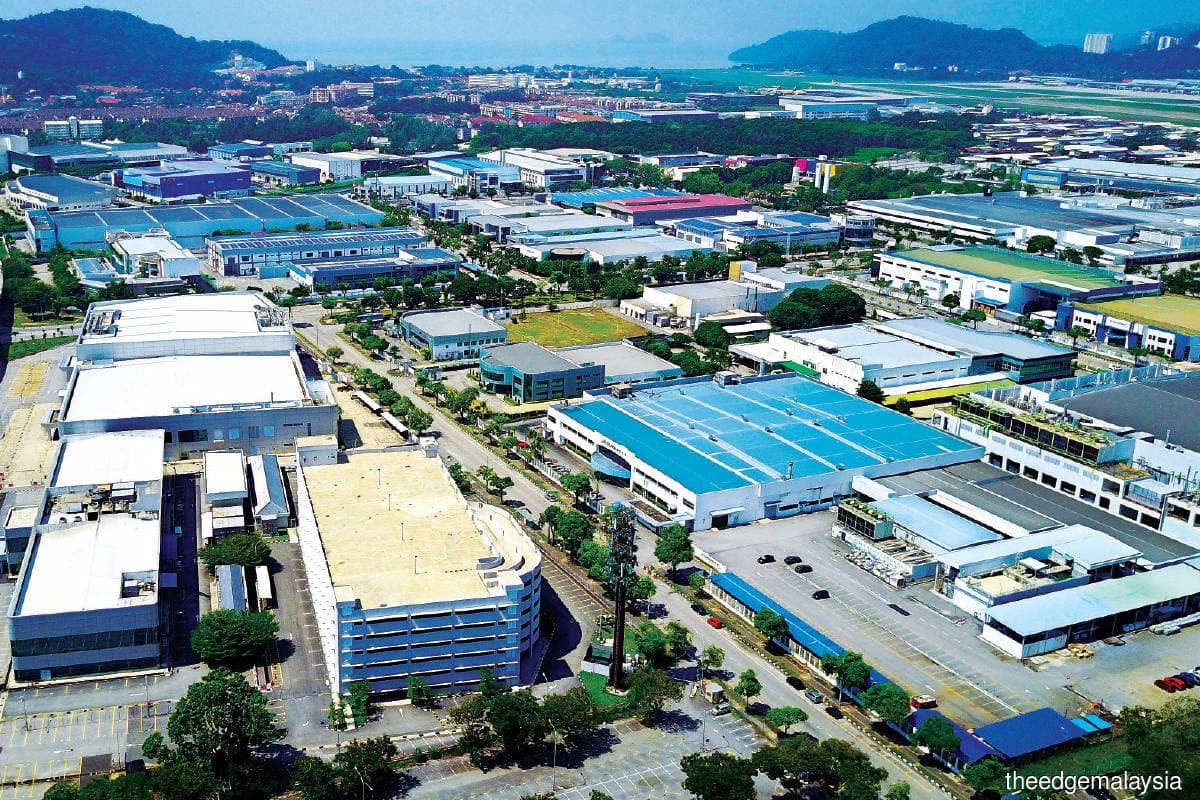
Meanwhile, among the six states heading to the polls, Penang is the largest contributor to the country’s total exports, at 29.86%, or a whopping RM463.32 billion of the RM1,551.62 billion worth of Malaysian exports in 2022, according to DOSM. This is because the state is the “Silicon Island” of Southeast Asia, with high concentrations of manufacturers of integrated circuits (ICs) and other electrical and electronic (E&E) components and products. ICs made up 40.5% of Penang’s exports in 2022, while other E&E made up 11.3%.
The tiny state is also the largest recipient of investments in the manufacturing sector in the first quarter of 2023 among the six states going for polls. In 1Q2023, approved manufacturing projects for Penang stood at RM3.28 billion.
Nationally, however, it is eclipsed by Perak, which received approved manufacturing investment projects worth RM4.33 billion in 1Q2023, according to data by the Malaysian Investment Development Authority (Mida).
Selangor trails behind Penang, Sarawak, Johor and Melaka in 1Q2023, with total approved foreign investments in manufacturing projects worth RM930.4 million.
Nevertheless, Kedah is catching up. The proximity of the state with Penang made it a natural expansion location for many investors. The Kulim Hi-Tech Park in Kulim houses big names such as Intel, Osram Opto Semiconductors, Infineon, AT&S and First Solar.
In fact, in 2022, the approved foreign investments in the manufacturing sector received by Kedah were bigger than those received by Penang and Selangor, at RM11.1 billion, according to Mida. Approved foreign investments in manufacturing projects for Penang stood at RM9.76 billion in 2022, while Selangor had RM7.57 billion.
Nationally, Kedah was eclipsed by only Johor, which received RM12.59 billion in foreign investments in the manufacturing sector in 2022.
Change of governments should not mean change of policies
Looking at the economic numbers of the six states, it is clear that these are major states where socioeconomic development will have a big impact on the country as a whole. Therefore, it is imperative for the governments at both the state and federal levels to align their policies towards a common goal.
Lee Heng Guie, executive director at the Socio-Economic Research Centre of the Associated Chinese Chamber of Commerce and Industries of Malaysia, says that regardless of the different political parties governing at the federal and state levels, regional economic development must be balanced.
“Investors see Malaysia as one when investing — they want political stability to provide certainty in [the] investment environment; and will diversify their investment in states that have potential to generate better investment returns,” he says.
Therefore, despite the different political ideologies, lawmakers must forge close cooperation between the federal and state governments and the relevant agencies to build a synergistic ecosystem that promotes the development of the country as a whole, he adds.
For example, when the Democratic Action Party (DAP) wrested Penang from the BN government in 2008, there was no major shift in economic policies towards developing the state as an economic hub.
Nevertheless, Lee adds, one should anticipate anxieties over the abrupt changes in policy stance and direction initially, if the state elections bring about a change in government from a “moderate” to “conservative” governing approach, or between reformism and populism.
It is only logical to conclude that in a democracy where popularity matters, when politicians take a populist approach, they will pander to the demand of their respective constituents to get elected. The fear is that, without a reformist government, the chosen assemblymen will dance to the tune of their voters from specific groups.
Kedah, Terengganu and Kelantan are Malay heartlands where the political considerations are different from those in Selangor, Negeri Sembilan and Penang. In both Kelantan and Terengganu, bumiputeras comprise more than 90% of the population, making the non-bumiputera political clout negligible.
Penang is largely a mixed state with no single ethnic group having a clear majority. Bumiputeras make up only 45% of the state’s population, while ethnic Chinese make up about the same percentage. The cooperation between the two groups is crucial to ensuring the development of the state.
Then, there are Selangor and Negeri Sembilan, whose ethnic make-up is almost similar to that of the national level, with bumiputeras forming a majority but not overwhelmingly so, while non-bumiputeras have strong political clout in major urban areas.
But while the two states’ electorates share similarities demographically, the outcome of the GE15 was very different. BN, then the “enemy” of PH, regained supremacy in Negeri Sembilan, but it was wiped out in Selangor.
Regardless of which coalitions manage to form the state governments in these six states, one thing for certain is that the most important job right now is to ensure that the country moves ahead amid a challenging economic environment.

Save by subscribing to us for your print and/or digital copy.
P/S: The Edge is also available on Apple's App Store and Android's Google Play.