

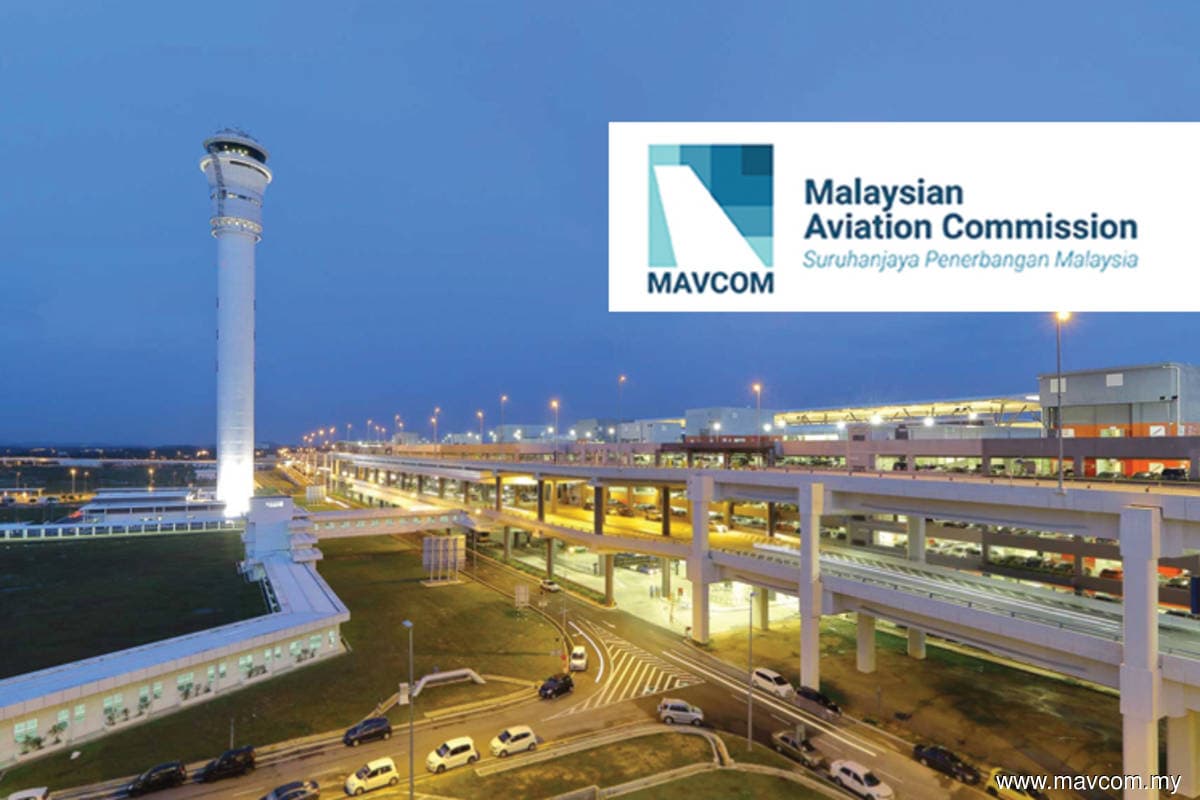
KUALA LUMPUR (June 19): The Malaysian aviation sector saw a vibrant recovery as passenger traffic grew 123.6% year-on-year (y-o-y) to 19.4 million passengers in the first quarter of 2023 (1Q2023), according to the Malaysian Aviation Commission (Mavcom) in its biannual industry report on Monday (June 19).
The latest Waypoint Report also showed international passenger traffic growing at an average of 80.9% quarter-on-quarter, following the full reopening of international borders.
Approved international air traffic rights, meanwhile, demonstrated a notable y-o-y increase of 246.1%, underscoring a steady revival of the international market.
Total passenger traffic stood at 73% of the 2019 level.
Nevertheless, Mavcom maintained its forecasts, expecting air passenger traffic to rise between 40% and 52% in 2023, reaching between 74.6 million and 80.8 million passengers.
Cargo performance a let-down
A decline, however, was seen in cargo performance in 1Q2023. Total freight-tonne kilometres were down by 11% y-o-y to 4.67 billion, marking the second quarterly decline in a row, in line with Malaysia's trading performance, due to a slowdown in the global economy, a continued shift in consumer spending from products to services, and a downcycle in the electrical and electronics sector.
Air cargo traffic is forecast to grow between 3.0% and 4.8% in 2023. Given the challenging cargo performance in 1Q2023, Mavcom now predicts full-year cargo traffic to hover near the lower end of the forecast.
Mavcom executive chairman Datuk Seri Saripuddin Kasim said: "Despite the downturn in cargo traffic in 1Q2023, the remarkable surge in passenger traffic paints a compelling picture of the resilience inherent in our aviation industry. This remarkable performance not only demonstrates our ability to rebound, but also provides a solid foundation for continued growth in the sector throughout 2023."
Country's air connectivity ranking improved
Reflecting a vibrant recovery in the aviation industry, Malaysia's air connectivity ranking improved to the fifth place in Asean, overtaking the Philippines, with a connectivity score of 61.0 in 2022, attributable to higher deployment of international seats to destinations with a higher weightage following the lifting of border restrictions in 3Q2022.
In addition, Kuala Lumpur International Airport Terminal 1 and Terminal 2 maintained their position as the fourth most connected airport in Asean.
The Waypoint Report also noted that the revenue per available seat kilometre-cost per available seat kilometre (RASK-CASK) spread had stabilised at 1.6 sen in 4Q2022.
“The commission looks forward to continuing supporting the industry and its players, particularly through our various industry-focused initiatives, such as the Waypoint Report. It will continue to be a crucial tool for stakeholders in the Malaysian aviation industry, not only in guiding informed decision-making, but also in fostering a resilient and consumer-oriented aviation sector, key to the nation's wider economic growth," said Saripuddin.