

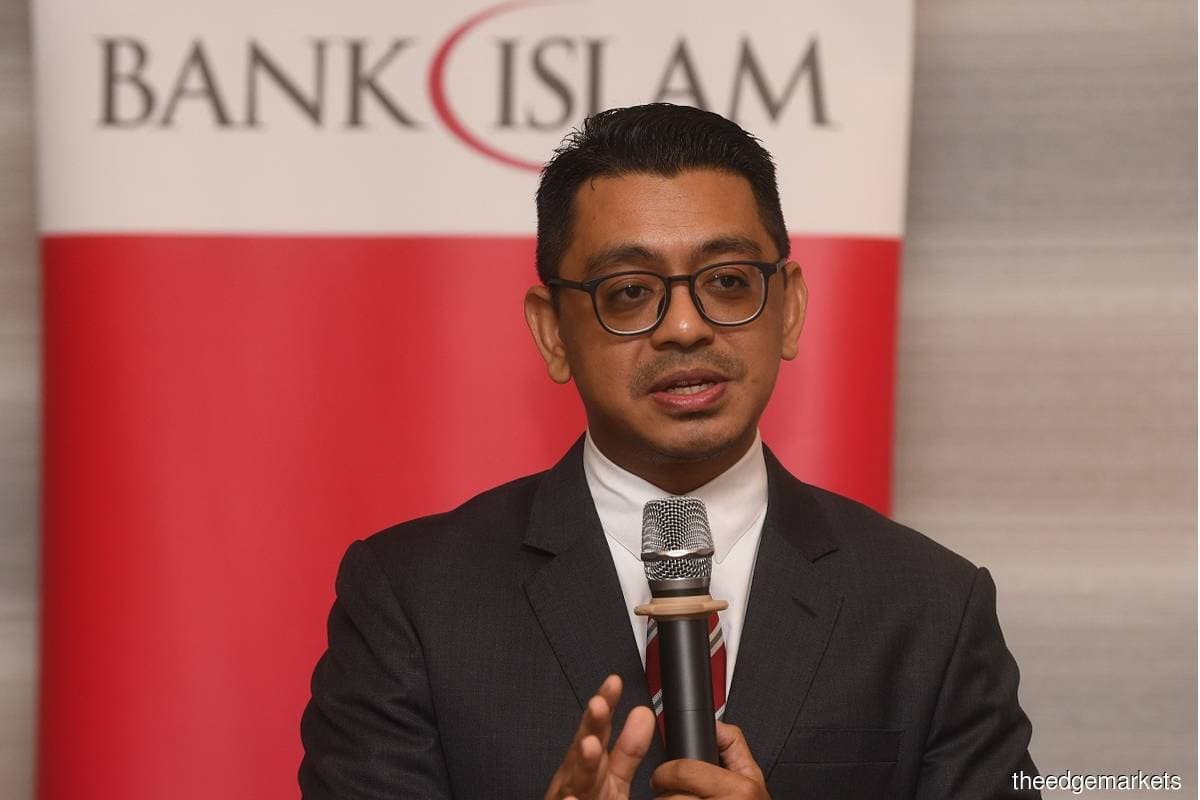
KUALA LUMPUR (Jan 18): The government should focus on bolstering the Medium-Term Revenue Strategy (MTRS) by re-introducing the broad-based Goods and Services Tax (GST) at lower rate of 2%-3% to strengthen revenue stream, particularly in light of the rising debt level that has reached a whopping RM1.5 trillion.
But the question of whether the new government can muster enough support to make the changes and reform the taxation remains to be seen, said Bank Islam Chief Economist Fridaous Rosli at Bank Islam’s 2023 Economic Outlook presentation on Tuesday.
Fridaous joins a chorus of tax experts who have called on the government to reintroduce the GST to broaden its tax base and bring in more revenue.
Manufacturers, via the Federation of Malaysian Manufacturers, have also urged the government to do the same, while World Bank Group lead economist for Malaysia Dr Apurva Sanghi has said the GST is more efficient than the sales and services tax — which was reimplemented in September 2018 to replace the GST that was abolished in June that same year.
The GST was first implemented on April 1, 2015 and covered everyday necessities such as fresh food and utilities. In the first nine months of implementation, the Customs Department recorded a tax collection of RM27 billion. For the whole of 2016, it collected RM41.2 billion in 2016, and for 2017 the total went up to RM44.3 billion.
“I think the idea about reintroducing GST should not be just about raising revenue alone, but it also has to be about having the correct system in place. It (GST) has to be introduced at a rate as low as possible so that it does not affect the whole balance of indirect tax versus direct tax,” Firdaous told the Edge on the sidelines of the event.
Firdaos said the reintroduction of GST must also take into account the people's perception and mindset change because it would have an impact on inflation. It must also consider how industries would adjust to the new system.
He, however, does not expect the GST to be reintroduced this year through Budget 2023.
“We hope the new budget will focus on the government’s MTRS. This will in turn elucidate the government’s fiscal priorities — in particular the reintroduction of GST and subsidy rationalisation effort,” he added, referring to the government's revenue framework that it has said would adopt and adapt international best practices in modernising Malaysia’s tax system and administration.
For 2023, Firdaus said Malaysia's economic fundamentals are likely to remain solid, so fiscal deficit is expected to improve slightly to between 4% and 4.5% of total gross domestic product (GDP) compared with 4.5% in 2022.
High debt level unlikely to trigger rating downgrade
On Tuesday, Prime Minister Datuk Seri Anwar Ibrahim said Malaysia's national debt, including liabilities, has reached RM1.5 trillion — more than 80% of the country's GDP — and should be addressed urgently. He also said the debt level could further widen the budget deficit than the earlier estimation of 5.8% of GDP for 2022.
Firdaous said the country's current debt level is unlikely to trigger any credit rating downgrade by international rating agencies.
“Rating agencies do not only look at Malaysia but also at the sovereign debts of other countries which have risen because of the Covid-19 pandemic. However, if other countries similar to Malaysia, which has an A3 rating, record better growth rates, our country’s ratings may drop slightly,” Firdaos said.
*This story has been updated for accuracy