

As the construction sector accelerates its transition towards sustainability, one trend has become increasingly evident: The future of the built environment will be defined not only by construction methodologies, but by the environmental performance of the materials used. Across markets, regulators, developers, engineers and consumers are converging on a single expectation — greater transparency, lower embodied carbon and a more responsible use of resources.
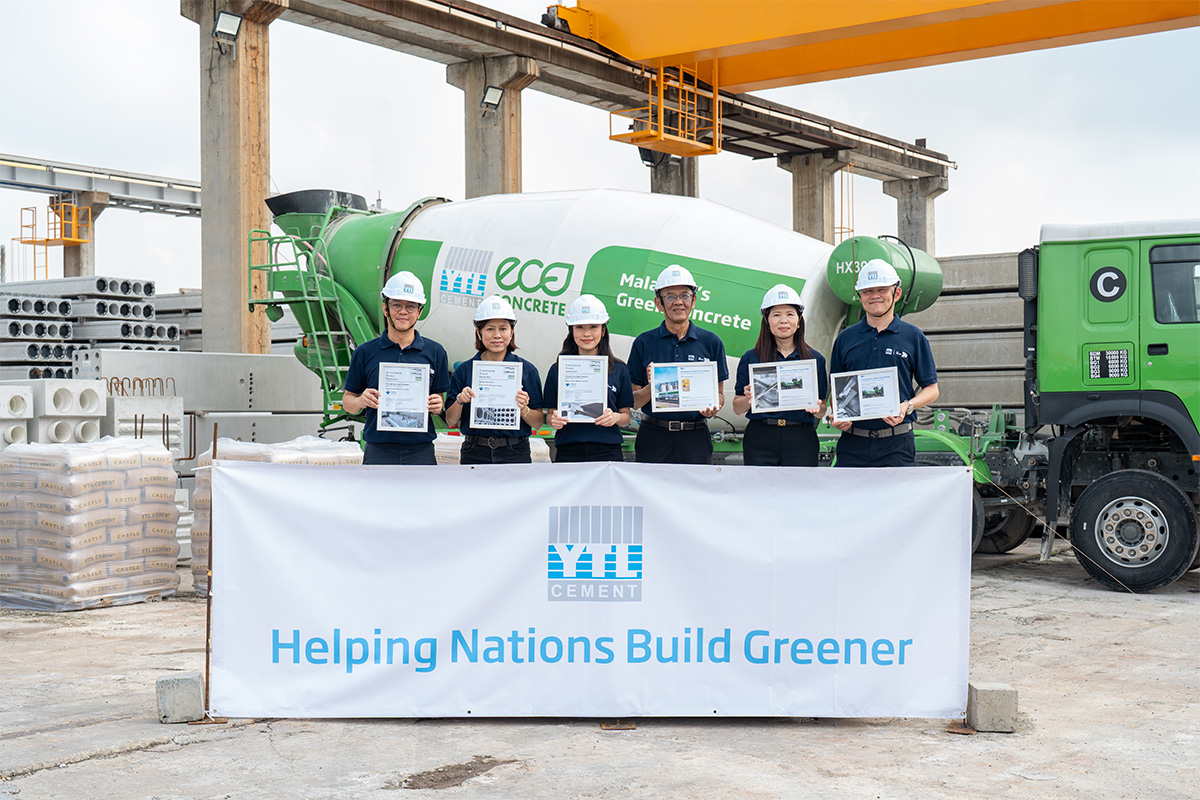
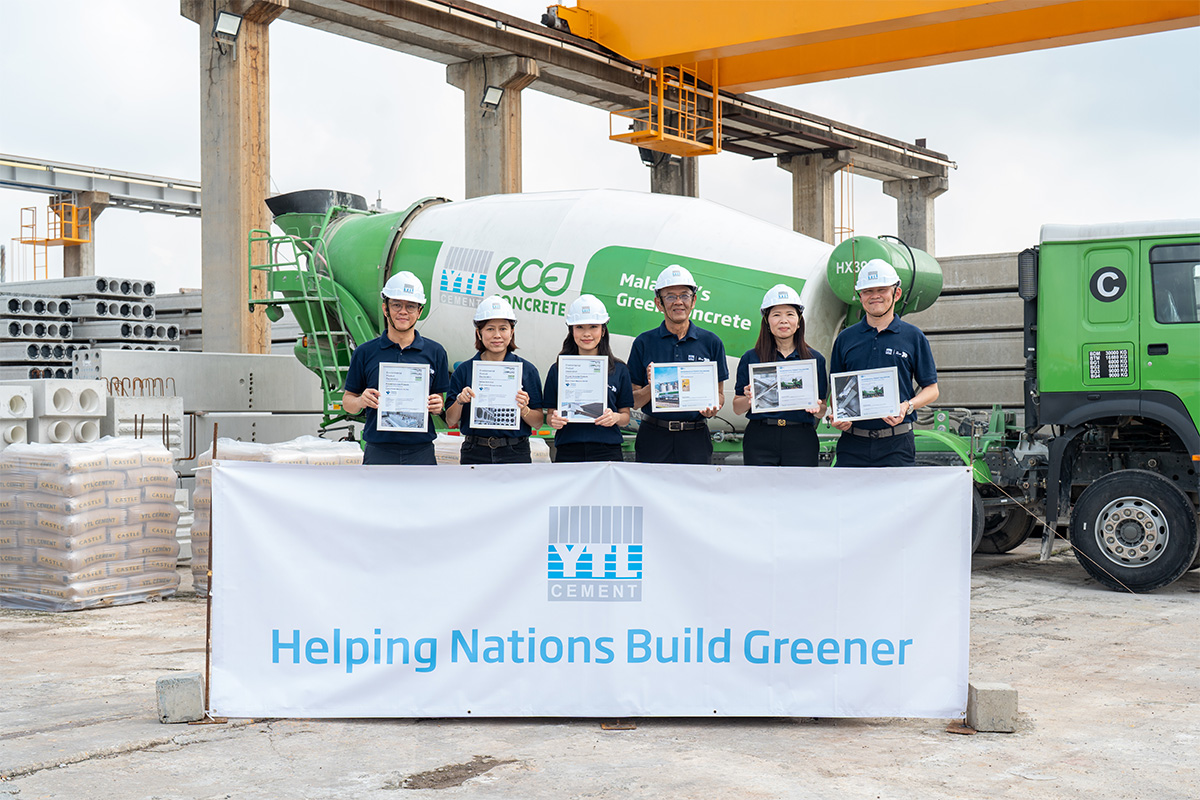
In Malaysia and Singapore, YTL Cement is now setting a new benchmark for that shift. The Group recently achieved environmental product declarations (EPDs) for its cement, concrete, and precast solutions in Malaysia, including ECOCem®, ECOConcrete™ and Eastern Pretech’s precast components. In Singapore, the Group also holds EPDs for its concrete and drymix products.
“Achieving EPDs across our product range reflects our commitment to sustainable construction and a resilient built environment,” says YTL Cement executive director Rachel Yeoh. “It attests to innovation being integral to industry-wide change, a milestone in our mission to provide building solutions and materials that are performance-driven and environmentally friendly.”
YTL Cement’s industry milestone
EPDs represent one of the most rigorous and internationally recognised ways to measure and disclose the environmental footprint of building materials. For YTL Cement, securing EPDs across its product range signals a deep-rooted commitment to responsible industry transformation.
“These EPDs represents our commitment to advancing low-carbon, high performance construction materials and reinforces our leadership in driving the transition towards more sustainable practices across Malaysia and Singapore,” says YTL Cement director of sustainability Clarisse Loh.
YTL Cement is the first Malaysian producer of cement and precast concrete to obtain such comprehensive EPD coverage — a step that positions the group at the forefront of material innovation. Beyond certification, the use of EPDs closes the loop between research, product development and real-world impact. It equips customers with verified data, supports green-building goals and accelerates industry-wide decarbonisation.
“This milestone is not only a reflection of how far the industry has come,” Loh adds, “but also a signal of where we are headed: towards a more responsible, resource-efficient built environment that benefits both people and the planet.”
Why EPDs matter and why YTL Cement prioritised them early
For YTL Cement, pursuing EPD certification was both a natural progression and a critical step forward. The group has invested consistently in sustainable product innovation — from its ECOCem® and ECOConcrete™ ranges to the incorporation of repurposed concrete aggregate (RCA), digitalisation initiatives and advancements in energy-efficient operations. EPDs allow the company to substantiate these efforts with transparent, measurable data.
“Prioritising EPDs is aligned with our long-term commitment to sustainability and innovation,” Loh explains. “It is about continually measuring and improving the environmental performance of our products, ensuring that every solution we offer contributes to a lower-carbon, more resource-efficient built environment.”
EPDs provide a credible framework for assessing a product’s life-cycle impact, making them a valuable tool for customers who want to build sustainably without compromising on performance. They also reflect the group’s forward-looking approach to decarbonisation, quality assurance and ESG governance.
“This milestone underscores our consistent investment in technology, research and product development,” Loh emphasises. “We are building on a clear vision to help our customers and industry partners build better, for generations to come.”


EPDs explained: Clear, comparable data for smarter material choices
EPDs are third-party verified documents that disclose key environmental indicators across a product’s life cycle, from raw material extraction to manufacturing, transportation, use and end-of-life. They adhere to international standards such as ISO 14025 and ISO 14040/14044, ensuring consistency and credibility.
These indicators include:
• Global warming potential (GWP), which quantifies carbon emissions;
• Acidification and eutrophication potential, which measures the impact on ecosystems;
• Ozone depletion and photochemical ozone creation potential, which tracks ozone-layer and smog-related impacts; and
• Resource use and depletion, which evaluates material and energy consumption.
By presenting a full spectrum of environmental data rather than a single figure, EPDs give architects, engineers, developers and contractors a more nuanced understanding of the products they select.
Notably, third-party verification enhances trust.
“It ensures the underlying analysis is rigorously conducted, the data is accurate, and the reporting aligns with globally recognised standards. This gives customers confidence that the environmental performance of our products has been independently assessed and reliably measured,” says Loh.
EPDs as a catalyst for green building certifications
As sustainability becomes mainstream, EPDs play a growing role in enabling projects to achieve higher ratings under LEED, GreenRE, Green Mark and other regional green building certifications. These frameworks increasingly prioritise life-cycle environmental data.
By incorporating EPD-backed products — such as ECOCem®, ECOConcrete™ or Eastern Pretech’s precast components — project teams can earn credits that contribute to certification outcomes. Just as importantly, EPDs support evidence-based decision-making, allowing builders to quantify embodied carbon early in the design stage.
From challenge to opportunity: How YTL Cement prepared for EPD certification
“The EPD process built on the foundation we’ve been developing through years of sustainability work,” Loh shares. “Because we’ve been investing in our facilities, processes and people, the process became an opportunity to validate our progress rather than a challenge.”
The group’s readiness stems from:
• long-standing investments in energy efficiency;
• an established culture of quality and environmental management; and
• continuous research through the Construction Development Laboratory (CDL).
This strong foundation allowed the company to pursue EPDs at scale, and to do so with confidence.
Empowering customers with data-driven, sustainable choices
At its core, the EPD initiative empowers the market.
“EPDs give our customers and partners clear, credible information on a product’s environmental impact,” Loh says. “This allows them to integrate sustainability into their projects more effectively while meeting performance and durability requirements.”
With data on embodied carbon, energy use, emissions and resource efficiency, project teams can:
• design greener buildings;
• make informed material decisions;
• meet ESG disclosure requirements; and
• achieve green-building certifications.
Road map grounded in innovation and real-world impact
Looking ahead, YTL Cement aims to further decarbonise its products through meaningful and measurable improvements.
“We are investing significantly in building technical expertise. This includes innovating with alternative raw materials, enhancing energy efficiency and adopting global best practices across our manufacturing network,” Loh notes.
The group is also expanding its EPD coverage into other markets and expects rollout in Vietnam by 2026.
“Our commitment is to ensure that sustainability goes hand in hand with high-quality construction. We will continue delivering solutions that help Malaysia transition towards a low-carbon, more resilient built environment,” says Loh.


Driving collective progress through industry collaboration
YTL Cement continues to play an active role in engaging regulators, professional bodies and academic institutions.
Recent initiatives include:
• Technical visit with the Institution of Engineers Malaysia (IEM) to Eastern Pretech’s Beranang factory, offering industry players hands-on exposure to precast innovations;
• Knowledge-sharing programme with ACI Malaysia, focusing on emerging sustainable concrete technologies; and
• Renewed collaboration with the Construction Industry Development Board Malaysia (CIDB) and Construction Research Institute of Malaysia (Cream) to deepen technical exchange and support policy development.
By fostering technical dialogue and supporting the development of future-ready talent, YTL Cement ensures that progress extends beyond its own operations and into the broader ecosystem.
Leading the way to a more sustainable construction sector
YTL Cement’s achievement of EPDs across its product portfolio is not simply a certification success. More than that, it is a strategic shift that signals how the company sees the future of construction.
It reflects a belief that sustainability must be measured, verified and integrated into every aspect of building. It underscores the group’s multi-year commitment to R&D, digitalisation, circularity, collaboration and capacity-building. And more importantly, it provides industry partners with the confidence and data they need to build responsibly.
“The attainment of EPD certification marks a significant milestone in our journey towards sustainable construction. It underscores our commitment to innovation and to providing low-carbon building materials that empower our customers to build more sustainably,” Yeoh concludes.