

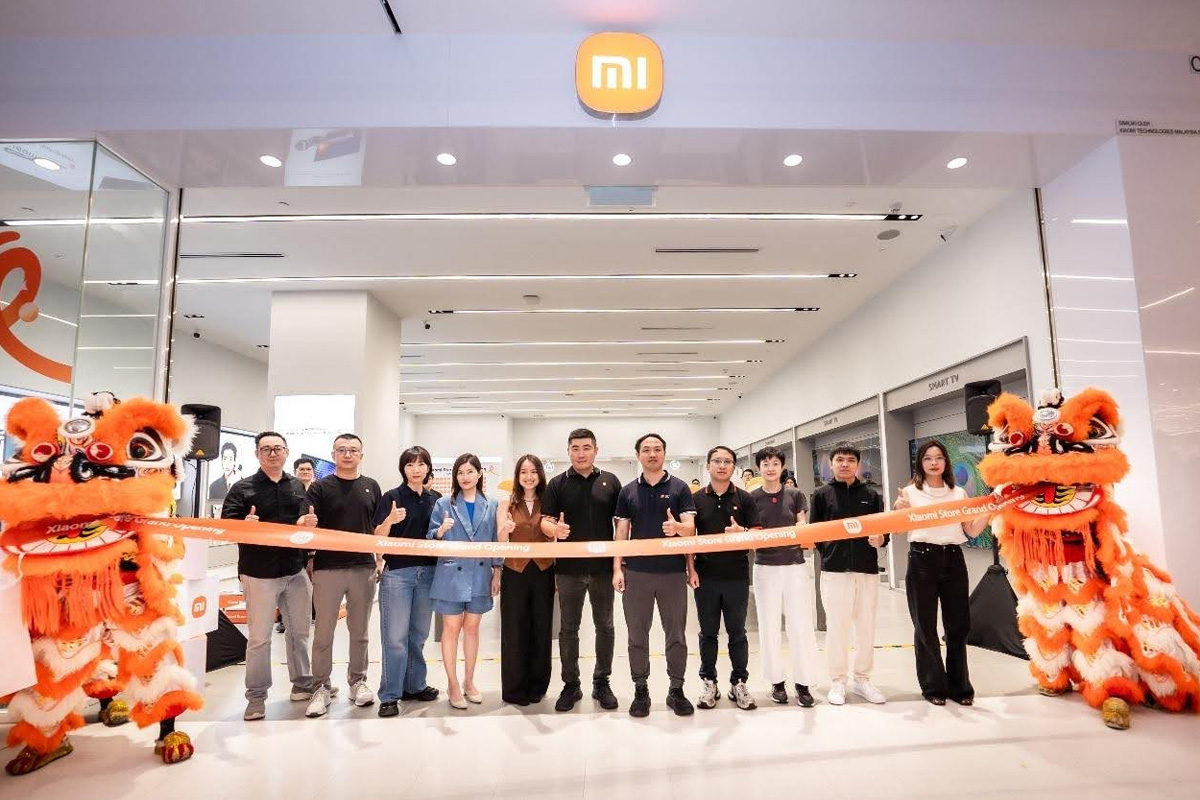

Xiaomi is setting the groundwork for regional expansion by replicating its successful China model globally. In China, the smartphone brand has diversified into smart household items, producing everything from smart air conditioning to electric vehicles. As part of this global strategy, Xiaomi recently launched its second Xiaomi Store in the country at The Exchange TRX.
The new store will serve as the brand’s new retail store in Malaysia and the wider region, and will standardise processes through new systems that ensure a stronger level of connectivity with all customers.
“Xiaomi operates the store to better connect with our partners and customers. We need to understand our customers’ experiences so we can better create a standard that works for both our customers and partners. However, opening our store doesn't mean that we want to compete with them; most of our stores will still be owned by our partners,” said Eddie Huang, country manager of Xiaomi Malaysia.
Xiaomi entered Malaysia more than a decade ago, in 2014, expanding to 77 stores nationwide. Of these 77 stores, only two are owned by Xiaomi while the others are partner-owned.

Huang explained at a press conference after the official launch party that all stores are using their own unique systems due to varied ownership, which isolates store-specific issues.
For example, if a store is suffering from a stock shortage of Xiaomi’s high-end phones, no other store would be able to assist or help in supply until that store reports it. Additionally, if a customer buys a phone in one store and then brings it to another outlet to report issues, it is difficult to verify where and when that phone was purchased.
“We want to have a standardised system for our new retail programs, because with this system, it can help improve store efficiency and user experience through the integration of online and offline channels,” said Huang.
This push comes from Xiaomi’s success in China, where the company has expanded its offerings into the electric vehicle market in addition to its other home appliances that can all be remotely accessed via its smartphone app via Internet of Things (IoT) technology.
This new structure in store operations is aimed at bringing China’s success to Xiaomi’s overseas ventures.
The current plan, according to Huang, is to gradually introduce this new system which applies an e-commerce mindset to offline operations, taking offline efficiency to the level of online efficiency. This new retail program not only has a user-centric approach, which integrates online and offline channels but also to enhance users experience. This can be seen with the integration of sales and service which ensure all user touchpoints achieve effective service delivery and traffic conversion.
The aim is to create a stronger ecosystem of store chains that can support each other, a system that has been proven in China.
Xiaomi has selected Malaysia as the hub for its physical store expansion in Southeast Asia. The 250-sq-m TRX Xiaomi new retail store is the largest in Malaysia and houses an official service centre for immediate on-site customer support.

“TRX is very popular for shopping and is at the heart of the Kuala Lumpur international finance district. So a lot of people come here every day. That's why we chose here, for its high visibility, easy access, and because the space is enough, we can showcase more products to the consumers,” Huang added.
The launch of the TRX store highlighted Xiaomi’s varied products — from its flagship Xiaomi 15 Ultra smartphones and Redmi Pad tablets to other popular products like its Redmi earbuds, the S40C robot vacuum cleaner and IoT-powered washing machines.
The current plan, according to Huang, is to gradually introduce this new system by working closely with their store partners, while also upgrading the store and upgrading its decorations.

The hope is that supporting partner stores will create a stronger ecosystem of store chains that can all support each other, a system proven in China. Should this succeed, with the TRX store at the forefront, this will become the blueprint for Xiaomi’s regional and global expansion, especially in the physical retail space.
While the world is steadily moving into the digital age, Huang explained that physical stores are still something not to be dismissed and represent a worthwhile continued investment.
He noted that although Xiaomi is one of the brands with a very strong online presence, physical stores remain a dominant and popular channel, serving as vital touchpoints for people to experience and try out the products in person.
Huang also revealed Xiaomi’s ambitious plan to expand its Malaysian retail presence by having a total of 85 Xiaomi stores in Malaysia by year-end.