



As businesses increasingly connect operations, manufacturing and AI, the question is not only whether a network is secure, but who they trust to provide it and which technology ecosystem they depend on. For Malaysia, a trusted, secure and globally aligned technology ecosystem is critical to attracting multinational investment.
Malaysia's next opportunity in 5G is to put the network to work. That opportunity lies on factory floors, in warehouses, healthcare, logistics and transport, and in the daily decisions that determine business competitiveness. Turning advanced connectivity into higher productivity could strengthen the country's appeal as a destination for investment and a base for multinational operations.
Companies choosing where to invest weigh several factors, including skills, reliable electricity, efficient logistics and policy stability. Trusted digital infrastructure increasingly adds to this proposition by helping businesses modernise facilities and introduce new capabilities with greater confidence.
Malaysia starts from an important advantage: Digital Nasional Berhad (DNB) already provides a key part of the 5G foundation that enterprise transformation requires. Its shared 5G network enables participating mobile network operators (MNOs) to deliver connectivity for businesses, supporting applications such as automation, real-time monitoring and artificial intelligence (AI).
The country has largely completed the first phase of its 5G journey: building the infrastructure. The next opportunity is to turn that infrastructure into measurable economic value, and that shift defines the next phase of DNB's role. Working through MNOs and with technology and ecosystem partners, DNB can help translate the capabilities of 5G and AI into practical enterprise applications across sectors.
Starting small with 5G
The first step does not have to be a factory-floor deployment. Starting the 5G journey does not require a large upfront technology investment or major transformation programme. Businesses can start small, using technology employees already understand.
For example, when an organisation next refreshes its laptops, it could consider 5G-enabled devices for employees who need to work productively away from the office. Like a smartphone, a 5G laptop can connect securely and directly to a mobile network using an eSIM provided by an MNO, without employees having to search for Wi-Fi or tether their laptops to their phones.
For employees, that means greater mobility and a simpler experience: open the laptop and get to work wherever there is suitable 5G coverage. For an organisation, it offers a practical way to introduce 5G through the normal IT hardware refresh cycle rather than beginning with a major infrastructure project.
From there, businesses can progress to more sophisticated applications where there is a clear business case. The principle is straightforward: start with one problem, prove the value and scale what works.
Building trust for enterprise adoption
As businesses consider where and how to adopt 5G, trust becomes just as important as the technology itself. That was among the priorities brought into focus at the recent Connected Enterprise Leadership Roundtable, which EuroCham and AmCham convened with industry partners. It brought together multinational businesses, government and telecommunications companies to examine how 5G could support enterprise digitalisation.
As businesses increasingly connect operations, manufacturing and AI, the question is not only whether a network is secure, but who they trust to provide it and which technology ecosystem they depend on. For Malaysia, a trusted, secure and globally aligned technology ecosystem is critical to attracting multinational investment.
For an investor, trust has practical meaning: production systems must remain available, information must be protected and technology must support business continuity. DNB's security framework addresses these needs through a dedicated cybersecurity function, round-the-clock security monitoring and an internationally certified information security management system, giving companies a concrete reference point for assessing its approach.
Network reliability is another part of that confidence. TM Forum has validated DNB's network operations at Level 4 Autonomous Network twice, recognising advanced use of automation and AI. The latest validation covers AI-enabled fault management, in which the network identifies problems, determines likely causes and coordinates corrective action with minimal human intervention.
For businesses increasingly dependent on connected production, automation and AI, the significance is practical: a network that can identify and respond to problems more intelligently can provide a more reliable foundation for critical business applications.
Turning connectivity into business outcomes
That reliability matters because of what it enables. A manufacturer could use connected sensors to monitor equipment and identify warning signs before a breakdown interrupts production, while cameras linked to analysis software could help detect defects earlier. In a warehouse, timely information on stock and equipment movements could help reduce delays and improve coordination.
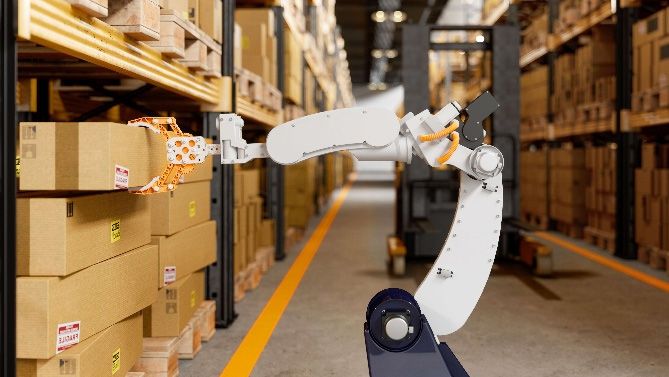
These applications become more valuable as AI moves closer to real-time operations. Reliable connectivity allows data from machines, cameras and sensors to reach the systems analysing it quickly, helping businesses identify problems sooner and make faster decisions.
Malaysia already has examples of collaboration around these needs. A programme by DNB and its technology partner Ericsson has explored 5G on the manufacturing floor, complementing fibre and Wi-Fi for monitoring and data collection. Such collaborations provide a starting point for testing what works under actual operating conditions.
For multinational companies, successful applications could strengthen the case for giving Malaysian facilities more sophisticated production or regional responsibilities. The investment argument becomes clearer when connectivity helps a plant improve quality, reduce downtime or introduce processes that were previously difficult to implement.
Scaling for growing enterprise demand
DNB's expanded spectrum resources add capacity for this growth. It has been awarded an additional 100 MHz, and its entire 240 MHz holding is now covered by a Spectrum Assignment, which provides greater regulatory certainty for future investment and growth. The additional spectrum also provides headroom to meet growing data demand and increasingly sophisticated enterprise applications.
But greater network capacity only creates value when businesses put it to use. Accelerating enterprise adoption will require close cooperation between businesses, MNOs and technology partners to identify practical applications, demonstrate measurable returns and scale those that work.
The opportunity is becoming more significant as AI increases businesses' dependence on real-time data. Research published in the June 2026 Ericsson Mobility Report found that 88% of enterprises surveyed expected their AI solutions to depend on real-time data, reinforcing the importance of reliable connectivity for monitoring, automation and faster decision-making.
For businesses, however, the case for 5G ultimately has to be measured in operational results. Projects should begin with a clearly defined problem and establish how success will be measured, whether through higher productivity, lower downtime, improved quality or reduced costs. Ericsson's 5G smart factory in the United States offers one reference point: advanced connectivity and automation there have enabled 120% higher output per employee compared with a similar operation without the same level of automation. The figure reflects connectivity and automation together, not 5G alone.
Wider enterprise adoption also creates new opportunities for MNOs and technology partners to develop commercially viable solutions around these needs. GSMA Intelligence's September 2026 global enterprise survey projects that businesses will devote 10% of their revenues to digital transformation through to 2032, covering technologies including 5G, AI and cloud.
Commercial offerings are already evolving in response. The June 2026 Ericsson Mobility Report identified 84 commercial services using 5G standalone network slicing, up from 65 six months earlier, with most new offerings targeting business customers. Such capabilities allow mobile operators to tailor connectivity to different application requirements and, working with technology partners, combine connectivity with applications, security and ongoing support.
Putting the network to work
These developments point to a clear priority for Malaysia: the value of its 5G capacity will depend on how many businesses can turn it into measurable business outcomes. As companies demonstrate gains from connected production, automation and faster decision-making, they could strengthen the case for locating more advanced manufacturing, research and regional operations in Malaysia.

For business leaders, the practical next step is a modest one: identify a single operational problem where faster, more reliable connectivity could make a measurable difference, agree in advance how success will be measured, and work with an MNO or technology partner to test the solution before scaling it.
DNB's next chapter is about putting that network to work. With the infrastructure largely built, its priority is to help enterprises digitalise, bring AI into real-world operations and turn connectivity into measurable gains, strengthening Malaysia's position as a productive, competitive destination for high-value investment.