

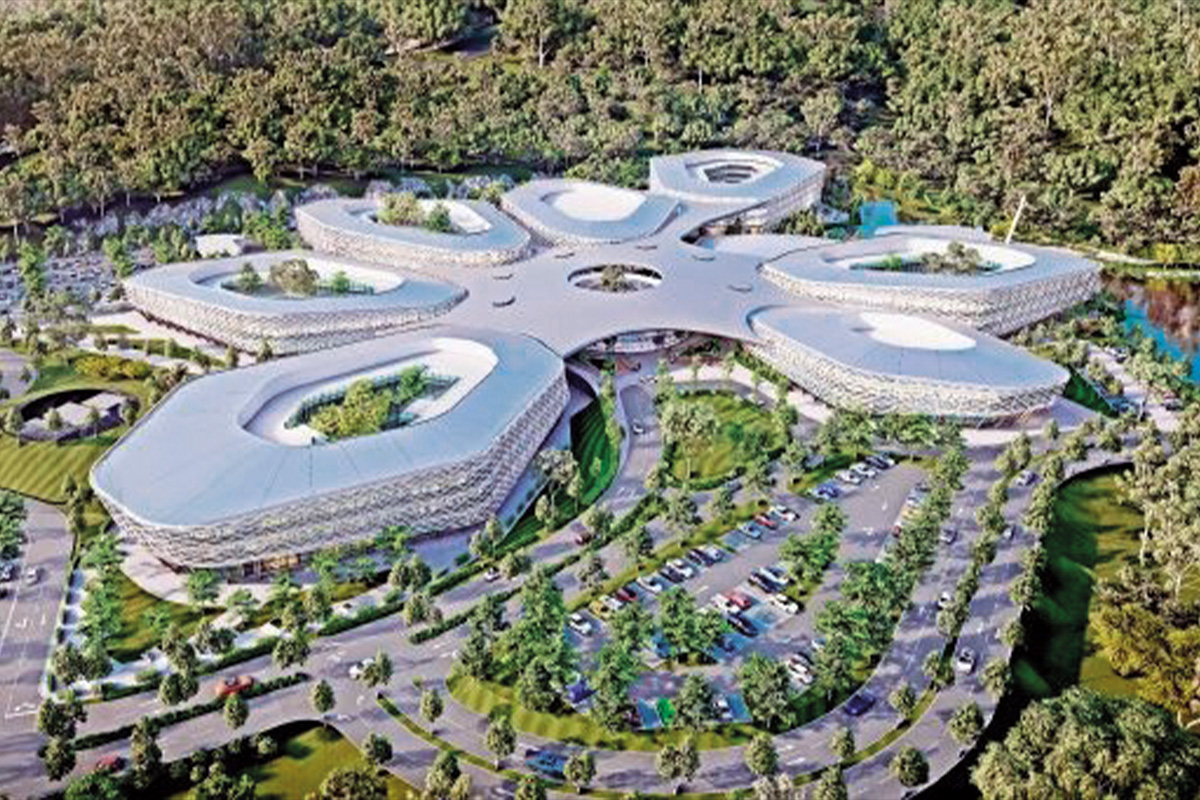

The Perak Rehabilitation Centre, a dedicated centre for neuro-robotics and cybernics under Perkeso, was established with a just mission to expand access to advanced medical care for patients in the northern corridor.
Aligned with the noble intention of the Sultan of Perak, Sultan Nazrin Shah, the design of the centre was developed in consultation with His Royal Highness, reflecting the essence and traditional elements of Perak Darul Ridzuan. Today, Perkeso’s rehabilitation centre in the state stands as the world’s largest neuro-robotic and cybernic rehabilitation facility, positioning Malaysia as a global leader in rehabilitative care.
The establishment of a rehabilitation centre in Perak is part of Perkeso’s broader mission to strengthen Malaysia’s healthcare and social protection network. Perkeso is an agency under the Ministry of Human Resources that provides social security protection to Malaysians.
“Rehabilitation is not only about physical recovery but also about rebuilding confidence, emotional strength and employability so that individuals can return to productive and meaningful lives,” says Perkeso CEO Datuk Seri Dr Mohammed Azman Aziz Mohammed.
There is a need for comprehensive rehabilitation in Malaysia due to work-related injuries and occupational diseases, he adds.
“In the northern region alone, more than 35,000 compensation claims were recorded in 2024 and approximately 10%, or about 3,500 of those cases, would require structured comprehensive rehabilitation. The Perak Rehabilitation Centre is designed to treat between 2,300 and 2,500 patients annually, therefore strategically reducing the gap.”
Its strategic location in Ipoh allows it to serve people from Perak, Penang, Kedah and Perlis as well as east coast states such as Kelantan, thanks to its shorter travel distance.
“This expansion ensures service access, reduced waiting time and more equitable access to rehabilitation across the region,” he says.
The rehabilitation centre features state-of-the-art technology, including the Hybrid Assistive Limb (HAL) system, which enables accelerated recovery pathways for patients who previously faced limited treatment options.
“HAL is a wearable robotic suit that detects faint bioelectrical signals generated when a person intends to move. These signals are captured through sensors and converted into movement, creating a feedback loop of intention, motion and sensory response. This strengthens the connection between the brain and muscles, a process known as neuroplasticity,” says Dr Mohammed Azman.
Compared with conventional therapy, HAL provides faster motor recovery, improved balance, reduced strain on therapists, accurate progress tracking and stronger patient motivation through visible results, he adds.
These technologies form part of the centre’s three-pillar approach to holistic recovery.
Advanced neuro-robotic treatments will restore physical functions and neurological capabilities of patients; vocational rehabilitation blocks are dedicated spaces for patients to retrain and develop new skills aligned with market demand; and comprehensive psychosocial support will be given to help patients rebuild confidence and overcome psychological challenges.
This approach is built on Perkeso’s experience in this area. In Melaka, more than 26,000 individuals have received care from its centre since 2014.
“A notable example is a professional diver from Terengganu who was paralysed after a diving accident. Through advanced therapy and vocational retraining, he regained his mobility and successfully returned to his career as a diving instructor at sea,” says Dr Mohammed Azman.
The Perak Rehabilitation Centre will be fully operational by the end of 2025, with an initial capacity of 700 inpatients, increasing to 2,500 patients annually once fully scaled. The facility includes robotic therapy suites, neuromodulation treatment zones, vocational training spaces and areas for family engagement.
Perkeso’s long-term vision for the state is to establish a Social Security Hospital which combines healthcare, rehabilitation and vocational services into one integrated ecosystem.
“The hospital will also feature a Trauma and Occupational Disease Hospital that strengthens the management of work-related injuries and illnesses while connecting patients directly to rehabilitation and employability programmes,” says Dr Mohammed Azman.
“At the heart of this vision is the philosophy of ‘from womb to tomb care’, a lifelong commitment to protect and empower every Malaysian at all stages of life. This principle ensures that social protection and healthcare are connected from prevention to reintegration, creating a system that uplifts workers and their families.”