


For decades, the smooth functioning of global supply chains has created the impression that goods move seamlessly across borders with manageable risk. But a series of geopolitical events, climate-related disruptions and trade bottlenecks in recent years has begun to challenge that assumption.
As businesses confront longer shipping routes, rising operational uncertainty and increasingly interconnected risks, marine insurance is emerging as more than just protection for cargo at sea. Industry players say it is increasingly becoming a form of risk infrastructure underpinning modern trade.
Despite its significant role, marine insurance is often viewed narrowly as protection for ships and cargo moving across oceans. In actual fact, the sector has evolved far beyond the maritime industry, extending across land, air and multimodal logistics networks that keep factories running and retailers stocked.
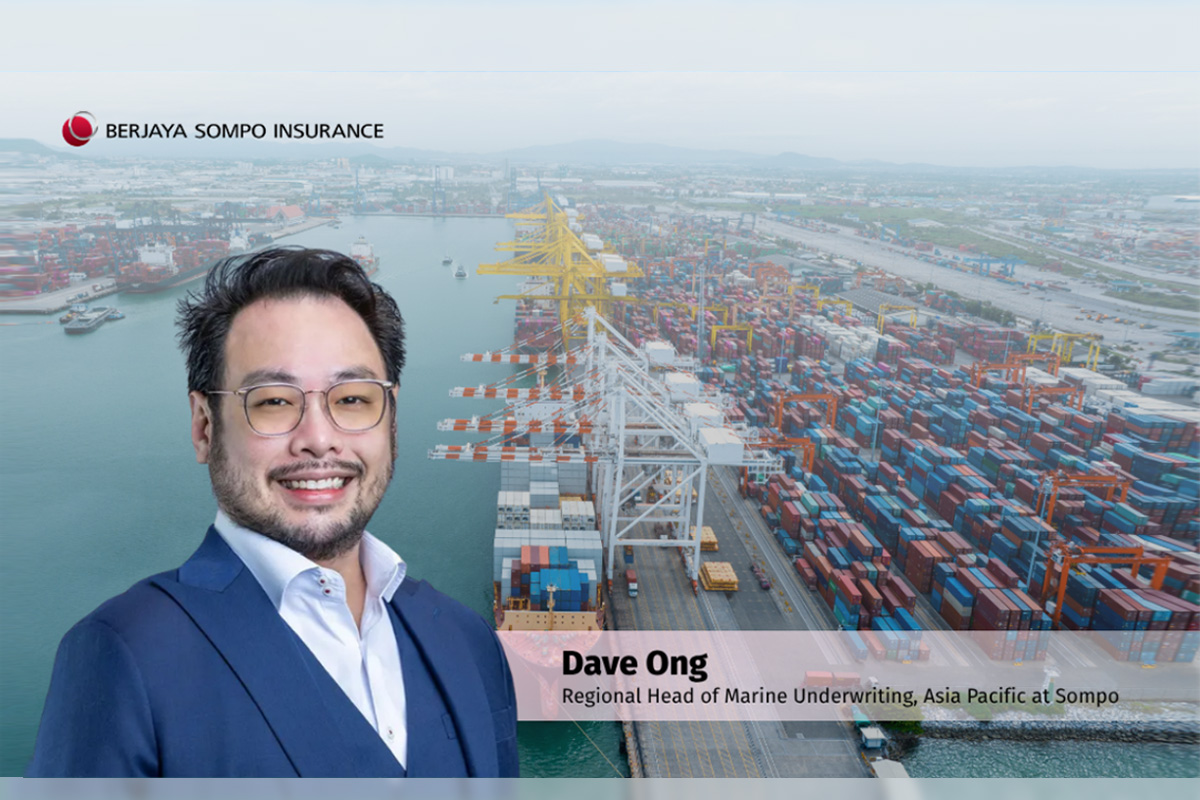
“Marine insurance is multi-faceted but serves as a backbone and enablement to global trade,” says Dave Ong, head of Marine, Asia-Pacific at Sompo. “Almost everything we see around us has been touched by marine insurance.”
The rerouting of vessels away from the Red Sea and Suez Canal in response to security threats, for instance, lengthens shipping times and raises costs for companies worldwide.
The broader concern, industry observers warn, is the ripple effect across supply chains.
“Most businesses focus on delays and higher shipping costs, but the bigger risk is the knock-on effect,” Dave says. “Longer routes can mean cargo damage, missed delivery deadlines, stock shortages, port congestion and unexpected costs.”
These disruptions highlight how interconnected supply chains have become. A manufacturer in Malaysia may depend on components sourced from several countries, transported through multiple ports and handled by various logistics operators before the finished product reaches consumers elsewhere in the world.
As companies diversify suppliers and production bases in response to geopolitical uncertainty and shifting trade policies, supply chains are also becoming more complex. The Russia-Ukraine war, for example, disrupted global wheat exports and forced businesses to rapidly seek alternative suppliers and shipping arrangements, creating new operational and insurance risks in the process.
Businesses also tend to underestimate risks such as cargo accumulation at transhipment ports, as well as sudden trade route disruptions due to sanctions.
“Many companies may only realise their exposures when a disruption occurs, and that their policy coverages are inadequate for their needs,” Dave observes. “Particularly when some of these policies have not been reviewed for a prolonged period, while their businesses have evolved significantly,”.
The risks of underinsurance
One of the most common misconceptions in cargo and logistics insurance, according to Dave, is the assumption that logistics providers or shipping lines will fully compensate for losses if goods are damaged.
“In reality, their liability is usually limited and may not match the actual value of the goods,” he says.
Another misunderstanding stems from the term “all risks”, which many businesses interpret as blanket protection.
“There are still exclusions and conditions that businesses may overlook,” Dave adds. “Underinsurance often happens when companies insure only the cost of goods, but forget freight costs, duties, storage and inland transport exposure."
The distinction between cargo insurance and logistics liability insurance is another area that remains poorly understood.
Cargo insurance generally protects the value of goods against loss or damage during transit. Logistics liability insurance, meanwhile, covers the legal liability of freight forwarders, transport operators or logistics providers for losses arising from their services.
The two are not interchangeable, particularly as supply chains become increasingly fragmented across multiple operators and jurisdictions.
From protection to resilience
Insurers, for their part, are also rethinking their role within supply chains. Rather than functioning solely as claims payers after losses occur, marine insurers increasingly position themselves as part of broader business continuity and resilience planning.
“We are moving beyond traditional cargo insurance and focusing more on helping businesses protect their overall supply chain,” Dave says.
Different industries, he says, face different vulnerabilities, requiring insurers to understand how specific goods move through supply chains, where bottlenecks exist and how operational risks evolve.
“The goal is not just claims payment but helping businesses reduce disruption and recover faster when issues happen,” he adds.
This is particularly relevant for sectors such as electronics, pharmaceuticals, industrial manufacturing and logistics services, where disruptions can quickly translate into production delays, contractual penalties and more importantly, reputational damage.
For Malaysian businesses, disruptions across global supply chains are also increasingly spilling over into domestic operating realities.
To fill the gap, Berjaya Sompo Insurance, which is part of the broader Sompo Holdings network, operates with both international marine insurance capabilities and strong local market insight.
“Global supply chains are connected, so businesses benefit from international experience and insights,” Dave says. “Through the Sompo network, we can draw from global marine expertise and worldwide market knowledge.”
“At the same time, Berjaya Sompo understands the local Malaysian business environment and customer needs,” he adds.