For Malaysia’s small and medium enterprises (SMEs) and mid-tier companies (MTCs), capital raising is the lifeblood of growth. SMEs alone account for almost 97% of business establishments, nearly 39% of GDP and more than RM440 billion in outstanding financing. Yet as these companies move into more advanced stages of growth, bank financing on its own is often not enough to fund the next phase of development and expansion.
According to Capital Markets Malaysia (CMM), an affiliate of the Securities Commission Malaysia, the problem is not that alternative financing options do not exist. It is that many companies rely on a single pathway without the readiness, knowledge or access to use alternative financing pathways effectively.
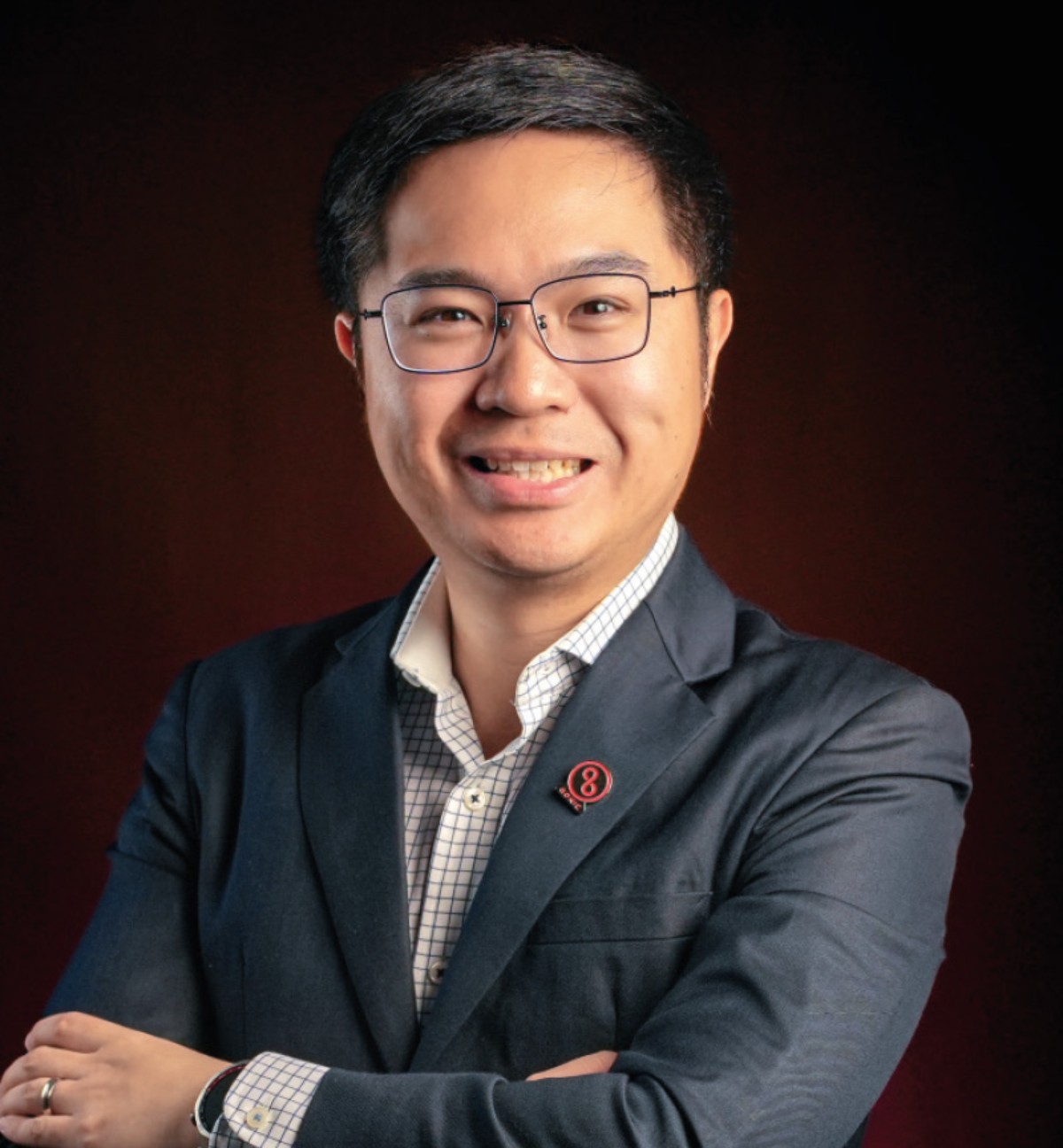
“The ceiling is not necessarily a lack of financing. The ceiling is relying on a single financing pathway when the business has already reached a stage where more sophisticated forms of capital may be needed,” says CMM general manager Mohd Jalallul Alam Jasni.
CMM calls this the “Missing Middle” — companies that have outgrown start-up funding but have not yet built the governance, reporting or investor relationships that institutional capital expects to see. The most common misconception is that a successful business automatically becomes an investment-ready one, says Jasni. In practice, closing that distance can take months or sometimes years of deliberate preparation.
The gap also often widens precisely as a company succeeds: larger contracts and higher revenues can mean longer receivable cycles and greater working capital needs, so growth itself strengthens the case for different kinds of capital-raising.
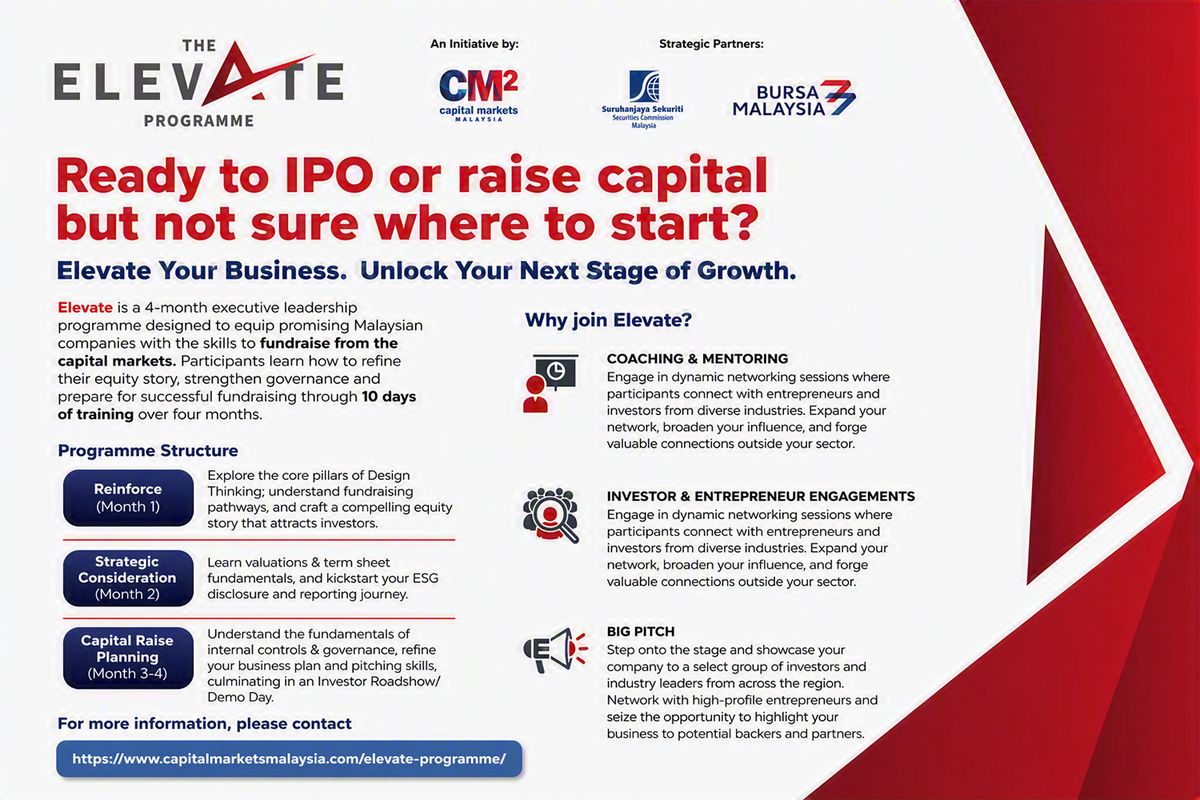
The Elevate Programme is CMM’s answer to that need: a fully subsidised, four-month executive programme that moves high-potential Malaysian companies from bank-financed growth to capital market readiness, whether that means private equity, venture capital or an eventual listing on Bursa Malaysia.


From lender-ready to investor-ready
Elevate is built around three phases: Reinforce, Strategic Consideration and Capital Raise Planning, each building towards a different question a growth-stage company must answer, from why a business deserves investment to what investors will scrutinise to how that story holds up under pressure.
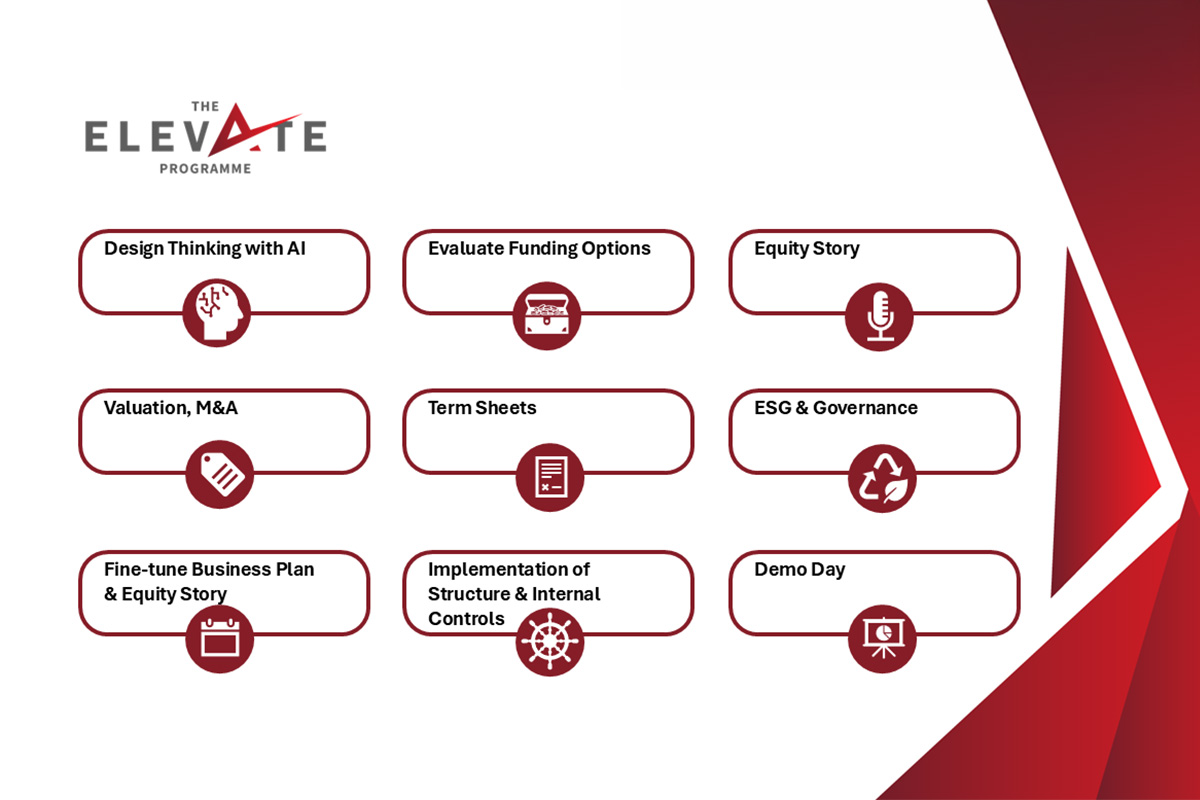
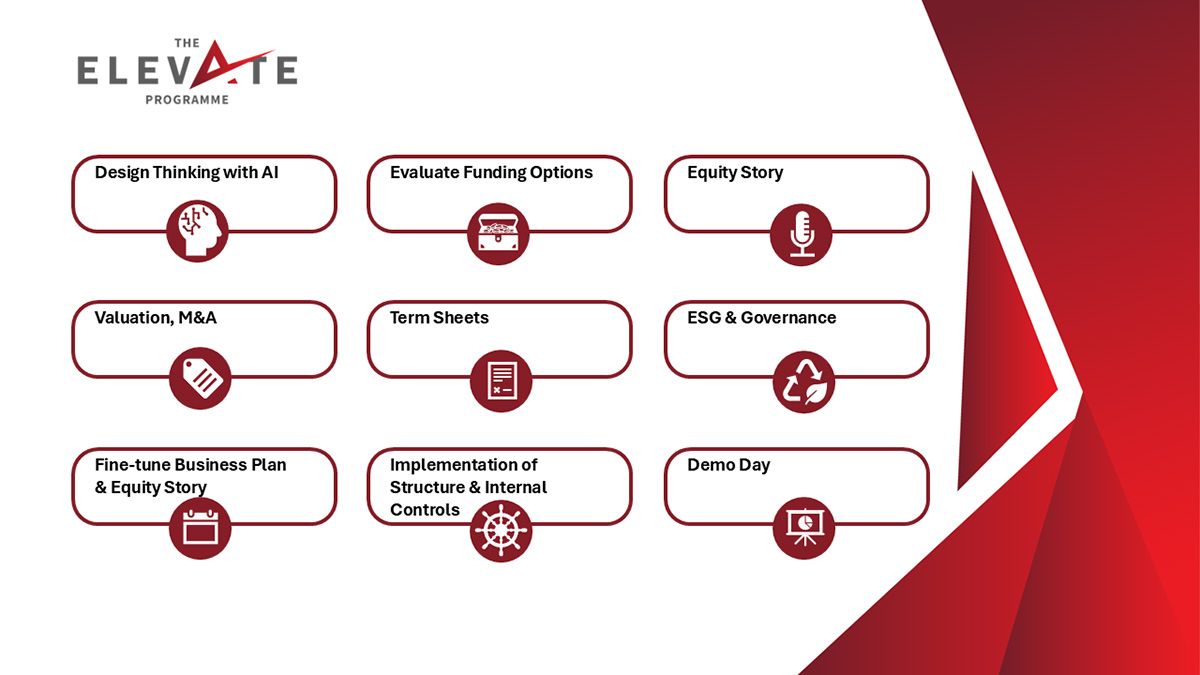
In practice, that means design thinking and funding-route mapping in the first phase, weighing private equity, venture capital, equity crowdfunding, peer-to-peer financing or an eventual IPO against the company’s stage and ambitions. The second phase works through the mechanics investors scrutinise most closely: valuation, term sheets, governance structures and ESG readiness through CMM’s Simplified ESG Disclosure Guide (SEDG). The third turns that work into an investable proposition, refining financial models, building the pitch deck and equity story, and testing the pitch ahead of Demo Day.
“After Elevate, companies will have made the transition from being lender-ready to investor-ready,” says Jasni, summing up the outcome of the programme.
For LiGNO Biotech, which is behind the commercial cultivation of tiger milk mushrooms, proving that science was never the issue. What the business needed was the governance and strategic discipline to scale beyond Malaysia.
Co-founder and CEO Ng Szu Ting says the shift showed up first in how the company made decisions. “We became more structured in how we plan, review and make decisions. We strengthened our governance and improved alignment on our long-term goals,” she elaborates.
“The programme also encouraged us to start our ESG journey, which has become an important part of how we think about building a sustainable business for the future.”
LiGNO has since started building a presence in the Philippines and Hong Kong as it expands beyond its domestic base.
KLAY EnerSol arrived at Elevate from a different starting point. The specialised industrial engineering company, which supplies insulation and energy solutions to refineries and power plants across the region, had spent three years growing steadily in Malaysia and was now weighing how to finance a push into new markets.
Its founder and CEO Yunus Sajad Hussein says the programme’s biggest contribution was breadth.
“The key takeaway was that funding is not a one-size-fits-all. Different stages of growth and different strategic objectives call for different financing structures,” he notes.
The governance improvements that followed have since been folded into KLAY EnerSol’s ISO 9001 quality management system as the company pursues expansion across Southeast Asia, Australia and India.
Putting the investment case to the test
Elevate’s final phase ends on Demo Day, when each cohort pitches to a room of active private equity funds, venture capital firms and investment bankers. Immediate deals are not the primary goal — the value lies in investor feedback, credibility and the relationships that follow.
For Aonic, an end-to-end drone, automation and agritech company already operating across Malaysia, Thailand, Vietnam and Singapore, that distinction mattered. The business had the regional footprint and ambition but was growing brand by brand rather than as one investable group.
CEO Cheong Jin Xi points to the company’s subsequent funding round as the clearest evidence of progress.
“The clearest sign of progress is that we closed a new funding round not long after completing the programme. Beyond the capital itself, it is validation that the structure and discipline we built through Elevate hold up in front of institutional investors,” he says.
With that foundation in place, Aonic is now pushing further into robotics and export markets, an expansion the business is finally ready to support, thanks to Elevate, he adds.
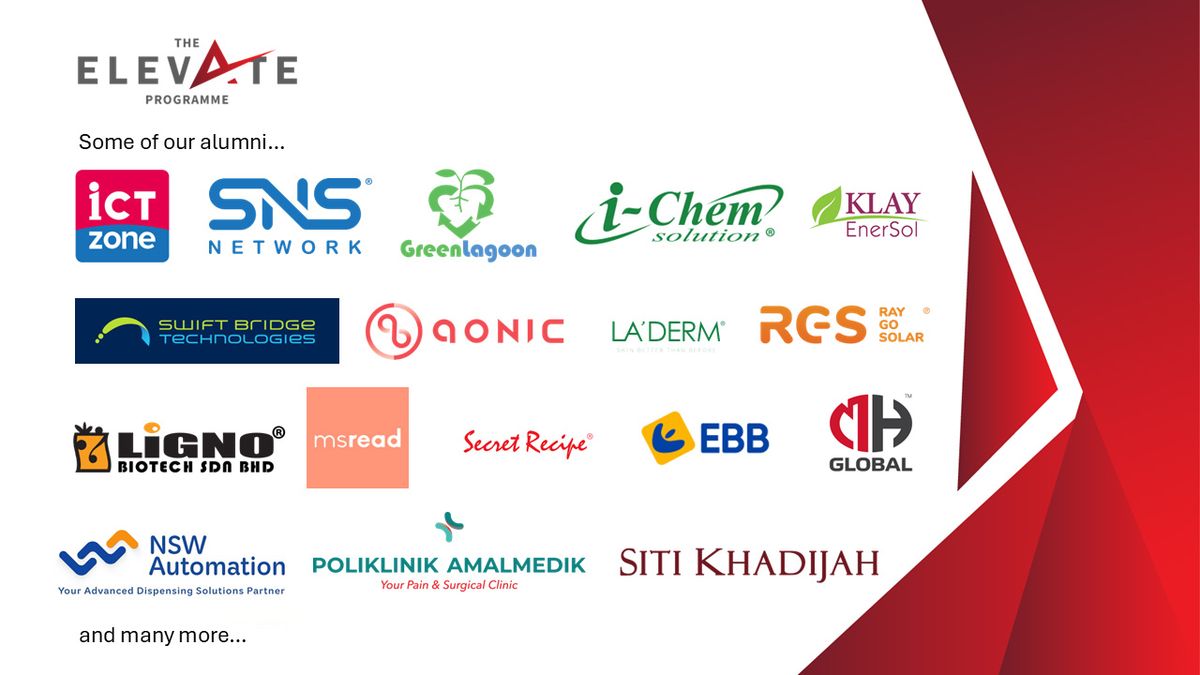
Since its launch in 2021, the Elevate programme has supported 130 Malaysian companies via eight cohorts, training more than 280 founders and senior executives. Seven alumni companies have since completed their IPO exercise. They include SNS Network Technology Bhd and YX Precious Metal Bhd, which are now on Bursa Malaysia’s Main Market, as well as ICT Zone Asia Bhd and Cape EMS Bhd. Others have gone on to participate in private equity, venture capital and equity crowdfunding.
What connects a drone company, a biotech pioneer and an industrial insulation specialist is not their sector, notes Jasni. Aonic, LiGNO Biotech and KLAY EnerSol sit in entirely different industries and at different stages of growth, yet each came to Elevate with the same trait: ambition, paired with a genuine willingness to learn how capital markets work. That appetite, more than any shared product or sector, is what ties the programme’s alumni together. Manufacturing alone accounts for over a third of the participating companies, alongside those from technology, engineering, services and other sectors.
“The strongest predictor of fundraising success among Elevate alumni is not the sector they operate in, nor even the financing route they ultimately chose. It is their ability to clearly articulate a growth story, demonstrate investor readiness and engage effectively with the right capital providers,” Jasni adds.
Elevate is not reserved for companies that are already fundraising or preparing for an imminent IPO. It is built for Malaysian SMEs and MTCs with strong fundamentals and the ambition to grow further, regardless of how developed their capital plans are today. Companies with an annual revenue of at least RM5 million can participate in the programme, which is fully sponsored by CMM.