
The conversation on sustainable finance has focused heavily on climate mitigation, and rightly so. Climate change is one of the most critical challenges of our time, with many emissions reduction solutions already technologically and economically viable. As a result, emissions reduction, renewable energy and the low-carbon transition have become key priorities for businesses, investors and financial institutions.
Building on this progress, one important area of sustainable finance now deserves greater attention: the blue economy. While markets often separate climate, transition, adaptation, nature and social finance, the blue economy cuts across all these themes. Although often associated with ocean conservation, its relevance is much broader. At its core, the blue economy is about using and managing water-related resources, as well as coastal and freshwater areas, in ways that support economic activity, livelihoods and long-term environmental resilience.
International bodies and frameworks increasingly recognise this broader view. The ASEAN Blue Economy Framework covers conventional marine sectors, such as fisheries, aquaculture, fish processing and tourism, as well as emerging areas such as renewable energy, biotechnology, marine and freshwater research and education. The International Finance Corporation’s (IFC) Guidelines for Blue Finance also include eligible activities across areas such as water and wastewater management, plastics recycling, as well as sustainable shipping and ports.
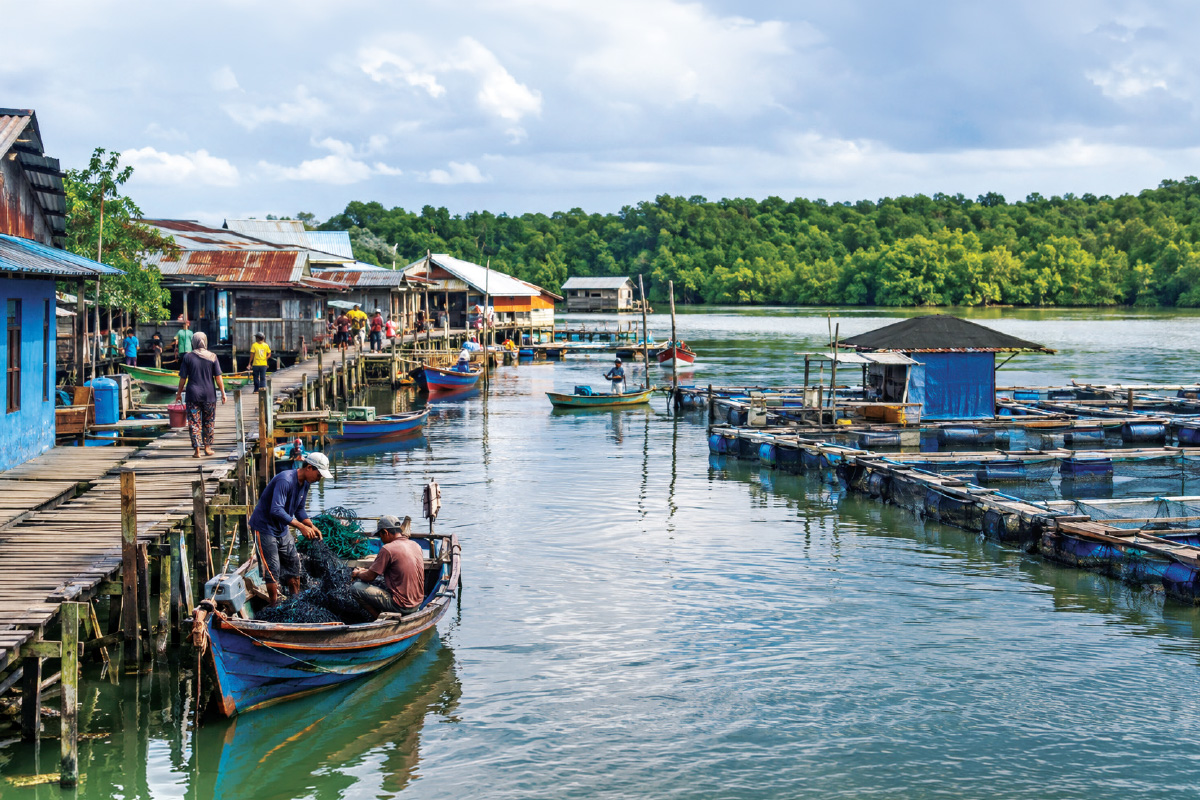
For this region, the relevance is direct. According to the ASEAN Blue Economy Framework, the blue economy supports up to 30% of GDP in parts of Southeast Asia. ASEAN also contributes over 20% of global fishery production, while its surrounding waters carry around one-third of global trade. Water and water-related systems support how the region eats, trades, travels, builds, works and lives.

Many businesses rely on water for their continued operation, while at the same time, the effects of floods, droughts, ecosystem degradation, pollution and water stress are already being felt. Floods have disrupted business continuity while water- and climate-related pressures have affected ports, fisheries, aquaculture, tourism, infrastructure and food security. These pressures can affect operating costs and asset values, and smaller businesses with limited financial reserves or lower preparedness are particularly vulnerable.
“As sustainable finance evolves, the question is not only about how we finance decarbonisation, but how we finance socio-economic resilience. The blue economy is an important part of that conversation, particularly for a region like ASEAN, where businesses and communities are deeply connected to oceans, rivers and coastal ecosystems,” says Luanne Sieh, Group Chief Sustainability Officer, CIMB.
Why the Blue Economy Matters to Businesses and Communities
A common perception is that blue economy projects are only undertaken by governments, non-governmental organisations or development agencies. This is understandable, as many water-related issues such as coastal protection, habitat restoration and water security involve public benefits and shared resources.
However, this view is too narrow. The blue economy is also directly linked to business continuity, asset value and competitiveness. A port operator depends on resilient coastal infrastructure and navigable waterways. A seafood processing plant depends on fisheries, aquaculture yields and water quality. A riverside hotel depends on reliable water supply and thrives when the waterway is clean. A manufacturer depends on water availability, wastewater treatment and resilient logistics networks. When these systems are weakened, businesses may face higher costs, asset damage, supply disruption, lower productivity or reputational risk.
For individuals and communities, the impact is even more immediate. Coastal and riverine communities depend on healthy water systems for livelihoods, food, mobility, cultural identity and protection from climate-related hazards. Fisheries, aquaculture and tourism provide income for many households, while seafood and inland fisheries remain important sources of nutrition and food security across the region. When water quality deteriorates, fish stocks decline, coastlines erode or floods become more frequent, the consequences are felt not only in economic terms, but also through higher cost of living, health impacts, disrupted education and greater vulnerability for lower-income communities.
A sustainable blue economy is therefore also an inclusive development agenda, supporting communities to earn a living, access safe food and water, stay healthy and build resilience against environmental shocks. This is why the blue economy should not be viewed only as a conservation agenda, but one that cuts across adaptation, nature, pollution management, food security, health, economic inclusion, tourism, trade and infrastructure.
Turning Blue Economy Risks into Investable Solutions
The challenge in scaling blue finance is not simply a lack of capital. It is also whether opportunities can be structured in a way that makes their return profile clear and attractive, which can be challenging in a sector that is highly interconnected with surrounding ecosystems. For example, sustainable aquaculture requires investment in energy-efficient production systems, but commercial success also depends on water quality, marine ecosystem health and fish stocks in catchment areas. Sustainable tourism depends not only on hotels and resorts with low-impact operations, but also on clean waterways and healthy ecosystems in the immediate vicinity.

There are also emerging opportunities that businesses and financiers are only beginning to explore. Blue carbon projects, such as mangrove and seagrass restoration, can support climate mitigation while strengthening coastal protection and biodiversity. Ports, industrial parks and coastal developments can also integrate biodiversity-friendly design features and invest in nature-based solutions to reduce flood risk and improve environmental outcomes. While many of these resilience measures can also be achieved by grey infrastructure, such as storm drains and sea walls, nature-based solutions can provide additional benefits to natural ecosystems while achieving resilience objectives.
While many blue economy projects are already suitable for commercial financing, others may require blended finance, guarantees, technical assistance, public-private partnerships or insurance to improve risk allocation and project viability.
This is where financial institutions can play an enabling role by helping clients assess project economics, manage financial risks, structure financing solutions and connect with development institutions or technical partners where needed. International guidance, including the Sustainable Blue Economy Finance Principles and IFC’s Guidelines for Blue Finance, can also help bring greater discipline to the market by defining eligible activities, financing approaches and impact indicators.
Where Businesses Should Start
For businesses, a good starting point is to assess their reliance on water, and exposure to water-related risks. This may include direct exposure through their own operations, or indirect exposure through supply chains, infrastructure, logistics, customers, employees and communities. For example, are operating locations vulnerable to floods or water shortages? Have transport routes for key inputs or outputs been disrupted in the past? How resilient are key suppliers to water-related risks, and are contingency plans in place?
Beyond managing risks, businesses should also consider where blue economy solutions could support their operations, as well as future funding needs. Companies in marine, coastal, freshwater or water-related sectors may have the opportunity to raise blue financing at competitive rates. Eligible projects could include water and wastewater infrastructure, sustainable aquaculture, pollution reduction, circular economy models, resilient tourism, infrastructure and nature-linked adaptation solutions. Recent market activity shows this is already taking shape: Air Selangor recently priced the world’s first blue sukuk and Malaysia’s first blue bond/sukuk issuance, with a nominal value of RM200 million. CIMB Investment Bank acted as sole sustainability structuring adviser and sole lead manager for the transaction.
For CIMB, this is part of a broader shift towards financing resilience, adaptation and long-term economic competitiveness. As CIMB works towards mobilising RM300 billion in sustainable finance by 2030, opportunities linked to climate resilience, natural capital and sustainable water systems are expected to become increasingly relevant alongside decarbonisation efforts.
The blue economy is critical to ASEAN’s resilience, competitiveness and long-term value creation. Investing in water-related systems is part of business strategy, helping build stronger supply chains, resilient businesses and healthier communities.