

SUBANG JAYA: Behind every memorable holiday, successful tourism business or seamless travel experience are people who understand how to connect with others, anticipate needs and create lasting impressions. While often associated with hotels and travel, hospitality is fundamentally about people, leadership and experience — qualities that are increasingly valuable in today’s service-oriented economy.
As the nation positions itself for further tourism growth through initiatives such as Visit Malaysia 2026 and the sector continues to evolve amid digitalisation, sustainability demands and changing traveller expectations, the need for future-ready talent has never been greater.
This growing demand is reshaping the role of hospitality education, expanding its relevance far beyond traditional industry pathways.
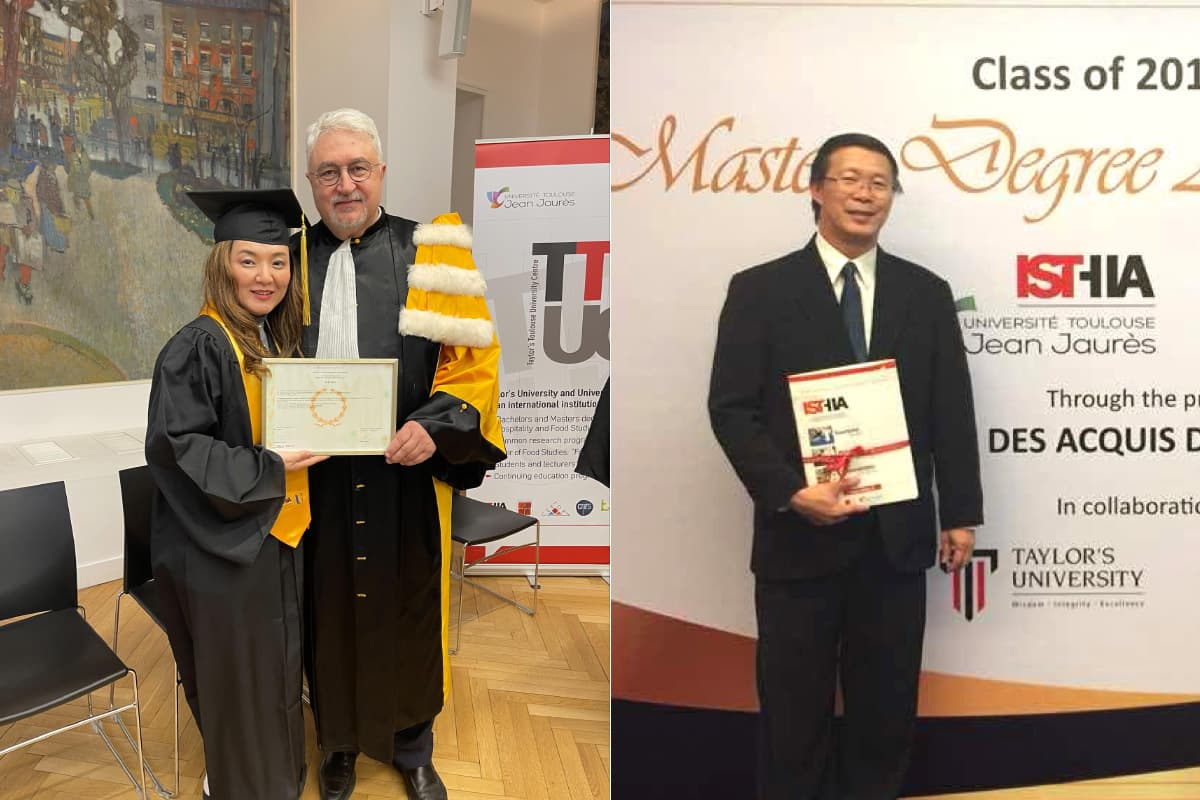
The journeys of Datuk Anna Teo and Datuk Dr Tan Kok Liang — both alumni of Taylor’s School of Hospitality, Tourism and Events — offer a compelling illustration of how hospitality education can serve as a launchpad for entrepreneurship and industry leadership.
Building businesses through hospitality professionals

For Datuk Anna Teo, co-founder and CEO of Hernan Corporation Sdn Bhd, Taylor’s University played a defining role in shaping both her professional outlook and leadership style.
A graduate of Taylor’s tourism and hospitality bachelor’s programme who later returned to pursue postgraduate studies, she was drawn to the university’s strong reputation and industry-focused learning approach.
“What stood out most was how learning was not just in the classroom. We were constantly exposed to real situations through projects, internships and industry experiences. That made everything feel real and easier to understand,” Teo recalls.
Her experience reflects one of the defining characteristics of Taylor’s hospitality programmes — experiential learning that bridges academic knowledge with practical application.
Among the highlights of her student journey was an internship at a Malaysian heritage building located at Perdana Botanical Gardens where she had the opportunity to assist in managing official visits. The experience exposed her to the highest standards of professionalism, service excellence and attention to detail in a formal hospitality setting.
More importantly, it deepened her understanding of what hospitality truly means while building the confidence and people skills that continue to guide her leadership today.
“I learned that it’s not just about service but about how you make people feel — being professional, flexible and genuinely attentive to others,” she says.

Her entrepreneurial journey was not without challenges.
“One of the biggest risks I took was making the decision to build Hernan Corporation and stepping into business on my own. There were moments when things became very difficult but I chose to persevere because I believed in the vision I had built,” she explains.
Shaping the future of tourism

Datuk Dr Tan Kok Liang, the director of Borneo Trails Tours & Travel Sdn Bhd based in Sabah, demonstrates how hospitality and tourism education can prepare individuals to influence the industry on a broader scale.
Today, Tan is recognised as one of Malaysia’s prominent tourism industry leaders, having played active leadership roles in the Malaysian Association of Tour and Travel Agents (MATTA), Federation of Asean Travel Associations (FATA) and Malaysian Tourism Federation (MTF).

Seeking a deeper understanding of the future of tourism, he pursued Taylor’s Postgraduate Tourism programme, offered in collaboration with University Toulouse–Jean Jaurès. With an established career already behind him, he was eager to further expand his knowledge and perspective.
“Taylor’s expanded my worldview. It did not simply give me a qualification, it sharpened my strategic thinking, especially when leading national tourism associations. It challenged me to think beyond day-to-day operations and to consider broader issues such as destination competitiveness, sustainability and tourism policy,” he explains.
“The experience was intellectually stimulating and highly practical. Classroom discussions often mirrored the issues we were facing in the marketplace,” he adds.
One of the defining moments during his academic journey came through research examining tourism business management and operating in crisis environments — insights that later proved invaluable when the global tourism industry came to a standstill during the Covid-19 pandemic.
For Tan, one of the most valuable lessons from his time at Taylor’s was the importance of continuous learning.
“Tourism is an industry that never stands still. Customer preferences change, technology evolves and global events reshape travel patterns. Success belongs to those who continuously adapt while maintaining the highest professional standards,” Tan adds.
Preparing talent for a growing industry
Although their careers have followed different trajectories, both alumni share a common belief: success is built through a combination of knowledge, practical exposure and lifelong learning.
Their journeys also reflect the breadth of opportunities available to graduates of the School of Hospitality, Tourism and Events — an outlook shaped by industry-focused education, such as that offered by Taylor’s University, ranked among the top 30 globally for Hospitality and Leisure Management in the QS World University Rankings by Subject 2026.
Students benefit from a holistic learning ecosystem that combines academic rigour with industry experiences. Through initiatives including the Hotel Takeover Project, tourism innovation labs and event project laboratories, students gain hands-on exposure to real-world operational challenges long before graduation.
Beyond preparing graduates for careers in hotels, tourism and events, the curriculum develops highly transferable skills in customer experience, people management and service innovation that enable them to thrive beyond traditional hospitality roles.
Students also benefit from a structured academic pathway that spans undergraduate and postgraduate education. Through its dual-degree collaboration with University Toulouse–Jean Jaurès, alongside close industry partnerships, Taylor’s enables students to build internationally recognised credentials while developing practical expertise and global perspectives.
The experiences of Teo and Tan offer a compelling message: hospitality education is no longer confined to a single profession.
Instead, it equips graduates with a versatile skill set that can open doors across industries and throughout the different stages of their careers.
As Teo advises, “Stay curious and keep learning beyond what is taught in class. The hospitality industry is changing fast, especially with the increasing use of AI technology, automation and personalised guest experiences. At the same time, people still expect strong human interaction, good service and memorable experiences. Both technology and people skills are important, and your ability to adapt is your biggest advantage.”
Tan echoes a similar sentiment: “Master the fundamentals but do not stop there. Tourism offers limitless possibilities. If you wish to excel in hospitality and tourism, work with passion and have an eye for small details to meet travellers’ expectations.”
The next intake for the School of Hospitality, Tourism and Events at Taylor’s University is in September. To explore its programmes, please visit https://university.taylors.edu.my/en/study/explore-all-programmes/hospitality-tourism-and-events.html