


The next few years will see the continuation of a rapidly evolving natural gas industry, as geopolitical shifts and energy transition remain prevalent in setting the tone for economies and businesses.
Even Malaysia, cushioned by upstream gas production, solid infrastructure, healthy supply-demand dynamics and supportive policies, faces significant changes in the way the entire industry operates.
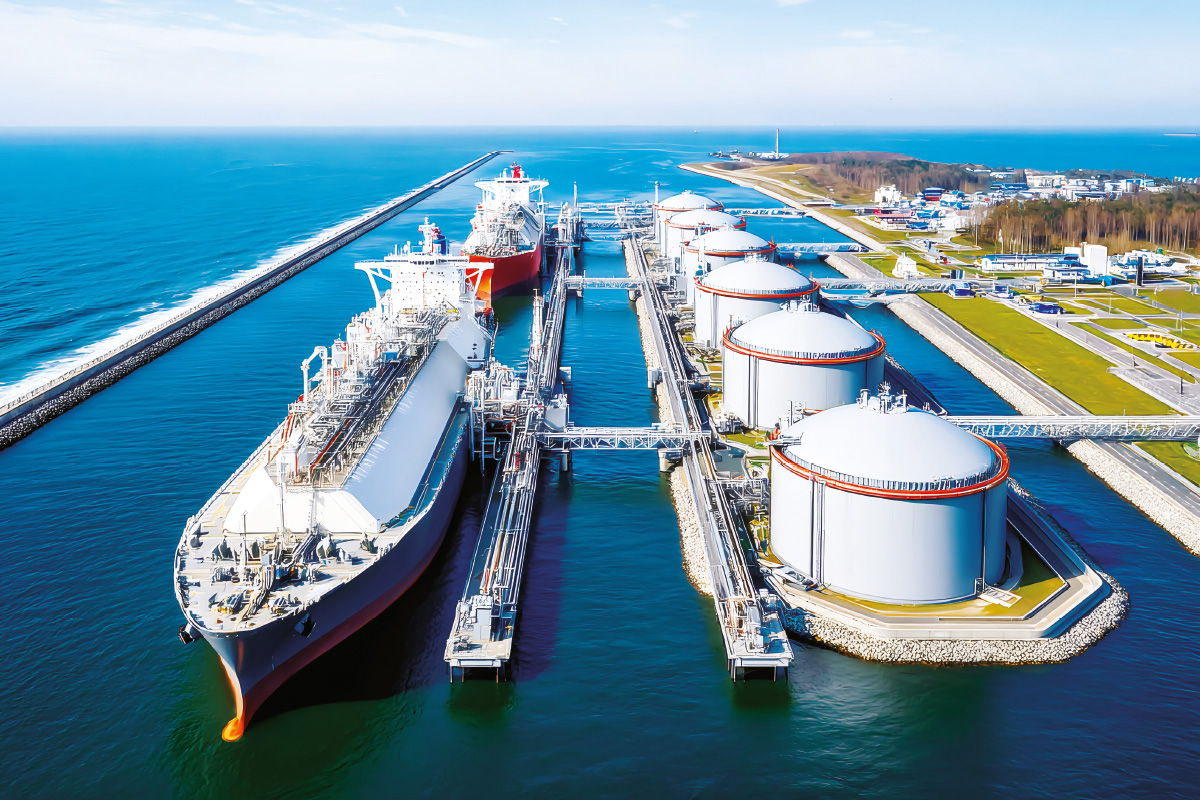
Some of the biggest signals are here. The government has sanctioned the development of a new regasification terminal to bring in more gas imports. More players are preparing for a gas trading market, and slowly consumers in hard-to-abate sectors are transitioning into gas as their primary energy source, seen as an alternative that scores on both emissions and efficiency.
Against this backdrop, industry stakeholders must realise that the entire Malaysian value chain needs to raise its competitiveness to survive against other markets, says Malaysian Gas Association (MGA).
“Malaysia’s upstream production is unable to catch up with demand growth. It has no choice but to increasingly rely on imports,” MGA president Abdul Aziz Othman says.
“Strengthening market-driven pricing, commercial attractiveness and infrastructure ecosystem are essential to attract liquefied natural gas volumes,” he says.
Malaysia’s natural gas industry contributes around/an estimated RM52 billion in national GDP. The commodity powers the nation with nearly two trillion joules of gas equivalent per year, making up about 42% of total energy supply in the country, according to data from the International Energy Agency (IEA).
However, it faces three interlinked challenges to remain on investors’ radar, as rising adoption threatens to take away the global supply that Malaysia crucially needs.
“Infrastructure readiness is becoming increasingly critical,” says Abdul Aziz. “Any delays or budget overruns risk constraining supply availability [and] would adversely affect the ability of natural gas to play its expected role in meeting the nation’s energy transition targets.”
Second, new technologies “present both opportunity and risk” and require a deployment process that is not just technically feasible, but also commercially viable, he adds.
One example of frontier areas is carbon capture and storage, which remains relatively untested at scale and requires astronomical capital requirements.
“The consequences for long-term decarbonisation progress would be significant,” Abdul Aziz adds.
Third, the liberalisation of Malaysia’s market continues to face headwinds stemming from regulatory uncertainty, market disruptions and price volatility, he says.
“Yet, liberalisation remains essential. Without transparent market signals and commercially driven pricing, Malaysia cannot attract both domestic and imported supply required to safeguard long-term energy security,” he explains.
Opening up the gas industry
As a gas-producing nation, Malaysia has a well-developed ecosystem with nationwide reach, backed by more than 2,600km of gas transmission pipelines and more than 2,900km of distribution pipelines in Peninsular Malaysia alone.
National oil firm Petroliam Nasional Bhd (PETRONAS) operates two regasification terminals in Melaka and Johor, with the third being planned in Perak.
These assets have been opened up for use by any third party interested in bringing in natural gas from overseas to meet local demand. Peninsular Malaysia imports around 30% of its gas demand, including liquefied natural gas (LNG) and through the Malaysia-Thailand Joint Development Area.
However, one key observation in the industry transformation journey is the modest uptake “due to structural and commercial realities”, says MGA’s Abdul Aziz.
“While some market participants have successfully utilised available infrastructure, there are constructive initiatives and programmes that can be undertaken to encourage the level of market participation,” he says.
Areas that require refinement include greater transparency in the commercial and operational framework governing the infrastructure access, and more predictable regulatory processes to support market confidence.
“Clearer rules and mechanisms such as ‘use-it-or-lose-it’ are needed to optimise infrastructure utilisation and reduce capacity hoarding,” he adds.
“What we need now is a framework that evolves in tandem with market ambition. Various initiatives and action plans have been identified — as part of the National Gas Roadmap (NGR) — and we hope it will be announced soon.”
Clear and predictable policies give companies the confidence to plan for the long term, concurs Malaysia’s distribution pipeline operator Gas Malaysia Bhd.
“Fair pricing, streamlined regulations and targeted incentives for energy-efficient projects like cogeneration would further strengthen commercial viability,” says Gas Malaysia president and group CEO Ahmad Hashimi.
“Ensuring timely expansion of gas infrastructure is essential to support new industrial corridors and maintain reliable gas supply across Peninsular Malaysia.”
“It is important that regulations and incentives evolve in tandem,” he adds. “Without supportive frameworks, the pace and scale of industry adoption may be constrained.”


Supporting the upstream ecosystem
In the upstream segment, PETRONAS has been active in its efforts to diversify Malaysia’s offshore oil and gas (O&G) resources with Malaysia Bid Rounds, witnessing awards in Sabah and Sarawak and Peninsular Malaysia that cover exploration and development blocks including in smaller fields.
Aside from catering to local demand, Malaysia’s upstream segment also supports Malaysia’s LNG exports, allowing the country to capture the upside in global prices.
Malaysia is the third-largest gas-producing nation in Asia-Pacific and the 11th largest in the world, IEA data shows. The country is also the fifth-biggest LNG exporter in the world, supporting energy security in key East Asian markets like Japan and South Korea.
Progress in the upstream segment, one of Malaysia’s key economic drivers, is crucial to support the wider industry ecosystem.
“The IEA’s Southeast Asia Energy Outlook also notes that gas will remain a ‘stabilising fuel’ for the region as countries balance reliability and decarbonisation,” says Malaysian rig operator Velesto Energy Bhd president and executive director Megat Zariman Abdul Rahim.
To play that role, Malaysia could benefit from policy clarity and consistency, he says.
“When upstream investment frameworks, licensing timelines and fiscal terms are predictable, operators can plan projects with greater confidence, and that stability naturally supports service providers handling long-cycle operations,” Megat Zariman adds.
“This, in turn, provides the confidence for us to make sustained investments in our core assets, particularly our rig fleet, as well as in the development of our people.
“Predictable frameworks help operators plan projects with confidence, which in turn supports service providers managing long-cycle operations. They also create space for practical adoption of automation and digital tools,” he adds.

The shifting operating market also presents an opportunity for players to upscale and improve their capacities, says upstream maintenance services provider Deleum Bhd.
“Government policies should focus on enabling innovation that strengthens local capabilities and opens new commercial opportunities.
“The right policies don’t just promote technology adoption. They create a business environment where companies like ours can scale solutions, attract partnerships and build expertise that are competitive beyond Malaysia,” says Deleum group CEO Ramanrao Abdullah.
“Support for cogeneration, digitalisation and lower-emission technologies must be paired with clear frameworks that encourage local participation. This includes financing pathways, procurement access and pilot programmes that help O&G services and equipment players prove and refine their offerings,” Ramanrao adds.
Reform to navigate
Recent updates show continued focus by the government on the gas industry. Malaysia’s Budget 2026, among others, prioritises support to low-carbon and green technology investments. The national budget also introduces innovative funding and capacity-building programmes to better integrate and future-proof the sector.
Industry players await the rollout of the NGR, which will underline the pace and direction of Malaysia’s gas industry, concurrent with the country’s net zero and economic growth agenda.
The country has benefited from its domestic O&G resources, helping grow Malaysia’s many economic sectors — from manufacturing to power — up the value chain.
Malaysia’s LNG requirement is rising at a time when the country’s economy transitions towards high-growth, high-value sectors aimed at global competition. This provides an impetus for the local gas pricing structure to change from its current model, where some domestic gas is sold to the local market at a discount.
While supply-demand dynamics remain stable in the short term with new projects coming onstream globally, the benchmark Henry Hub natural gas price has this year spiked above US$5 per mmbtu for the third cycle in the last 10 years.
The US Energy Information Administration (EIA) forecasts natural gas prices will rise 14% in 2026, following a 59% year-over-year increase from 2024 to 2025, according to reports. In Asia, gas demand is expected to rise over 4% in 2026, accounting for half of global gas demand growth, EIA projection shows.
In the 10 years between 2014 and 2023, demand for natural gas, which makes up 19% of Southeast Asia’s primary energy consumption, has grown 18%, IEA data shows. LNG demand soared 65% in the same period.
Beyond conventional gas, the nation is also seeing rising commercial interest in lower-carbon gas solutions such as biomethane, reflecting the industry’s gradual shift towards cleaner energy options while utilising existing gas infrastructure.
“The global gas market is navigating a period of rapidly evolving and highly unpredictable energy landscape. Demand continues to rise, particularly in Asia, yet supply fragmentation, price volatility and geopolitical risks are affecting trade flows,” says MGA’s Abdul Aziz.
To grow a healthy industry ecosystem, tariffs as well as contract structures must allow fair returns for all stakeholders.
“Malaysia needs a transparent market reform pathway that provides clear and predictable pricing structures to restore investor confidence and ensure supply security in an increasingly tight global market,” Abdul Aziz says.
“These realities are unavoidable. Our only choice is to prepare for the future that is already taking shape,” he adds.