


The world is entering a period of transition marked by uncertainty. The digital revolution, green economy, and aging population are reshaping the world of work. Traditional employment is now intersecting with the gig economy, automation, and more flexible models.
Amid this complexity, one crucial question emerges: what is the future of social security when the very nature of work is changing?
Malaysia Takes Bold Steps
Malaysia chooses not to wait. While many countries are still struggling to find new formulas, we have emerged as among the earliest in the world to enact specific legislation to protect gig workers.
Gig workers are not just statistics. They are young people who have made digital platforms their source of livelihood, single parents who work day and night to raise their children, and fresh graduates who view the gig economy as their entry point into the working world. They have been working hard all this time without certainty, without justice, and without any security protection.
This new law changes that situation. It ensures that as long as they have contracts or working relationships with service entities, they are entitled to fair protection. For the first time, gig workers in Malaysia are officially recognized as part of the nation's workforce ecosystem, no longer on the periphery.
This is more than a reform; it is a bold move that places Malaysia at the forefront of addressing the challenges of a rapidly evolving work landscape. It demonstrates that Malaysia is not simply keeping pace with global trends but taking the lead in shaping new models of social protection.

From Kuala Lumpur to the World
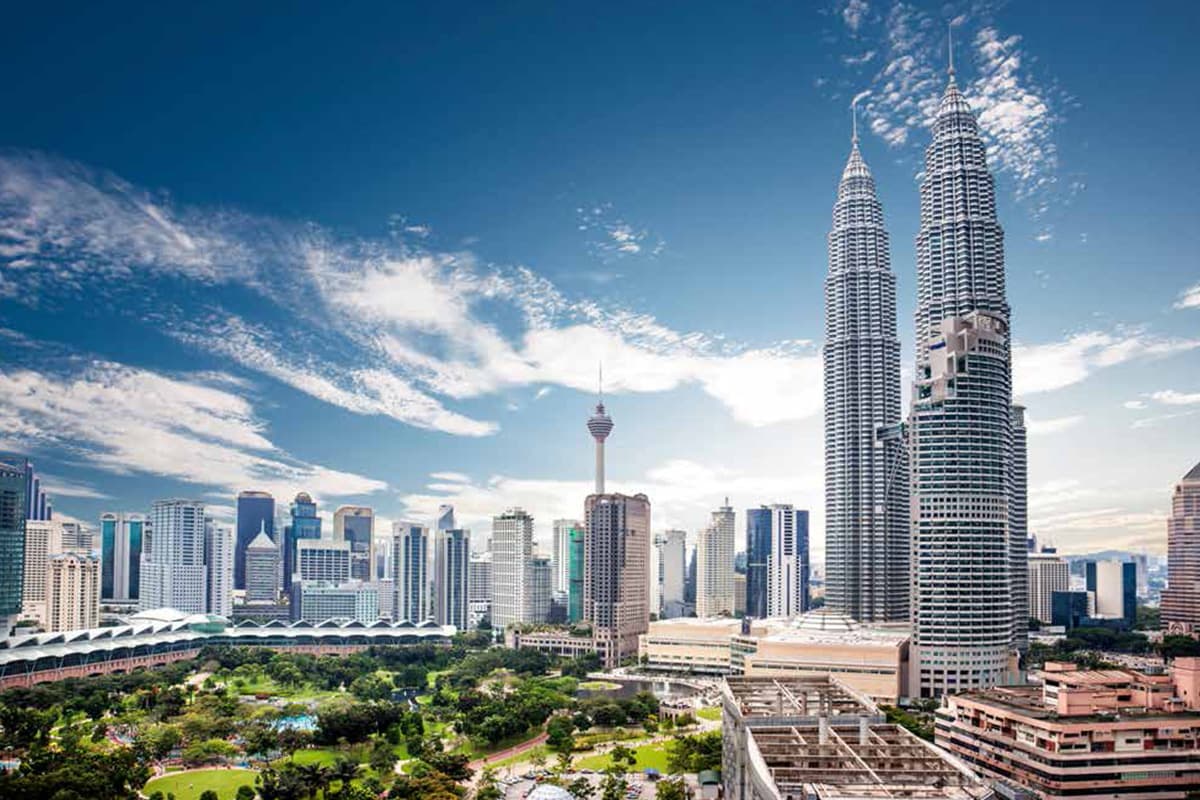
Following this bold move, history will be made as the Kuala Lumpur Convention Centre (KLCC) welcomes the World Social Security Forum (WSSF) from September 29 to October 3. This vision took centre stage today as Kuala Lumpur hosts the World Social Security Forum (WSSF) 2025, officiated by Prime Minister Dato' Seri Anwar Ibrahim . The five-day forum carries the theme "Shaping Social Security for a World in Transition" and positions Kuala Lumpur as the hub of international dialogue on social protection .
Organised by the International Social Security Association (ISSA), cohosted by Social Security Organization (PERKESO) and the Employees Provident Fund (EPF), with support from Kumpulan Wang Persaraan (Diperbadankan) [KWAP] and the Implementation Coordination Unit of the Prime Ministers Department (ICU JPM) , the forum is a gathering of global leaders. With over 2,000 participants representing 253 institutions from 133 countries, including ministers, CEOs, technical experts, and representatives from international bodies such as the International Labour Organization (ILO) and the World Bank, the forum marks the world's largest gathering on social protection.
The presence of ministers, chief executive officers, and technical experts from the United States, China, Germany, Spain, Brazil, Iceland, Switzerland, and many more is proof that Malaysia is now recognized worldwide as a leader in discussions on the future of social security.
The National Presentation on Malaysia's Social Security highlighted the nation's reforms to expand coverage, strengthen financial sustainability and integrate digital technology. Malaysia's approach is increasingly recognised as a model for balancing domestic priorities with global challenges, from the rise of the gig economy and ageing populations to the need for stronger, more resilient institutions .
The afternoon plenary, Global Developments and Trends in Social Security, brought together international experts to assess how demographic shifts, digitalisation and changing labour markets are reshaping protection systems worldwide. Discussions underscored the urgent need for agile and resilient systems capable of addressing climate change, informality and rapid technological disruption .
Leadership is not about who is the richest or most advanced. Leadership is about who dares to make changes at the right time. Malaysia has proven that a developing nation can become a global pioneer.
The WSSF in Kuala Lumpur is a symbol that Malaysia is not merely following global transition but stepping forward to lead and shape its direction. These insights will frame the conversations throughout the week and guide the collective effort towards a future-ready global social protection agenda .
The WSSF 2025 will continue with sessions on transformation and innovation in social security management, interactive workshops and showcases of new approaches.
The forum will culminate in the World Social Security Summit on Friday, where leaders will set the tone for the next decade of inclusive and future-ready social security worldwide.

The Spirit of Malaysia Madani
This is the spirit of Malaysia Madani, a policy framework rooted in humanity but with a far-sighted vision. Through the courage to enact gig worker legislation to host the WSSF, Malaysia stands as a world leader. We are not merely adapting to change but are determined to shape a future of social security that is more just and inclusive.
We are also moving to strengthen our legal framework. For example, the Government will soon introduce the Non-Employment Injury Scheme to ensure workers are protected not only during office hours but beyond them.
This stems from a realisation that the pressures of work do not stop at the factory gate or the office door. In an age of flexible and remote arrangements, this reform will align protection with the realities of how people live and work today. And crucially, it will extend coverage around the clock, recognising that accidents and injuries do not keep to a timetable.
From Kuala Lumpur, the message is conveyed to the world that a developing nation is also capable of leading with a clear vision, making this transition not merely a challenge but an opportunity to build a world that is more just, inclusive, and humane.