

The world is moving into a longevity society, but governments and businesses are still largely treating longer lives as an ageing issue to be managed through healthcare, pensions and social protection.
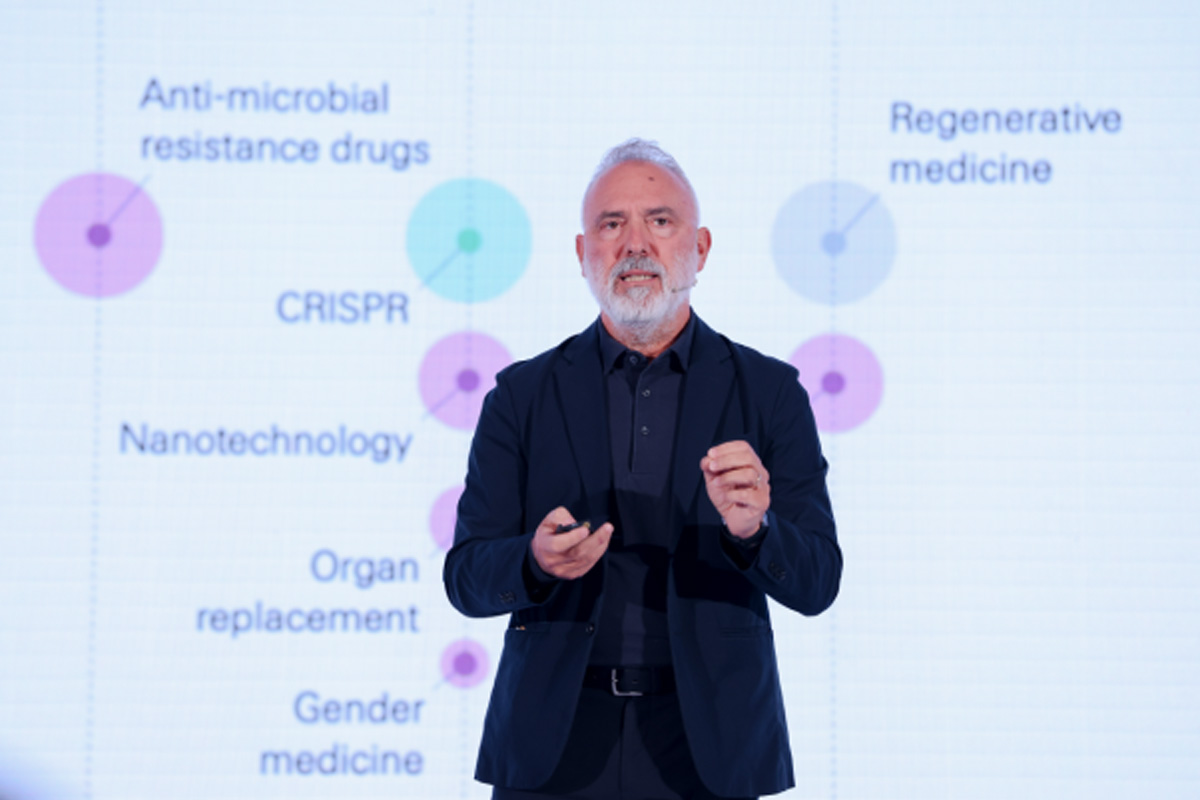
That needs to change, according to Prof Nicola Palmarini, director of the UK’s National Innovation Centre for Ageing (NICA), who argues that longevity should instead be viewed as an economic and societal opportunity.
Speaking on the future of longevity at the International Social Wellbeing Conference 2026, Palmarini said societies need to look beyond simply extending life expectancy and focus instead on extending the number of years people can live in good health.
“We’re not only getting older, but we’re living longer, which is very different,” he said, distinguishing an “ageing society” from what he calls a “longevity society”.
The distinction matters because living longer does not necessarily mean living healthier for longer, according to Palmarini. He pointed to the gap between life expectancy and healthy life expectancy as a more meaningful measure of how societies are ageing.
Malaysia ranks 67th in global health-adjusted life expectancy. The US ranks 68th, yet spends about 17% to 18% of its GDP on healthcare, compared with Malaysia, whose healthcare expenditure stood at about 4% of GDP.
For Palmarini, this illustrates why healthcare spending alone cannot determine how long and how well people live.
He cited a combination of studies which suggest that healthcare accounts for about 11% of the factors influencing health outcomes. Genetics accounts for about 22%, the environment 7%, while societal and behavioural factors together account for about 60%.
“Everyone is putting their money in healthcare, but it only accounts for 11%,” he said.
The point, he stressed, is not that healthcare is unimportant. Rather, healthcare largely intervenes after something has happened, while a larger opportunity lies in influencing the conditions that shape health before people become patients.
“Why don’t we work on the prevention side instead of only caring about things that already have happened? Why don’t we care about people instead of patients?” he quipped.
That means thinking about longevity through education, employment, housing, transport, food, urban design, social connections and the environment, as well as the way companies design and market their products.
It also means looking beyond the traditional “silver economy”, which focuses on products and services for older consumers. The longevity economy, by contrast, spans the entire life course — beginning before old age and potentially even before birth.
“It’s not anymore a matter of how long we live. We should have to start thinking about the quality of that life,” said Palmarini.
Economic opportunities
Palmarini cited studies suggesting that population ageing could weigh on economic growth if societies do nothing to improve healthy longevity. Conversely, keeping people healthy for longer could allow older workers to remain economically productive, reduce pressure on public healthcare systems and create new economic activity.
He pointed to unpaid domestic and care work as one area with significant economic implications.
Unpaid domestic and care work is estimated to account for 9% of gross domestic product (GDP) on average globally, according to Palmarini, while it accounts for 17.6% of GDP in Malaysia. This would make it the second-largest sector by GDP, behind manufacturing, he noted.
He also pointed to the potential to bring more women into the formal economy. Raising the profile of the 3.2 million people involved in care work in Malaysia, he said, could potentially raise GDP by 4.9%.
The private sector, too, has a role as businesses influence people's everyday choices — from what they eat and how they travel to how they work, exercise and spend their leisure time.
Companies can develop products and services that support healthier behaviours, while employers can capture what Palmarini calls the “wisdom dividend” — the value of experience retained when older workers remain in the workforce.
Cities are another important piece of the puzzle. Palmarini argued that they should move beyond being merely “age-friendly” and become “longevity-enabling”, recognising the role of neighbourhoods, transport, the built environment and social conditions in health outcomes.
Ultimately, Palmarini's argument is that longevity cannot be delegated to health ministries or hospitals. The larger opportunity lies in connecting other parts of society that shape how people live.
He suggested governments consider establishing ministries of longevity to oversee the interconnected components that influence how people live.
“It’s time that we start designing for what is the strongest medicine we are aware of,” Palmarini said, pointing to exercise and other preventive interventions.